Category Archives: eLearning

10 Ways that Education will change in the next 10 years

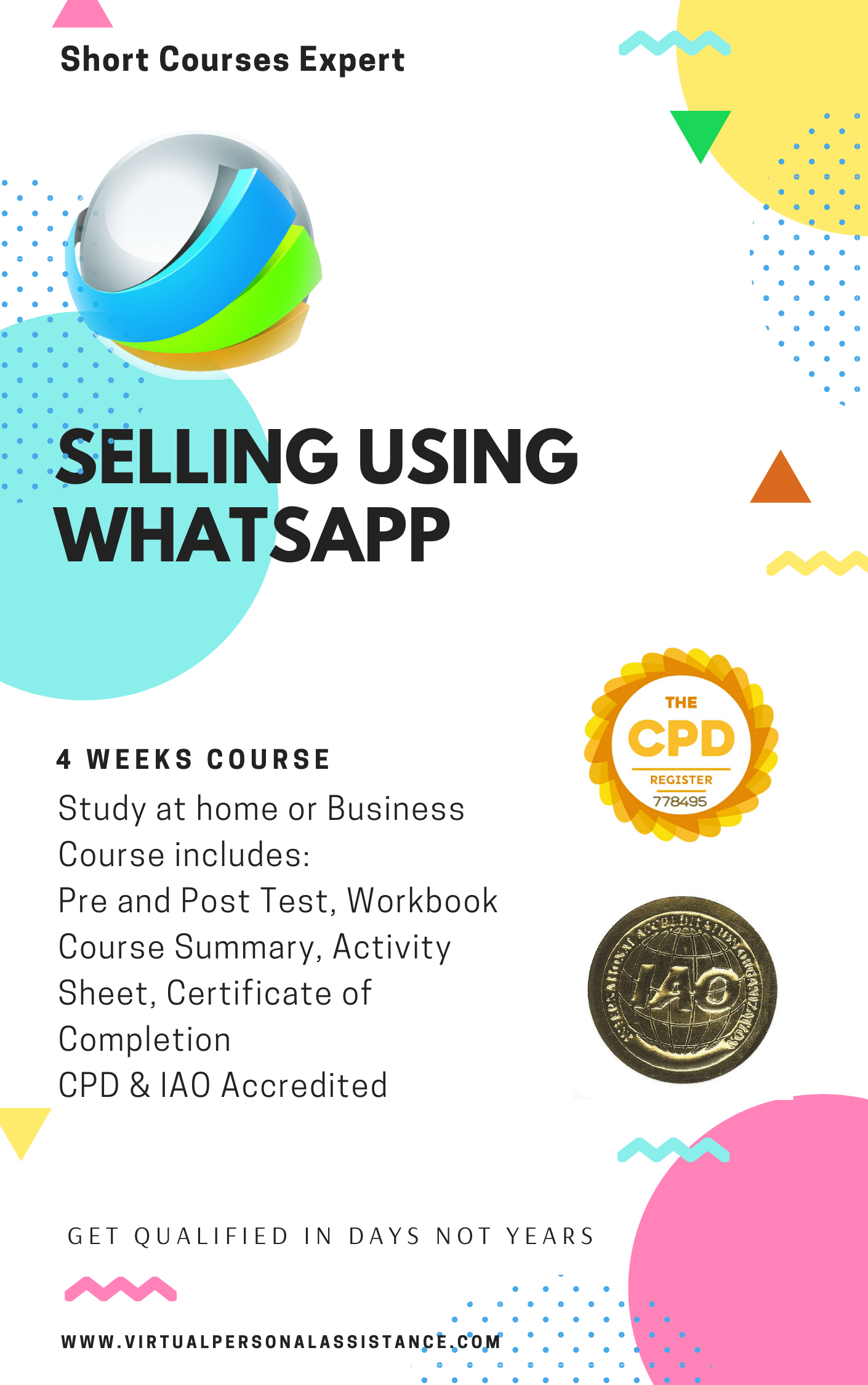
Get qualified in days not years

Article by

By Tim T Dingle BSc (Hons) PGCE MBA  CDO  Academy of Vocational and Professional Training Ltd

One of my true heroes is Peter Drucker and I love his quotation:

The best way to predict the future is to create it.

Having been in education, training and leaning for the last 28 years (and now as Chief Development Officer for The Academy Of Vocational and Professional Training ) I am involved in creating that future. I came across this morning   poll from Edutopia that asked:  What will online learning look like in 20 years?  And the results were:

Universal. Some type of virtual learning will be mandatory in all schools, and virtual schooling, with no in-person teaching at all, will be widespread.

33% (171 votes)

Prevalent. Online learning will continue to grow, though not every school will have it. Online-only schooling will enjoy greater popularity.

51% (264 votes)

Atypical. The challenges of online courses will restrict their usage; classroom learning will remain the primary place for education.

13% (66 votes)

None of the above.

3% (16 votes)

When I voted, I considered lots of possibilities and my answer was that it would be prevalent and thus continuing to grow, and will be growing in popularity.  This seemed to be the most popular answer.  As I considered this more, I asked myself what education would look like in 20 years.  I started teaching in 1981 and by 1985 we had word processors (the joy of early green screen Amstrads) and presentations were still done with colourful posters that were painstakingly made.  Teachers and students remember ‘Bandas’ (the smell, oh the smell) and Roneo ‘mass production’ via stencils. I used state of the art learning aides: video’s  (Betamax) of David Attenborough’s  Life on Earth were the highlight of the 80’s Biology teaching. I can’t remember when I got my first email address, but I can remember my first home computer in 1991!

So when I ask myself what education will be like in the next 20 years, I imagine it to be a little more advanced with some more bells and whistles with some early adopter teachers that embrace it, some that go with the flow and try to keep up, and some that are “old school”.  I do know a few things:  education is slow to change….slow is fast in education…and innovation & technology are useless unless the teachers are supported and encouraged to try it and use it.

This year proved to be one of great debate surrounding the future and necessity of the Learning Management System. Much of it boils down to whether employee learning should be controlled and tracked, particularly when much of workplace learning occurs through informal channels. Learning Management Systems can enable collaboration, knowledge sharing, and social networking.

So here goes: my top ten predictions for change in the next 10 years:

NO MORE OLD DESKS, BENCHES AND CHAIRS

  1. The 21st century does not fit neatly into rows because we all need to be facing the same way!  I do a lot of stand up comedy and being on the stage is frightening for many. Allow the network-based concepts of flow, collaboration, and dynamism help rearrange education for authentic 21st century learning.

NO MORE LANGUAGE LABS

  1. It is true that foreign language acquisition is only a smartphone away or Google translate away on your iPad. See www.expresstrainingcourses.com . Time to get rid of those clunky headphones,desktops and monitors and do something fun and funky with that room. Make it a space for interaction and global connection.

 NO MORE COMPUTERS

  1. Hmm…how does this work? More precisely this one should read, let’s change our view and concept of what a computer is and does. Because computing is going mobile and over the next decade we’re going to see the full fury of individualised computing via hand helds come to the fore. See Diane Shawe’s blog’s on this! Due to improved infrastructure, slick mobile operating systems and smartphone market penetration, we seemed to hit a tipping point of readiness for mobile content this year. From mini-courses to collaboration to performance support, mobile learning could go mainstream in the near future. In terms of converting legacy courses, it will mean streamlining everything—paring down over-sized multimedia elements as well as implementing a ‘less is more’ philosophy. In terms of new development, designers will have to manage the limitations of a smaller screen and decreased memory capacity. When mobile learning hits critical mass, people of all ages and occupations will reap the benefits.

 NO MORE HOMEWORK

  1. There is no doubt that the 21st century is a 24/7 environment. And the next decade is going to see the traditional temporal boundaries between home and school vanish. Mobile Learning, anytime, anywhere, anyplace…The new Martini generation!

TRUE DIFFERENTIATED LEARNING

The 21st century is absolutely customisable. In ten years, the teacher who hasn’t yet figured out how to use tech to personalise learning will be the teacher out of a job. Differentiation won’t make you ‘distinguished’; it’ll just be a natural part of your work. Most learning will be done via tablets and phones and will happen everywhere.

 LETTING GO OF THE FEAR OF WIKIPEDIA

  1. So many people have a fear of Wiki but in many ways Wikipedia is the greatest democratising force in the world right now. I know it can be wrong. It also challenges the Teacher as the expert.  If you are afraid of letting your students peruse it, it’s time you get over yourself.

NO MORE TEXT BOOKS

  1. Books were nice. In ten years’ time, all reading will be via digital means. Maybe you like the ‘feel’ of paper. Well, in ten years’ time you’ll hardly tell the difference as ‘paper’ itself becomes digitized and a generation od Children will have better posture for not lugging around a ton of text books.

    THE JOURNEY TO AUGMENTED REALITY

Gary Woodill, Ed.D., a Senior Research Analyst at Brandon Hall Research and author of The Mobile Learning Edge, was kind enough to contribute his perspective on the trends affecting Augmented Reality related to mobile learning.

According to Dr. Woodlill, “Augmented Reality (AR) is one of the most disruptive applications for mobile learners. It is an example of location-based services, where information is provided to you based on your location, and even the direction that your phone camera is facing. With that information, your smartphone can supply additional textual information about what you are looking at, or can blend computer generated objects with the video or still image on your screen.

THE END OF  I.T. DEPARTMENTS

  1. I.T. Departments as we currently know them will disappear… Cloud computing and a decade’s worth of increased wifi and satellite access will make some of the traditional roles of IT — software, security, and connectivity — a thing of the past. So the question is what will all those IT professionals do? Simple:  Innovate. Look to I.T. departments to instigate real change in the function of schools over the next twenty years. Dream, design and deliver!

 NEW BLENDED LEARNING  

Blended or hybrid learning came about because one eLearning course is often not the solution to an organisation’s or an individual’s learning needs. Until recently, blended referred to a learning experience that included both instructor-led and online self-paced components. But that was a long time ago in Internet Time.

Now that live synchronous instruction frequently occurs online and that opportunities for individualized learning abound, the definition of blended learning is expanding to include any number of strategies, from learning through a community of practice to mobile performance support. For example, someone might attend a workplace webinar on how people learn, then participate in a video-based Google+ hangout with a cognitive psychologist, and join a LinkedIn community of instructional designers to discuss the application of these ideas.

So  (in my humble opinion) it will be a very different in School in 10 years time and hugely different for learners. We will become genuine Life Long Learners served by technology and we will see fundamental changes for employers, employees and systems. Technology enhanced learning (TEL) has the goal to provide socio-technical innovations (also improving efficiency and cost effectiveness) for e-learning practices, regarding individuals and organisations, independent of time, place and pace.

Can’t wait.

The kind of Leaders people want to follow by Diane Shawe

Get the skills you need to lead today

article by Diane Shawe M.Ed

Leadership can possibly be defined as the ability of an individual to influence, motivate, and enable others to contribute toward the effectiveness and success of the organisations of which they are representatives. Leadership is not dependant on title or formal authority and is often feared by some management teams as a potential threat to their job if opened up to other members within the team.

All too often we think of leadership as a higher order of management, something we will develop and apply subsequently rather than earlier in our profession.

This applies to both leadership within our chosen occupational discipline and leadership of our profession. In the early stages of a career, most people naturally focus on the practical aspects of their career. They begin their careers applying the vocational disciplinary information and skills they acquired in college or university and focus on those aspects that will ensure a job, promotion  and success early in their career. However Leadership is something that should be considered and fostered early and often throughout our entire professional career.

Leadership is a subject that has been studied, discussed, and debated across a wide variety of disciplines for centuries. There are numerous books, articles, and self-improvement courses on the subject – so many that the interested student on the subject of leadership might at first be discouraged.

The purpose of this article is not to be exhaustive but instead to signpost you to  a practical on-line training course that will introduce to you a fundamental training that forms the foundation for both the theory and practice of leadership and to outline some of my own tips.

So  what are my seven tips on The Kind of Leader Others Want to Follow

Well before I set out my tips, The key to becoming an effective leader is not to concentrate on making other people follow, but on making your own self the kind of person they want to follow. You will need to become someone others can trust to take them where they want to go.  The seven following tips are also useful:

1. Find out if your ego is getting in the way.

The truly great leaders are not in leadership for personal gain. They lead in order to serve other people.

2. Become a active listener.

Rare is the effective leader who didn’t learn because they could not effectively listen. There is a lot to be said about becoming an effective follower in order to become and effective leader, but you cannot achieve this without listening.

3. Being negative just does not cut it.

Leadership is influence, nothing more, nothing less. If you spend time using that influence to cause a destructive and negative result to an organisation then your potential leadership quality is flawed.

4. Work with excellence.

No one respects and follows mediocrity. Leaders who earn the right to lead give their all to what they do. They bring into play not only their skills and talents, but also great passion and hard work. They perform on the highest level of which they are capable.

5. Rely on intellect and discipline, not emotion.

Leadership is often easy during the good times. It’s when everything seems to be against you– when you’re out of energy, and you don’t want to lead– that you earn your place as a leader when all around you is flagging.

6. Added value, added value and more added value.

Men and women who helped people to live better lives and reach their potential are often revered long after they have gone. That is the highest calling of leadership– and its highest value.

7. Don’t hog your  power.

Leaders are like a river, not a reservoir. If you use your power to empower others, your leadership will extend far beyond your grasp.  People cannot live with air!

Education and the mLearning generation by Diane Shawe

Education from the Cutting Edge

Article by Diane Shawe

Things are happening very quickly out there. It is changing. Harvard, MIT, Cambridge and Oxford are doing it. Companies, both big and small, are doing it. Solopreneurs are doing it. And some teachers have been doing it … they just haven’t been making any money at it. It’s a trend that many in education saw coming 10 years ago. The “It” is on-line education — and it’s gone from being an interesting sideline to a major social and economic trend.

This trend’s going to be around a little longer than some online trends. Because there are some very solid factors underlying the shift to online education … and they’re only getting stronger. Online education is at a tipping point. And that’s brilliant news if you’re into education and have a mobile device and go to www.shortcourses.expert . Let’s talk about why.

Online education is now a massive juggernaut; more than 8.1 million current college students took a Web-based course beginning September 2011. According to recent research in the US (published in the Boston Globe), nearly a third of students have taken one during their college careers.

You see the traditional model of get a degree and land a great job just isn’t working any more, at least in most professions. I’m still a huge fan of universities, but we have to face the fact that they’re quickly becoming a pricy luxury in the UK and other developing nations. Indeed even with a good degree many students are taking ‘McJobs’ to earn money and are frustrated by the lack of real opportunities. I know many that are angry with unpaid internships.

Students are looking for other ways to learn what they need to learn — without the six-figure price tag. You see normal people live online now! Is your father on Facebook? Mine is. And the weirdest thing about it is … it’s nice. It lets me keep up with what he’s doing, and share the exploits of my charming hooligan daughter.

I first got online in 1991. I remember how long it took me to ‘get online’….those strange handshake noises….and the joy of slow connections.  But the internet doesn’t belong to early adopters like me anymore. The internet, assisted by the smart phone and tablet is woven into our lives like it never has been. My father’s iPad is the new Silver Surfer must have accessory.

That means that normal people, not just web junkies, are willing to consider online activities that never would have occurred to them before. It means they look at online education and think, “Wow, I could do that.”

The world is changing faster than traditional education can evolve. As a former Headteacher, I know that the revolution is here. The (dial m for mobile) mLearning generation are about to inherit the earth.

Almost every aspect of our lives is changing. Making money, learning, socialising, family life and education. Certainly for education, we want it quicker (try just 4 weeks at The Academy of Vocational & Professional Training), we want it better and we want it to have some global ‘value’. All that change is coming faster than most people can handle. In the global economy with huge aspirations, we all need help with some aspect of the change that’s swirling around us.

Which means if you can master some element of the changing world, and stay on top of it, you can help customers do the same. Great businesses are built by solving tough problems. And mastering change is one of the toughest problems we all face … every day, and in every aspect of our lives.

Traditional education has a tough time with this. If you want to study ancient Greek, you should be set. (And more power to you, because I think that is cool.) But if you want to study technology, nutrition and fitness, marketing, communications, or any of the other myriad ways people make a living, you need the latest information. And the only way to do this is with the new Blended mLearning methodology.

You see, Online learners are … well, learning. None of this would matter if online education didn’t work as well as face-to-face learning. But it appears to actually work better. In a 2009 report based on 50 independent studies, the Department of Education found that students who studied in online learning environments performed modestly better than peers who were receiving face-to-face instruction.

Online learning allows students to go at the pace that’s right for them. When online education is well designed (and it really needs the thought process, the design and brilliant content), it gives plenty of opportunity to not only absorb the theories in the material, but to discuss it meaningfully and put it into practice. Put that with the best of interactive learning (Virtual Tutor Facilitators) and you have a winner!

Students can replay lectures if they need to. They can interact with other students online in ways that far surpass traditional classroom discussion. Even something as simple as being able to attend class when you’re at your most refreshed can make a huge difference. (I am pretty convinced that I learned exactly nothing from the early morning University lectures I attended). You don’t have to shuffle into a physical room with an instructor physically present to learn.

That we can take the very best education and make it widely available, instead of limiting it to a few hundred people at a time. That we can learn at our own pace, on our own time, when and where it’s convenient for us.

Top Universities will continue to do a brilliant job teaching law and microbiology. But you may very well be able to do an even more brilliant job teaching small business tax planning or sports nutrition. Or advanced NLP, Business start up, Hair extensions. Or how to get a novel published. Or take my courses in Stand up Comedy! All in 4 weeks. And all globally accredited.

Diane Shawe the CEO is very passionate about how we can extend and touch the lives of anyone wanting to learn through online training!  she says that the way online games have captured the attention of the young,  is what she would like Academy of vocational and professional training to do with online mlearning  sustainable education.

For me the mLearning revolution is here. Online and now.

Catch you there