Category Archives: Uncategorized

Video

online training courses

Get qualified in days not years

US Wireless Data Market Grows 23 Per Cent Year-on-year

All I can say is WAKE-UP SME’s and start smelling the COFFEE!

by Diane Shawe

I-send was sent a recent post from the the analyst, Chetan Sharma, who released its US Mobile Data Market Update for Q4 2010 and 2011.

The report reveals that the US wireless data market grew 5 per cent quarter-on-quarter, and 23 per cent year-on-year, to reach $14.8bn (£9.1bn) in mobile data service revenues in Q4 2010. The final tally for the 2010 year was $55bn, which the analyst expects to increase by 22 per cent to $67bn in 2011.

US mobile subscriptions officially crossed the 100 per cent penetration mark in Q4 2010. The connected device category (including tablets, M2M, telematics, eReaders, etc.), registered the highest growth at 55 per cent, while postpaid subscriptions grew by only 3 per cent for the calendar year. Connected devices now account for 7 per cent of the installed base.

Smartphone shipments overtake computers
The report notes that 2010 marked the milestone of the start of a new computing and communications era. For the first time in the US, smartphone shipments exceeded the traditional computer segments (desktops, notebooks and netbooks). In 2011, the smartphone segment, along with connected devices will not only exceed the computer segment in unit shipment but more importantly, in overall revenues as well.

While connected devices ARPU is low, Chetan Sharma believes this segment will prove to be the most profitable in the coming years, due to higher margins. By the end of 2011, connected devices will be commanding double digit market share.

However, not all sub-segments are going to be successful in the operator channel, until multi-device data pricing plans are introduced. Most of the tablets and eReaders can work well with only wi-fi most of the time. Monthly data plans make sense for enterprise users but not for consumers who might use these devices occasionally. As such, the report says, tablets will be more successful in direct and traditional retail channels. Operators who start to bundle multiple devices by single data plans and data buckets are going to see a better yield in this category. Similarly, OEMs who rely on operators for sell-through of tablets/eReaders will see low volumes compared to players who have more diverse distribution channels, such as Apple and HP.

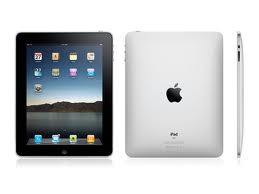
As previously noted by Chetan Sharma, the iPad and other tablets are making Netbooks irrelevant. In fact, tablets are starting to eat into the laptop category as well. As expected, the device has been a hit with many enterprises with mobile workers. Many enterprises are giving out iPads to their workforce instead of laptops or Netbooks. The analyst expects iPad to dominate the space in 2011 as competitors will find it hard to compete across all dimensions – price, performance, ecosystem, distribution, and brand power.

Data traffic more than doubles
Mobile data consumption continued to grow across all networks, increasing by 2-5 times on major US networks. While average data consumption in the US at the end of 2010 was 350 MB/month, many of the superphones introduced in the second half of 2010 are clocking 1-1.5GB/month on average. Thus, while data revenues for the year increased by 23 per cent, mobile data traffic grew by 132 per cent.

The significant rise in smartphone sales and usage in the US market – over 50 per cent of devices sold in the US in 2010 were smartphones, almost twice the global average – means that by the end of 2011, in the US, the smartphones will consume more data than data cards for the first time. Chetan Sharma also expects the US to become the number 1 nation in mobile data consumption this year, edging out Sweden.

The report notes also that the center of gravity of the mobile market has shifted back to the US, which is also the most dominant market in terms of revenue generation for the industry. While the US represents less than 6 per cent of the subscription base, it accounts for over 21 per cent of data revenues, with Verizon Wireless becoming the number one mobile data operator in 2010, edging past the decade-long leader, NTT DoCoMo. AT&T also went past China Mobile to gain its current number three ranking. By the end of 2013, the US market will account for 25 per cent of global mobile data services revenues.

Wake-up call
Chetan Sharma calls the Nokia-Microsoft announcement “a wake-up call to many in the industry who were in denial”, and praises Nokia for decisiveness, and for moving quickly under pressure. But it concludes that the impact on Nokia remains uncertain, saying: “While there were risks with Android, going with Win7 is not an assured path to resurrection either. It all comes down to execution…Nokia has significant talent and it’s a proud company, but jumping into the shark-infested cold waters miles away from the shore will require all the stamina, good weather, and skill it can muster to make landfall before thanksgiving”.

Looking ahead, the report notes that Android and iOS are completely dominating the developer and ecosystem mindshare, and says the race to become a viable third option is on, with operators keen to see another competitive force emerge in the market. Chetan Sharma will be discussing how the  industry is going to evolve in the next decade at its mobile thought leadership summit – Mobile Future Forward, in September.

I-send proximity is launching a series of workshop/expert forums to discuss the implementation and road mapping of apps into any type of business, visit http://www.i-send.co events page for more information.

5 steps to turning website traffic into customers

by Diane Shawe

What good is SEO and driving traffic to your website if nothing ever converts into a customer?

Would you rather have lots of visitors with no conversions or less visitors with higher conversions?

Register for How  Apps could benefit your existing business. Discussing the Pros & Cons in London, United Kingdom  on Eventbrite

You have to realize that everything starts with your website and then onto mobiles!. Your website needs to be able to funnel the traffic in a way that will create some sort of action which is often been taken on mobile smartphones. That means conversion aspects in place, up to date design and lots of branding.

Here are some ways to turn your website traffic into customers:

Create an Apps Downloadable link
Over 500,000 apps was created last year for mainly the iphone and blackberry.  this is set to quadruple in 2011/12.  Apps originally where designed primarily as games, but now businesses are using them to brand and keep people focused on their cool, quick and uncomplicated processes.

For instance trainlines, tesco, strarbucks, mac donalds to name but a few make the shopping experience on your mobile phone translucent.

You do not have to be a large business, an apps is surely the best way to establish your pressence on your consumers smartphone. You could recruit, update, take payment, socialise with your consumer in an intimate cyber way never experienced before.

Live Chat
The live chat features out there today are incredible allowing you to see where a visitor is going and where they came from. You can ping in and ask them a question or you could simply wait until someone needs a question answered and they ping you and believe it or not but you could also do this in real time from your smartphones or ipad/notepads when your online and roaming around.

Shopping Cart Development
Shopping cart abandonment is a big problem for some websites and if the development is not in place to analyse or at least try to save the sale there could be a great deal of revenue lost. Install efforts that can ask a customer a question if they decide to leave the shopping cart anywhere through the process or propose to them a discount or coupon in order to have them move forward with the transaction.

Lots of smaller transactions can now be processed over the clients mobile phone so exploring mobile phone payment solutions is also a useful way to go.

Easy Communication
Your website visitor should be able to communicate with someone at your business with little to no effort. They shouldn’t have to look for a contact form or seek out a phone number at any time because most people will not look for a way to communicate with you. Make it as easy as possible for them to be able to talk to you.  Have an apps located on your website, when they have downnloaded it free of charge, a click to call or email link can be very useful.

Clean Up Your Design
Sometimes all it takes is to really clean up your homepage design to entice people to want to work with you. You only have once chance to make a first impression and if your design and development is really off queue than people might just tune out right away.

Turning website traffic into customers is no easy step. Unless it’s an emergency, most people will focus on comparing online before they buy. some buy on price, others on how reliable the website looks, what people say about your services and how secure the payment process is.

Staying current and working with new technology is the best way forward. To find out more about how you could use an apps in your business, click here

Startbucks and McDonalds have launched contactless payment apps

A few days ago I wrote about the coming of the mobile phone credit card!   Well it’s here.  Many people across the industry have been excited about the prospects for mobile and contact-less payments for some time now – myself included.

To catch the public’s imagination, awareness and indeed a widespread frenzy similar to that experienced at the launch of iphone 4 or the ipad,  it has a lot of impact when well known merchants and locations that people see in the high street or mall and buy from every day start to offer and promote new ways of paying.

This is what has happened in the last few days.

First we had Starbucks. The Starbucks Card Mobile App is now available at its 6,800 U.S. company-operated Starbucks, and all U.S. Target stores. Extensive rollout here. Just scan your phone and go with your coffee – it’s promoted as the fastest way to pay. Excellent move and my guess is that in future assuming it goes well we’ll see apps for other smartphones to add to BlackBerry and iPhone.

Next comes McDonalds, who have announced that contact-less card payments will be offered in all of its 1,200 UK restaurants by this summer, working with Visa. Oh, and, wait for it – the company is emphasising speed  – McDonalds prefaces “contact-less” by labelling it “lightning fast”. McDonalds explains that “Contact-less payment saves time and effort, allowing customers to quickly pay for items which cost £15 or under without having to search around for cash.”

Whilst customer convenience is one of the key benefits, there are more benefits too. Reduced queues or lines for example. How many times have we walked up to a fast food or drink outlet, seen eight people waiting, and moved on? So moves like this reduce customer loss and increase customer throughput. They also mean less cash is handled by the merchants – with attendant risks of errors in counting, theft, mistakes in giving change and slower transaction speeds.

this is why several research organisations are forecasting a big future for mobile payments with nearly 1 in 2 of us having made a mobile payment of one sort or another by 2014. With iconic fast food and drink brands like Starbucks and McDonalds leading the way, we’re sure to see more launches in the future. After all, 2011 has only just begun….  But what about the small retailers, what can they do to get a slice of this market?  Well perhaps one of the first things to consider is getting your own business mobile apps in place and then look to belong to a partner offering a wider service and mobile access to consumers passing outside your shop front.

Launching marketing apps can backfire for retailers

by Diane Shawe

more than just a phone

For a growing number of UK shoppers, the difference between off-line and on-line shopping will be no line at all.

What does this mean for retailers and marketing companies?

With an inundation of new smart phone apps these hand-held shopping tools are redefining the shopping experience and blurring the distinction between the in-store experience and the virtual world of information now available in the palm of your hand.

Advances in location-based technology, price-comparison apps, bar-code scanning apps and social-networking tools have turned the mobile device into a real-time third channel of commerce, empowering consumers while challenging retailers to rethink the way they do business.

The appetite for new apps seems voracious. A recent survey by comparison-shopping site Price Grabber revealed that 36 percent of consumers plan to use their mobile phones for shopping-related activities this holiday season.

Around 4.2m of us in the UK are already using our mobiles to access the internet and browse retailer’s e Commerce sites

Recession-wary consumers are embracing new tools that can instantly call up product specs, reviews, price comparisons and input from Facebook friends and Twitter followers, all while they’re standing in the aisle.

David Dorf the Director of Technology Strategy states ” The United Nations estimates about 60 percent of the world’s population has access to a mobile communications device. More Americans have a mobile phone than own a credit card, and an increasing number of those are smart phones capable of Internet access. This proliferation is so unlike that of any other modern-day consumer technology that it is difficult to fully measure the impact on consumers and the industries that serve them.

With what is effectively a computer in the palm of their hands, consumers are finding new ways to do everything from banking to managing healthcare and household services. Shopping is a natural fit, and the retail industry has emerged as a front line for innovation in mobile applications. The mobile commerce revolution has changed almost every aspect of the retail business, from the way that we think about customer relationships to the way that we manage inventory and complete transactions”

So where are the retailers in all this? Playing catch-up with their customers as fast as possible in most cases, often looking for the quick wins.

Shopping is changing, and while the urge to please customers, capture sales and compete with competitors is very hard to resist, as the Interactive Media in Retail Group (IMRG) pointed out in a recent survey of 57 retailers, only four had fully mobile-optimised websites.

Chris Brassington is CEO ofStarfish360 stated in a recent article “It ’s true that many retailers are launching apps and/or a mobile site in an effort to capture the mobile customer, but the survey showed that a tactical approach to mobile marketing is likely to backfire, as 82 per cent of consumers said that if a retailer’s website performed badly, it would dissuade them from buying goods from that organisation, on the web or even in store.

And in today’s social media-driven society, a poor, fragmented customer experience could turn off not only the customer who experiences it, but many more too, if that customer chooses to share their experience on the web. So getting the customer experience wrong on mobile carries a big risk”

Many retailers, instead of providing a joined up mobile experience that will enhance customer service and reduce costs, have instead bolted on a piece of technology that does not provide an integrated shopping experience. These are often bespoke builds from marketing agencies, with one eye on what the competition is doing and increasing revenue for themselves, rather than a clear focus on how their clients customers’ behaviour is changing.

We have all used the phrase ‘blind leading the blind’. In this case we often see no integration, no alignment to the business’ challenges; no strategy in terms ownership; and no cyber psychology lead program to customers needs. So instead of mobile potentially being a progressive channel, it has, in most cases, provided only frustration for the shopper.

Mobile marketing roadmap

Diane Shawe the Project Director for i-send proximity is passionate about helping not only retailers benefit from proximity based mobile commerce and marketing, but how to address the retail sector’s operational challenges when implementing a mobile commerce strategy which can be measured in real time and assist a wide cross section of mobile phone users.

I-send proximity is leading the way towards helping different Boroughs to build a private Bluetooth wide area broadcasting network within a geographical area that will benefit consumers and visitors. By using this low energy, green, permission based and wireless controlled broadcasting network , retail town centre management teams and local authority regeneration departments can implement a cost effective and cost neutral solution. Click to read more

Because we believe that playing catch-up will be significantly more expensive than taking the strategic approach. Adopting the strategic approach will provide the blueprint and the roadmap to ensure the successful implementation of mobile marketing as a consumer channel, from both a business and a strategic viewpoint.

//

Tablets Force Developers to Refocus Strategies on Apps

I-send most recently came across several articles which have highlighted changes about to take place in the Apps market due to the growth of the tablet such as the Ipad and others fast in pursuits.

Appcelerator, maker of tools for building mobile, desktop and tablet applications, and IDC have announced results of a joint survey showing that the onslaught of tablet systems has caused some developers to refocus their development efforts.

Indeed, the joint Appcelerator-IDC survey of more than 2,200 developers around the world, indicated that tablet interest spikes across the board: Android Tablet interest jumped 12 points in three months to 74 of respondents saying they are “very interested” in developing for these devices. Interest in Blackberry Play book nearly doubled from 16 percent to 28 percent. iPad rose three points to 87 percent, while web-OS Tablet interest remained flat at 16 percent, the study showed.

With 85 new, primarily Android tablets announced at the Consumer Electronics Show (CES) in early January, developers are pushing these devices to the top of their priority list, Appcelerator officials said.

Overall, the survey reveals how new entrants to the tablet market are changing application development priorities and how businesses large and small are accelerating their efforts to build a mobile application strategy to deal with an explosion in apps, mobile devices, operating systems, and capabilities, Appcelerator officials said.

Moreover, Scott Schwarzhoff, vice president of marketing at Appcelerator, said, taken January 10-12, the Appcelerator-IDC Q1 2011 Mobile Developer Report shows that Google has nearly caught up to Apple in smart phone popularity and is closing the gap in tablets. Microsoft and RIM made solid gains through their product line update, while interest in Google TV and Apple TV dropped off.

And as these trends unfold, it is also becoming clear that the days of mobile app experimentation are over, Schwarzhoff said. This year, developers expect to triple their app development and the average developer is now building for four different devices, the survey showed. Meanwhile, a dramatic increase in the integration of geo-location, social, and cloud-connectivity services underscores new focus on sustaining user engagement, while increased plans to integrate advertising and in-app purchase business models points to a new focus on longer-term financial viability over free brand affinity apps.

With the Android Tablet market set to explode this year, 57 percent of developers said price will be the most important factor for success, followed by minimized fragmentation (49%) and then Android Honeycomb OS capabilities (33%).

“The tablets, unlike smart phones will have wildly different pricing,” Schwarzhoff told eWEEK. “Smartphones are about $199, but tablets will be different. There will be some sub-$100 tablets and developers see this as a big opportunity

Android phone interest, at 87 percent, rose 5 points to tie iPad and close to within 5 points of iPhone, which has 92 percent.  Yet Apple continues to be the number one priority with over 10 billion app sales to date.  Schwarzhoff said a common refrain from developers is: “after iPhone, do I go Android or iPad?”  For Apple, topping the iPad 2 wish list included: new camera capabilities, a USB connector, and an improved retina display, the survey showed.

As indicated, interest in building mobile apps for connected TVs decreased across the board as Google dialed down its launch plans, TV networks blocked access to their content and developers increasingly focused on tablets. Google TV interest slumped 11 points to 33 percent, while Apple iTV dropped 10 points to 30 percent.  Developer interest in other alternatives like Yahoo TV, Boxee, and Roku was also minimal, the survey showed.

Meanwhile, Windows Phone 7 rose 8 points to 36 percent of developers indicating they are ‘very interested’ due to a better-than-expected launch, Schwarzhoff said. Respondents said that Windows Phone’s improved UI was a critical factor for the increase.

“No one is ruling out Microsoft, at least in the enterprise,” Schwarzhoff said. He said Microsoft’s strategy of more stringent control over OEM implementations will limit fragmentation, which could become a concern for Android. Also, Microsoft’s tie-in to business apps is a plus for its platform, he said.

“As apps are becoming more social, more local and more cloud connected, it’s a long way to go [for Microsoft],” Schwarzhoff said. “Are they going to blow it open this year? It’s daunting, but they will improve it. They will be maniacally focused on iterative improvement. With Windows Phone 7 they made it through the toughest launch in their history.”

Regarding app stores, Schwarzhoff said Amazon’s newly announced Android Appstore shows early promise. While 82 percent of developers said they are interested in distributing their apps through the Android Market, 37 percent said they are interested in the Amazon Appstore, 13 percent for Verizon VCAST, and 9 percent for GetJar. Interestingly, developers are about equally as interested in the Mac App Store, at 39 percent, as they are in Amazon’s new Android Appstore.

Appcelerator said the proliferation of apps, devices, platforms, and capabilities has triggered a race among businesses large and small to define a sustainable mobile strategy. This quarter, Appcelerator and IDC introduce a new “Mobile Maturity Model” to identify three phases of mobility adoption shaping up in the enterprise and consumer markets: ‘exploration’, ‘acceleration’, and ‘innovation’. Last year, most respondents (43 percent) said they were in the ‘exploring’ phase of their mobile strategy. A simple app or two – typically on iPhone – and a focus on free or $0.99 branded apps was standard practice. This year, 55 percent of respondents said they are now shifting into the ‘acceleration’ phase.  This phase is defined by the following trends and mobile strategies.

For instance, on average, each respondent said they plan to develop 6.5 apps this year, up 183 percent over last year. And businesses are increasingly taking a multi-platform approach. On average, respondents said they plan to deploy apps on at least four different devices — such as iPhone, iPad, Android Phone, Android Tablet this year, up two-fold over 2010.

Moreover, 87 percent of developers said their apps will connect to the cloud this year, up from 64 percent last year. Interest in commerce apps is also on the rise, with PayPal beating Apple and Google as the number one preferred method for payments. And business models are evolving to stay in lockstep with these more engaging mobile app experiences. Developers are shifting away from free brand affinity apps and becoming less reliant on $0.99 app sales.  Increasingly, the focus is on user engagement models such as in-app purchasing and advertising, with mobile commerce on the horizon. And 81 percent of respondents said they “insource” their development, with the majority saying they have an integrated in-house web and mobile team.

For a complete summary of the findings, visit: http://bit.ly/appcelerator_idc_q1_2011_mobile_developer_report.

At this point it is becoming even more important for town centres and Cities to explore how they can build a private WAN on the platform for Bluetooth Proximity Broadcasting.  This will provide a controlled and direct way to communicate with consumers on a wide range of topics and encourage them to look for specific offers once they have downloaded the cities own integrated apps. Just take a look at what it did for one town centre.

Source


Mobile Phones soon to become credit cards!

Not so very long ago, you may recall, mobile phones were used exclusively for, well, ‘phoning.  Then the launch of texting on the mobile phone became a phenomena, you could text someone you didn’t really want to speak to.. and then to compete with the camera industry the mobile became our camera and photo album rolled into one. Then it became our music player. And our games device.  And our personal organiser. And – the crème de la crème – our means of accessing the Internet, allowing us to send emails, watch TV, tweet, update face book and buy items from our phones.

Oh, and by the way it’s going to be a credit card.

Well, it’s already a means of accessing your bank balance, isn’t it? So why not take things that one step further: forget that little plastic oblong tucked inside your wallet, simply swipe your handset over a bar code reader, the money comes out of your account and the new sofa is yours.

We have just seen Tesco’s advertising the iphone reading bar codes and dropping the item into your smart phone shopping basket!

I know that m-commerce is more simply brimming over with developments for the future but the simple question of whether or not mobiles can replace credit cards is an interesting proposition especially when the theft of mobile phones is on the increase. Because the mobile has become much more than the a simple talk and text communication tool therein lies the problem.
As the handset becomes the point of access to, and indeed default storage locker for, the myriad minutiae of our existence, the potential loss of that handset becomes a far more traumatising then moving home! I think the stress list needs to be rearranged to read a) loss of mobile phone, b) moving c) getting divorced etc.

Speaking personally, I love this new technology, I love the fact that you can do so much from a little handset which simplifies one life and even though the concept sounds great! (less for me to carry in my handbag) how is this method of payment from your mobile phone going to be guaranteed secure?

Because phones are relatively cheap to come by now (especially if you take out a contract) most teenagers are carrying the latest models.  I don’t want to be negative, but I don’t fancy getting mugged for my phone because they can swipe it for a packet of cigarettes.

This is part of the wider problem that we face: managing the transition to a mobile-centric world. It ain’t easy, it won’t be easy, but we have to do it, because – whether we like it or not – that transition is happening. I can’t pretend to have the solution to the credit card conundrum, but I suspect that is a conundrum that will be taxing a lot more of us in the medium term as new organisation raise up to help solve and charge us for the privilege.

With this in mind, more and more retailers need to look at how they can communicate with smart phones.

Another step forward for Bluetooth retailing

Cellebrite, which specializes in point-of-sale (POS) mobile content transfer and back up, has added to its Universal Memory Exchanger (UME) line-up with the launch of the Cellebrite Touch.

It’s a touch screen tablet device for mobile phone operators, retailers and service centres, which facilitates the instant transfer of a customer’s mobile content to a new phone, with the added option of increasing sales value with the installation of additional mobile apps or content at the point of purchase. The device has already been implemented at multiple Tier 1 operators in Western Europe.

The device sports a 7-inch touch screen for ease of operation, and is equipped with wi-fi and Bluetooth. It enables the phone-to-phone-transfer of all content, including contacts, messages, photos, videos and audio files, and supports more than 3,000 phone makes and models. Content can be backed up or restored to a USB device, SD card, remote server or third party application. It is also capable of firmware flashing, which can fix many faults on site, eliminating the need to return the handset to the vendor or network operator. Cellebrite says its own experience has shown that introducing on-site flashing can reduce returns to vendors by as much as 30 per cent.

Want to find out more about the pro’s and cons of bluetooth v SMS

450,000 Mobile Apps Published in 2010

Around 450,000 smart-phone apps were published to the main app stores worldwide in 2010, according to new research from Research2guidance.

Click to Download i-send proximity apps

The company notes that while the IT service market is normally well covered by the analyst community, the smart-phone app development market is not yet analysed in detail. With this in mind, the company is conducting a global app development market study to find answers to some questions around the market.

The study aims to establish the size of the market, and the main drivers and barriers. It will also look at how you become a successful player in this market, and at how app development companies are organized, and the services they offer. It will also examine whether major IT firms are participating in the market, and if not, whether they are planning to.

The findings of the research will be used to produce a business guide to app development, which will be available from March 2011. Everyone who takes part in the study will receive a copy of the guide for free. You can access the survey here.

Bluetooth helps Hillstreet Shopping Centre snap up award

AN INNOVATIVE Bluetooth marketing system has helped the Hillstreet Shopping Centre in Middlesbrough win national recognition.

June 18 2010 Evening Gazette

Hillstreet Shopping Centre

The centre won awards in the digital marketing and community relations categories of the British Council of Shopping Centres’ (BCSC) annual Purple Apple Marketing Awards.

Competition judges praised Hillstreet for engaging with new marketing channels and achieving return on investment for retailers and partners.

The Tees side firm said its Bluetooth system was a key part of its overall marketing strategy. The technology allows retailers to learn more about the buying habits of their customers and produce targeted promotions which help to boost sales.

Five transmitters were installed in the mall which sent promotional information to more than one million bluetooth-enabled mobile devices since the scheme began in 2008. Around 100,000 downloads have been made – a conversion rate of around one in ten.

Jon Walton, Hillstreet marketing consultant, said: “Retailers see it as a value-added tool for which they don’t have to pay. A conversion rate of one in ten is a great result for any advertising campaign.”

Hillstreet plans to increase the number of transmitters to 12 and trial the technology in individual retail units.

With over 60 million Smartphones and PDA users in the UK alone, 60% of them continually Bluetooth enabled, Bluetooth proximity marketing allows ‘on the spot’ communication without the delay and expense of printing or using expensive broadcasting services.

Diane the Project Director of i-send proximity, states “It is clear that retailers are looking for a new and direct way to connect with passing consumers.  Smartphones are on the rise and with the introduction of the  i-pad, using a low energy, green multi media broadcasting transmitter to connect in real time at low costs have to be of advantage to both the retailer, consumer and the shopping area’

For more information on how to install a blue tooth broadcasting network visit http://www.i-send.co and request more information.