Tag Archives: online learning

Is Mobile Technology re-wiring the brains of our Children?

Overload or Growth?

Overload or Growth?

Or is there hope in a BRAIN project funded by the President of the USA?

Well you do hear people say that mobile technology and smart tech is rewiring their brains brain, making a new breed of digital natives and even brain washing our children. The facts are that they will spend 11.5 hours a day using smart technology; whether that’s computers, tablets, television, mobile phones, or video games (and in my experience usually more than one at a time). That is a big chunk of their 15 or 16 waking hours. The media tend to exploit these facts and combine them with pseudo-science with outlandish claims of ‘brain rewiring’ and potential harm. I have heard this uttered in alarm, (usually by those concerned that children’s ability to learn and pay attention) and stated as a ‘good thing’ by others, convinced that a generation of digital natives has developed incredible powers of absorbing and applying information.

Indeed 4 years ago President Obama officially announced in 2013 that 100 million dollars in funding for arguably the most ambitious neuroscience initiative ever proposed. The project has the catchy name of Brain Research through Advancing Innovative Neuro-technologies, or BRAIN, and aims to reconstruct the activity of every single neuron as they fire simultaneously in different brain circuits, or perhaps even whole brains. If you have seen Iron Man 3 there is marvellous moment when the evil Aldrich Killian (played by Guy Pearce) shows the beautiful Gwyneth Paltrow inside his brain in real time; a must see moment. The next great project, as Obama called it, could help neuroscientists understand the origins of cognition, perception, and other brain activities, which may lead to new, more effective treatments for conditions like autism or mood disorders and could help veterans suffering from brain injuries. It also might just help people realise why they need to choose a great course and real focus.
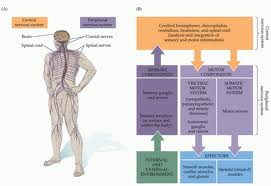
neuroscience and nerve system neuroscience brainSo what are facts about neuroscience and mobile smart technology? Can we learn effectively using smart devices? Well, when our minds are engaged in a simple or complex task, the information relevant to that task is held in our STM or short-term memory. According to the late but great psychologist, George Miller, this mental holding space can only contain four to seven pieces of information at a time. To be retained it needs to be transferred to the LTM (long term memory). We can only move information from short-term to long-term memory using our attention; we have to be paying attention to, and thinking about, a fact or a concept in order for it to be encoded in memory.

To encode properly you need to eliminate distractions, which are often caused by multitasking events. Young people report frequent media multitasking (texting, emailing, surfing the web, Twitter and Facebook) while also doing homework. Their belief is they can do it effectively, but research shows otherwise. In fact, research demonstrates that individuals who multitask the most are actually the worst at it. Whether we’re learning with a tablet, smart device or a book, it’s best to give it our best attention.

The rapid evolution of mobile technology has placed quite a burden on our concentration. The day is constantly being challenged by external sources. Even the most pressing of matters can be interrupted at any moment by a familiar buzzing in the pocket. This gives a friendly nudge to pay attention that the brain responds to and many find virtually impossible to resist; alarmingly even while driving. These all too frequent interruptions, coupled with growing expectations for immediate responses (emails responded to at 2am), will challenge our cognitive control system at its very core.

The cognitive control system is our ability to focus on accomplishing a task in the context of competing demands. You might want to look at a course that explains this in more depth. This special ability is what has allowed humans to achieve remarkable achievements, from developing languages and building complex societies.

It doesn’t matter that we think children are growing up digital natives and somehow addicted to technology. It simply doesn’t change how we come to understand new information. Basic understanding happens when we process new information in terms of its meaning, rather than its surface features. Understanding happens when we connect new information to what we know already.

It seems that the competing noise and multitasking distractions, will have a more significant negative impact for those with undeveloped or impaired focus and cognitive control. Those that easily lose focus such as children and us older adults, or in the presence of neurological or psychiatric conditions like ADHD or Alzheimer’s disease. There is no doubt that we have to be careful about the influence of unending data streams of interference on our minds. We need to make more informed decisions about how best to interact with the technologies around learners and how we use the technology positively every day. Perhaps the BRAIN project will guide us on new ways being effective learners.

The lesson seems to be that when we are engaged in something that requires high quality attention (like one of our excellent express courses in critical thinking we should conduct ourselves in a manner that is most appropriate for how our brains function: in the absolute focus mode.
So it seems that despite all the real concerns, technology is not rewiring young people’s brains or brain washing them. Indeed mobile smart technology must and can be harnessed to improve our minds. This will come as a relief to some and a disappointment to others. This new brain research will shed light on our understanding, our attention and focus systems and better memory that can now be applied to a new generation of humans, not so different from the ones who came before.

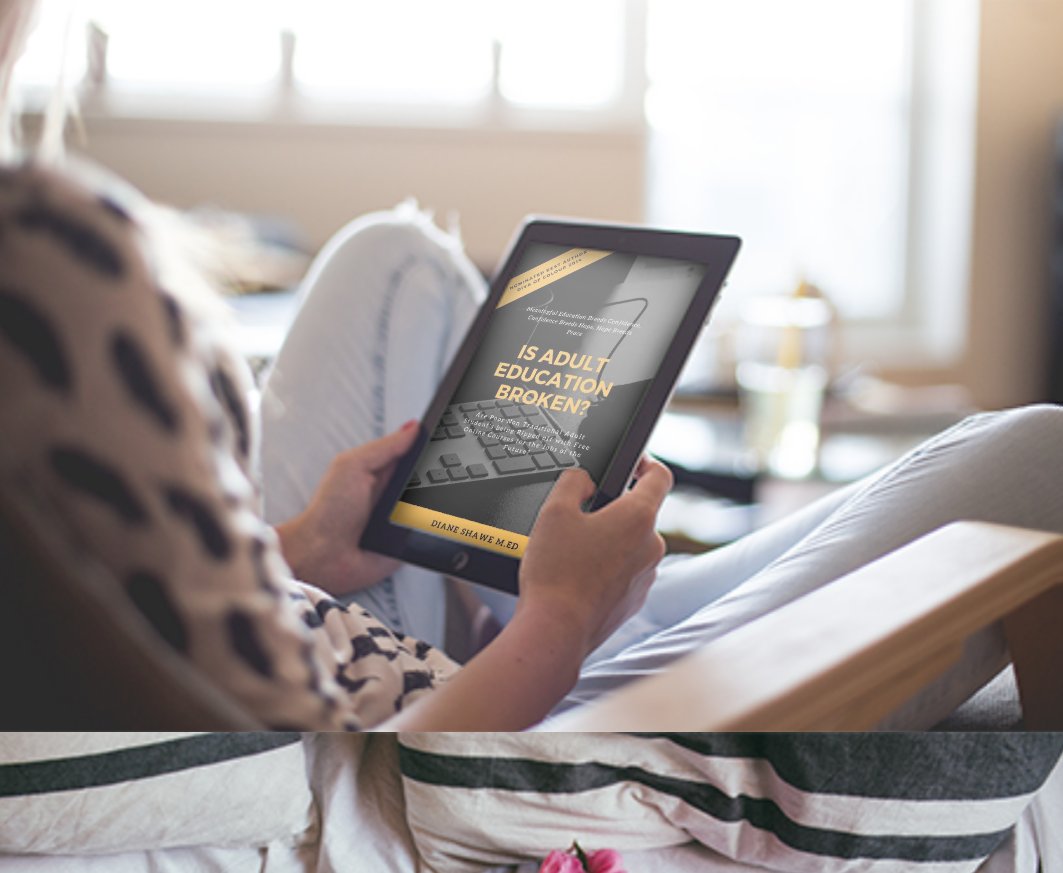
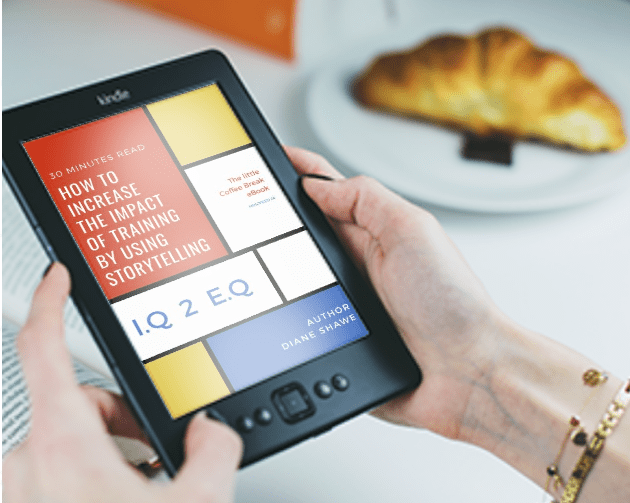
Mindfeed ebooks by Diane Shawe

Get a copy of Diane Shawe book from Amazon


 Shawe’s eBooks are available on Amazon right now at: https://www.amazon.com/Diane-Shawe/e/B0052WG8V6

About the Author

Diane Shawe is an author, speaker, trainer, mentor, consultant and entrepreneur with more than 15 years of experience. She has personally trained over 2800 people around the world in a variety of fields and has published a number of works. She has contributed to over 100 Kiva Entrepreneur’s around the world.

She was also one of the producers of a Day time Ladies Talk Show in 2015 and Host of one of the UK’s best loved Annual Hair Extensions Awards.

Diane also enjoys oil painting, sailing and clay pigeon shooting. She focuses on topics that she is passionate about in her writing and has attracted over 36,000 followers on her popular blog.

Media Contact
Company Name: AVPT Short Courses & Hair Extension Training Academy
Contact Person: Diane Shawe MEd
Email: Send Email
Phone: +44 208 1333120
City: London
Country: United Kingdom
Website: http://www.academyexpresscourses.com

Keep Taking the Tablets

Keep taking the tablets

Keep taking the tablets

-More Than 1 Billion Smart Devices Sold Last Year Changes Everything

article by: Tim T Dingle BSc (Hons) MIBiol PGCE MBA  CDO at AVPTGLOBAL

I can remember clearly (it was after all, only 3 years ago on April 3rd 2010) when Steve Jobs unveiled a unique consumer tablet with an unusual name. It had been one of his obsessions for years, even before the iPhone. Many people thought Apple would be better served by coming out with a netbook: you remember netbooks, don’t you?

According to the International Data Corporation[1], worldwide shipments of smart connected devices grew an amazing 29.1% year over year in 2012, crossing 1 billion units sold with a value of $576.9 billion. The market expansion was largely driven by 78.4% year-over-year growth in tablet shipments, which surpassed 128 million in 2012. Quite astonishing and I hope everyone had a great Christmas opening the tablets!

We all know that smart devices can deliver amazing functionality; from constant Internet and social media connection to brilliantly helpful apps. They are genuinely changing the way we operate as a society. The change is happening so rapidly and almost seamlessly that most of us probably don’t realise how much we use and rely on our smartphones and tablets.  How did the business world even operate without employees having constant access to their phones, email and the Internet? How did busy parents keep track of their schedules without a calendar that never leaves their side and actually reminds them of events?

apps galore!

apps galore!

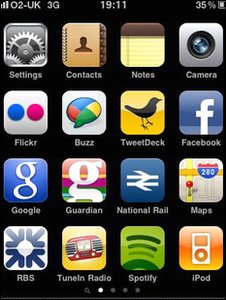
If we pause to consider that now we can use apps to find the best meal when on the road, the nearest petrol station or to locate possible holdups on route. We don’t even have to watch TV or connect to an online news site to get instant national and local news. We can scan rail and plane tickets with our smart phones and check in with no paper for international flights. While smart devices are making everyday activities easier for consumers, some businesses are facing challenges to compete effectively. The challenge is being met by forward thinking companies like AVPT Global[2] who seek to use tablets and smart phone technology to be at the heart of online learning and push forward the rise of mLearning.

The iPad and other smart devices (including my brilliant Samsung Note 10.1) have had huge initial impact on access to information, business sales and social interaction. In fact the pioneering of this new category has in some ways been even more significant than the iPod and even the iPhone, because it has disrupted so many different device manufacturers. It has created a market opportunity for smart device manufacturers and created a challenge to other PC makers and even potentially influencing how we may watch television in the future. It has also extended digital content opportunities to make books and video on-the-go a more practical experience, ending the back breaking march of the child with books to school perhaps?

The iPad was the first device to successfully bridge the gap between the PC and smartphone for consumers. Since it landed in the first consumer’s hands more than 55 million iPads have been sold worldwide, used for watching (and streaming) movies, reading books, magazines and newspapers, Web surfing and playing games. Tablets are becoming familiar common coffee-table fixtures in households around the country. They’re also being stowed in the briefcases and bags of travellers, whether they’re going by car or by plane. And they’re increasingly carried by teachers, doctors, lawyers, real estate agents — a wide range of professionals who find they can do much of their work with a tablet. Put simply, the tablet has become the go-to PC substitute for a variety of activities.

A smarter way to study with www.avptglobal.com

A smarter way to study with http://www.avptglobal.com

People now leave their laptops behind more often, taking advantage of the tablet’s lighter weight, ubiquitous wifi (and 3G /4G) connectivity, its longer battery life and catalogue of useful applications. We are seeing some of the tasks traditionally performed on PCs and laptops, now being performed on the tablet. In fact, all five of the top activities (email, Web surfing, game-playing, social networking and online shopping) shifted towards the tablet in late 2011.

Many of these are activities we do on our smart phones, of course, but doing them on the tablet is not only more pleasurable visually, it leads to entirely new behaviours. Watching video (be it movies, TV or YouTube) is definitely one of the preferred uses of tablet owners who also have smartphones, as is Web surfing and email, according to new research from Nielsen. In a great piece of research called, “Tablets are for meals. Smartphones are for snacks,” Nielsen[3] shows how 10 per cent or less of smartphone owners opt to do those activities on their phones. Social networking (both Facebook and Twitter) is also better done on a tablet than smartphone, as is writing emails. Aside from making phone calls, the only activity right now where the smartphone beats the tablet is instant messaging. But even 18 per cent said they’re doing that on their tablets. It appears that mobile phones tend to be the gateway drug in emerging markets where consumers typically move on to a tablet.
The IDC report that grabbed the headlines last week (1.2 billion smart devices), goes on to say that it expects global smart connected device unit shipments to surpass 2.2 billion units by 2017. Consumers and business buyers are now starting to see smartphones, tablets, and PCs as a single continuum of connected devices separated primarily by screen size. Each of these devices is primarily used for data applications and different individuals choose different sets of screen sizes in order to fit their unique needs. These kinds of developments are creating exciting new opportunities that will continue to drive the smart connected devices market forward in a positive way. The first step on the long road to mLearning is just beginning and the potential for individuals and companies to grasp the opportunity is seen by only a few.

Taking the Tablets has never been so exciting.

AVPT-Logo-ALL-INFO


[2] The Academy of Vocational and Professional Training www.avptglobal.com

[3] Dan Lee, Director of Product, Digital Nielsen July 18th 2012

Turning 50 isn’t the end of a business career – new wave of olderpreneurs

Get qualified in days not years

Get qualified in days not years

article by Diane Shawe M.Ed

Turning 50 isn’t the end of a business career – it’s the beginning. And an ever-growing wave of ‘olderpreneurs’, starting a business have 70% chance of surviving their first five years compared with only a 28% survival rate for those younger than them.

Nearly half the self-employment population is over 50, and one in six new businesses started in the UK are set up by post-half-centurions.

So what’s fuelling the entrepreneurial impetus of the ‘silver startup’, and why are they doing so well?

Necessity

The over-50s age group has been particularly hard-hit by the recession. Last year, the Office of National Statistics (ONS) revealed 28% of those aged between 50 and state pension age were out of work – compared with only 20% of those aged under 50.

Why? One of the biggest factors is the rife ageism that permeates practically every industry in the UK, that anyone over 50 who’s been forced to look for employment will testify to with a weary nod. The ONS estimates those who lose their job aged 50 or over have only a 10% chance of being re-employed.

Deciding to use their money from redundancies to fund ta company, over the course of two years the payout had trickled in its entirety into the business. But it was worth the investment – and they often don’t have to rely on the ineffective banks at the moment.

Become a Virtual Teacher Facilitator

Become a Virtual Teacher Facilitator

New challenge

At a fundamental level, sometimes people just want to do something different in their later years.

It’s interesting that recent YouGov and Standard Life research found the average age at which people feel totally confident in their working skills is 37, while the more elusive sense of fulfilment peaks at 50. Perhaps this climax of achievement and sense of ability leads to a need for a new direction, a new challenge, once a person passes the half-century mark.

If  we take a look at the Government statistics below it will give us an overview  Source Office of National Statistics

Summary of labour market statistics published on 23 January 2013

Between June to August 2012 and September to November 2012:

  • the number of people in full-time employment increased by 113,000,
  • the number of people in part-time employment fell by 23,000,
  • the number of unemployed people fell by 37,000, and
  • the number of economically inactive people, aged from 16 to 64, fell by 13,000.

Between September to November 2007 and September to November 2012:

  • the number of people in full-time employment fell by 341,000,
  • the number of people in part-time employment increased by 660,000,
  • the number of unemployed people increased by 854,000, and
  • the number of economically inactive people, aged from 16 to 64, fell by 75,000.

Chart 1: Changes in number of people in the labour market between September to November 2007 and September to November 2012, seasonally adjusted

Changes over 5 years

Source: Labour Force Survey – Office for National Statistics

The employment rate for those aged from 16 to 64 for September to November 2012 was 71.4%. This was up 0.1 percentage point on June to August 2012 and up 1.1 on a year earlier, but it was lower than the pre-recession peak of 73.0% recorded for March to May 2008. The number of people in full-time employment aged 16 and over increased by 113,000 between June to August and September to November 2012 to reach 21.57 million but the number of people in part-time employment fell by 23,000 to reach 8.11 million. Compared with a year earlier:

  • the number of men in full-time employment increased by 237,000,
  • the number of men in part-time employment increased by 95,000,
  • the number of women in full-time employment increased by 77,000,
  • the number of women in part-time employment increased by 144,000, and
  • the total number of people in employment increased by 552,000, the largest annual increase since 1989.

Chart 2: Changes in number of people in employment between September to November 2011 and September to November 2012, seasonally adjusted

Annual employment changes

Source: Labour Force Survey – Office for National Statistics

The unemployment rate for September to November 2012 was 7.7% of the economically active population, down 0.1 on June to August 2012 and down 0.7 on a year earlier. The number of unemployed men aged 16 and over fell by 37,000 between June to August and September to November 2012 to reach 1.41 million, but the number of unemployed women was unchanged at 1.08 million. The number of women unemployed for up to six months increased by 26,000 to reach 571,000. This may reflect changes to the benefits system resulting in more single mothers starting to look for work (see Claimant Count section of this Bulletin for further details).

The economic inactivity rate for those aged from 16 to 64 for September to November 2012 was 22.5%, unchanged on June to August 2012 but down 0.7 on a year earlier. The number of economically inactive people aged from 16 to 64 fell by 13,000 between June to August and September to November 2012 to reach 9.03 million.

The number of people claiming Jobseeker’s Allowance fell by 12,100 between November and December 2012 to reach 1.56 million.

Between July to September 2012 and October to December 2012, the number of vacancies increased by 10,000 to reach 494,000. This is the highest number of vacancies since October to December 2008, but it is 200,000 lower than the pre-recession peak of 694,000 recorded for January to March 2008.

Between September to November 2011 and September to November 2012, total pay for employees in Great Britain rose by 1.5%. This annual growth rate for earnings was lower than the increase of 2.7% in the Consumer Prices Index between November 2011 and November 2012.
Source Office of National Statistics

Breaking News….. Standby for the roll out of Master Practitioner VTF

master vtf by AVPT Global

AVPT Global about to launch Master VTF practitioner Course

The ultimate course that over an intense and amazing week will develop all the skills necessary to work around the world training new Virtual Tutor Facilitator in their new career. Course topics include: Advanced Facilitation, Body Language, Teaching & Learning Skills, Mediation, Communication, Presentation Excellence and Assessment and online LMS systems.

It is brand new and uses all the latest techniques, theory and experience to deliver simply the best training course (train the trainer) out there. Graduates will get to spend a full day shadowing the professionals and learning the insight track for delivering excellence in learning.

The course will allow the trainers to deliver the workshops anywhere in the world having gained their IAO  global accredited certificate. The demand for such a course has been intense and we are delight to be taking enquiries and reservations for the first course dates. Become the best in the field, be the person you want to be and never except anything less than excellence.

To receive the latest updates for the launch of the  Master Practitioner VTF Course click here

£8000 worth of Scholarship to be given to four students in 45minutes.

Image

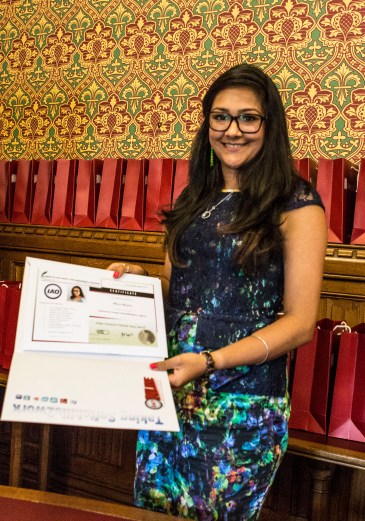
Maya receiving her certificate at the house of Lords

E-Learning hub, the Academy of Vocational and Professional Training, targets scholars by launching a ‘Dragon’s Den’ style initiative

Launching Friday 12th October 2012 on stand 315 at the Youth Enterprise Live Initiative at Earls Court Exhibition Centre, young people will be encouraged to pitch the reasons they deserve a scholarship to a group of experts, Dragon’s Den style! Potential scholars will be battling it out for the chance to acquire a scholarship worth over £2,000 from The Academy of Vocational and Professional Training (AVPT). Four of the candidates will be chosen on the day, to mark the launch of the Scholarship Den with Channel 4 recording the day’s events.

AVPT supports young adults by offering them affordable and quick globally accredited soft skills qualifications. Diane Shawe, Founder and CEO says: “Our courses range from £250 to £4,500, which can be done either online or at one of our fast track training workshops. However, we respect that some students aren’t in the financial position to pay this money, and that’s why we have created the Scholarship Den.”

AVPT has found that many graduates are struggling to take their first, all important, steps on the career ladder as potential employers worry that graduates do not have enough experience. Tim Dingle, Chief Development Officer, explains how AVPT can help graduates overcome this issue, “Many students and young people are stuck in a catch 22. Employers aren’t willing to take the risk on inexperienced individuals and graduates aren’t able to gain experience. AVPT specialise in courses that are prepared at NVQ level 4. The courses are packaged in a chunk-able format so that blended learning can take place whilst the student is on the move and help young people into work quickly.”

APVT Global launches Scholarship Den

The ‘Chunk-able format’ in which the courses are designed in, allows students to work on the move using their tablet, smartphone or notebook, rather than committing to a 2000-word essay and most courses can even be completed in just one month!

On September 21st 2012, AVPT’s first intake of students received their awards at the House of Lords with certificated globally accredited by the International Accreditation Organisation (IAO). Lord Ahmed congratulated the students and recognised that e-learning has a place in helping all types of people continue in life-long blended learning.

As the m-learning hub continues to grow, AVPT is now working with apprenticeship schemes to provide apprentices with the key skills they require. With this new initiative and the Scholarship Den’s launch, looking forward it is set to be a very busy and successful year!

To find out more information about the Academy of Vocational and Professional Training please visit http://www.avptglobal.com or call 0203 551 2621.

Online Learning is where Online Music was five years ago

Article by Andrew Maynard
2020Science

Posted: Jul 6, 2012

YouTube is gearing up to transform the way we learn…We are at the beginning of an exciting revolution in online educational content.

That’s the message that came across loud and clear at this morning’s VidCon breakout panel on education. In an overflowing room of well over two hundred conference goers, head of YouTube Education Angela Lin led a panel of five leading video makers in a lively discussion, that gave a compelling glimpse of the future of online education.  And it was a future that didn’t feature too many conventional lessons or institutionalized videos!

As the panel included John and Hank Green (SciShow, CrashCourse and a gazillion other things) I was expecting a room packed to the brim with their incredibly engaged teen fans – which it was.  An odd audience you might think for a panel on education.  But this was a serious, intelligent and engaged crowd, eager to listen to the panel, ask questions and provide their own insight on online learning.

Joining the Green brothers were physics blogger Henry Reich (minutephysicsminutephysics), science YouTuber Brady Haran (The Periodic Table of Videos), Mike Rugnetta, host of the PBS Idea Channel and Vi Hart of Mathemusician and the Khan Academy.

What was notable was that these panelists are all a) successful online educators (extremely so in some cases), b) not formally trained in teaching (to my knowledge) and c) not representing mainstream educational institutions (not counting PBS).  This is important, because there was no doubt here that the excitement and impact surrounding online education is occurring outside conventional educational circles – and in many cases leaving them standing.  John Green talked about this emerging online education community as being “disruptive,” while brother Hank talked about a “new kind of learning.”

And everyone the panel agreed that education content on YouTube is where online music was five or six years ago, and on the cusp of something really big.  But a big that might not necessarily include conventional educational institutions unless they get their act together!

On this point Henry Reich made the distinction between learning and teaching.  Formal educators (as well as “informal educators” in museums and on educational TV programs) teach to a curriculum or a plan, with competencies, learning objectives and evaluation being the name of the game. But at the cutting edge of community online education, content developers are using their passion and interests to facilitate user-driven learning.  And as John Green pointed out – endorsed by the packed room – people want to learn!

Bridging this gap between learning and teaching is perhaps going to be one of the biggest challenges – and opportunities – of online education over the next few years.  Without question, there is a global hunger for learning, and some very talented individuals who are beginning to satisfy this hunger using an increasing array of online tools.  This will undoubtedly help people develop and grow as individuals – but how do you also give them the tools to “do stuff” as opposed to simply enriching their understanding and satisfying their curiosity?

As new tools come online, educational institutions are jumping on the band-wagon to provide instructional content.  Initiatives like Coursera and edX are bringing college course material to a far wide audience using online video.  But even these innovations are in danger of looking turgid and outmoded in comparison to the new breed of community educators.

There are some moves to close this gap.  Brady’s Periodic Table videos for instance are used by teachers to kick-start classes and inspire kids.  And the AVPT Ltd is leading the field in terms of combining user-driven learning with practical virtual facilitating.  But if teaching institutions want to keep up with the revolution in online learning, it seems pretty clear that they are going to have to radically rethink their ideas of web-based content.  They are going to have to start partnering with and learning from the masters of online community education.  And they are going to have to let go a bit and embrace the mess and madness of online educational content as they respond to a growing community’s desire to learn.

What seems clear after this panel is that we are at the beginning of an exciting revolution in online educational content.  What is not clear is whether the teaching institutions can get their act together fast enough not to be sidelined in the rush toward online learning.


Andrew Maynard is Director of the Risk Science Center at the University of Michigan School of Public Health

Source

Taking SoftSkill2Work

At Academy of Vocational and Professional Training, we care about your success as an individual or organisation. You may have a new job in mind or you may be looking to start a new business, what most of us don’t have is the luxury of time and money!  Whatever your reason you will find that our courses are designed to help you train on the go.

We have developed our e-Training products to serve as a complete training solution to deliver high quality blended learning. We’ve already completed the preparation work for you and if you want to train personally, or are currently training, or planning on developing an organisational training plan, we have all the materials you need.

Diane Shawe M.Ed  CEO  http://www.expresstrainingcourses.co.uk

Education and the mLearning generation by Diane Shawe

Education from the Cutting Edge

Article by Diane Shawe

Things are happening very quickly out there. It is changing. Harvard, MIT, Cambridge and Oxford are doing it. Companies, both big and small, are doing it. Solopreneurs are doing it. And some teachers have been doing it … they just haven’t been making any money at it. It’s a trend that many in education saw coming 10 years ago. The “It” is on-line education — and it’s gone from being an interesting sideline to a major social and economic trend.

This trend’s going to be around a little longer than some online trends. Because there are some very solid factors underlying the shift to online education … and they’re only getting stronger. Online education is at a tipping point. And that’s brilliant news if you’re into education and have a mobile device and go to www.shortcourses.expert . Let’s talk about why.

Online education is now a massive juggernaut; more than 8.1 million current college students took a Web-based course beginning September 2011. According to recent research in the US (published in the Boston Globe), nearly a third of students have taken one during their college careers.

You see the traditional model of get a degree and land a great job just isn’t working any more, at least in most professions. I’m still a huge fan of universities, but we have to face the fact that they’re quickly becoming a pricy luxury in the UK and other developing nations. Indeed even with a good degree many students are taking ‘McJobs’ to earn money and are frustrated by the lack of real opportunities. I know many that are angry with unpaid internships.

Students are looking for other ways to learn what they need to learn — without the six-figure price tag. You see normal people live online now! Is your father on Facebook? Mine is. And the weirdest thing about it is … it’s nice. It lets me keep up with what he’s doing, and share the exploits of my charming hooligan daughter.

I first got online in 1991. I remember how long it took me to ‘get online’….those strange handshake noises….and the joy of slow connections.  But the internet doesn’t belong to early adopters like me anymore. The internet, assisted by the smart phone and tablet is woven into our lives like it never has been. My father’s iPad is the new Silver Surfer must have accessory.

That means that normal people, not just web junkies, are willing to consider online activities that never would have occurred to them before. It means they look at online education and think, “Wow, I could do that.”

The world is changing faster than traditional education can evolve. As a former Headteacher, I know that the revolution is here. The (dial m for mobile) mLearning generation are about to inherit the earth.

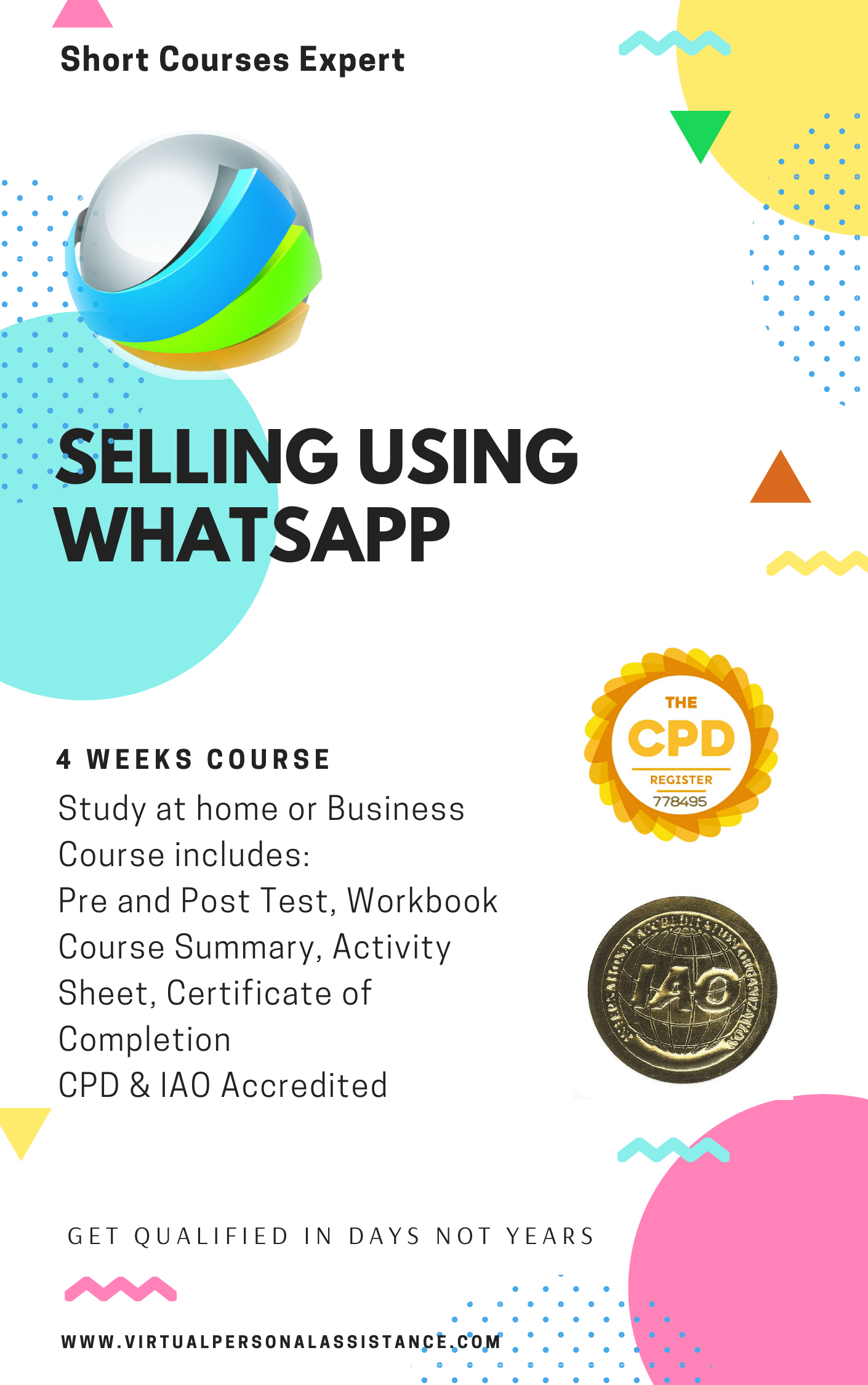
Almost every aspect of our lives is changing. Making money, learning, socialising, family life and education. Certainly for education, we want it quicker (try just 4 weeks at The Academy of Vocational & Professional Training), we want it better and we want it to have some global ‘value’. All that change is coming faster than most people can handle. In the global economy with huge aspirations, we all need help with some aspect of the change that’s swirling around us.

Which means if you can master some element of the changing world, and stay on top of it, you can help customers do the same. Great businesses are built by solving tough problems. And mastering change is one of the toughest problems we all face … every day, and in every aspect of our lives.

Traditional education has a tough time with this. If you want to study ancient Greek, you should be set. (And more power to you, because I think that is cool.) But if you want to study technology, nutrition and fitness, marketing, communications, or any of the other myriad ways people make a living, you need the latest information. And the only way to do this is with the new Blended mLearning methodology.

You see, Online learners are … well, learning. None of this would matter if online education didn’t work as well as face-to-face learning. But it appears to actually work better. In a 2009 report based on 50 independent studies, the Department of Education found that students who studied in online learning environments performed modestly better than peers who were receiving face-to-face instruction.

Online learning allows students to go at the pace that’s right for them. When online education is well designed (and it really needs the thought process, the design and brilliant content), it gives plenty of opportunity to not only absorb the theories in the material, but to discuss it meaningfully and put it into practice. Put that with the best of interactive learning (Virtual Tutor Facilitators) and you have a winner!

Students can replay lectures if they need to. They can interact with other students online in ways that far surpass traditional classroom discussion. Even something as simple as being able to attend class when you’re at your most refreshed can make a huge difference. (I am pretty convinced that I learned exactly nothing from the early morning University lectures I attended). You don’t have to shuffle into a physical room with an instructor physically present to learn.

That we can take the very best education and make it widely available, instead of limiting it to a few hundred people at a time. That we can learn at our own pace, on our own time, when and where it’s convenient for us.

Top Universities will continue to do a brilliant job teaching law and microbiology. But you may very well be able to do an even more brilliant job teaching small business tax planning or sports nutrition. Or advanced NLP, Business start up, Hair extensions. Or how to get a novel published. Or take my courses in Stand up Comedy! All in 4 weeks. And all globally accredited.

Diane Shawe the CEO is very passionate about how we can extend and touch the lives of anyone wanting to learn through online training!  she says that the way online games have captured the attention of the young,  is what she would like Academy of vocational and professional training to do with online mlearning  sustainable education.

For me the mLearning revolution is here. Online and now.

Catch you there