Tag Archives: free online courses

Image

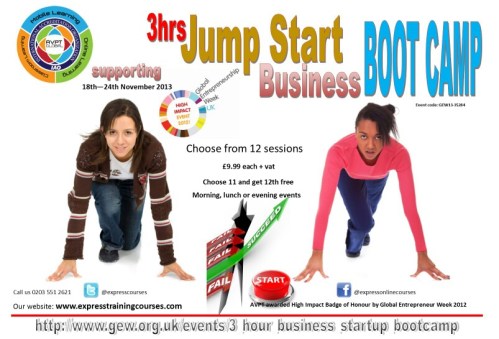
Special offer for one week, all bootcamp training just £9.99 + vat

1 a good deal

Can the Law of Reciprocity Make or Break Your Business?

We mean to help you so that in turn you help us

We mean to help you so that in turn you help us

Understanding the Law of Reciprocity

article by: Tim T Dingle BSc (Hons) MIBiol PGCE MBA
CDO  Academy of Vocational and Professional Training

Have you ever wondered why some people seem luckier than others? Have you ever been (mildly) annoyed that others attract more referrals than you? There has got to be a reason, hasn’t there? Well a good definition of ‘luck’ is when action meets opportunity. People that help other people every chance (they get) almost always come out on top. I am amazed by the simple gestures of holding a door for someone, returning a lost wallet and giving someone a referral produces 2 things:  First, the feeling that the person on the receiving end of your kindness is compelled to reciprocate; and second, you create a positive thoughts/feelings about your self-image. There’s something very powerful at play that causes this phenomenon.

Psychologists call it The Law of Reciprocity and it says that when someone does something nice for you, you will have a deep-rooted psychological urge to do something nice in return. It is buried deep inside our DNA and is an evolutionary survival mechanism. As a matter of fact, you may even reciprocate with a gesture far more generous than their original good deed. You can try and resist this law, but your DNA will intervene and you will more than likely still feel that you need to respond in kind to a good deed. If that’s true (and it is) then it would be to your advantage to understand the right way – and the wrong way to take advantage of this powerful law.

Do you think that the Law of Reciprocity can make or break your business?

Diane Shawe the CEO of the Academy of Vocational and Professional Training states “the law of reciprocity is like a karmic “piggy bank”. What you broadcast into the universe, whether it is positive or negative, is a deposit due to be returned to you. Your deposits may be returned quickly, without the effects of past and future deposits added”  but then she goes on to say “How then do we define the purpose of Business Etiquette?”  interesting combination.

For this reason, it is wise to bank positive deposits often.

As someone who is running (or is aspiring to run) their own business, there are a couple of ways you can invest in the use of reciprocity: the Constructive Way and the Destructive Way.

The Constructive Way

80% students get qualified
One of the hardest parts of a new business relationship is building trust and rapport. To do that, there are some things you have to establish up front with a potential client to show them you’re one of the good guys. These fall in the area of intent, empathy and credibility. So, if you really are one of the good guys, you can show people what you’re made of simply by being friendly, honest, and helpful. That’s the idea behind a lot of the freebies that bloggers give away all the time. By giving something that’s of legitimate value away with no expectation of compensation, you’re achieving several things.

  • If the material or help you’re giving away is of high quality, you’re establishing yourself as a person of credibility – someone who knows what they’re talking about.
  • You’re demonstrating empathy by showing the recipient that you understand they’re looking for answers. You understand that they need help – and you’re someone who’s willing to give it to them.
  • You’re showing that your intent is not just to get into their wallets – but to sincerely help.

In the process, you stimulate the DNA program of The Law of Reciprocity. When you establish yourself as an honest, sincere, and giving person – you make it much easier for people to buy from you when you have something to offer. It is at that point they already like you, they have seen that you know your stuff, and they trust you. All that makes it much easier for them to choose you.

The Destructive Way
3 HR JUMP START BUSINESS BOOTCAMP WITH GEWUK 18 NOV 2013While responding to The Law of Reciprocity is hard-wired into us, most people aren’t stupid, but can often be inexperienced or too trusting. If the Law is exploited as a tactic, they often experience a lot of discomfort and dis-ease about the situation. Even though I use the word ‘exploiting’ ( I don’t believe that most people conspire to use this law) you might best understand it as someone being false’ pretense, a front; you are pretending to be sincere and helpful, therefore only to trick people into feeling a sense of obligation. Poor salespeople are easy to find – and when someone is using reciprocity as a pressure tactic, it’s obvious. You’ve been there as a consumer.

I’ll bet you don’t have to go back very far in your memory bank to remember a time when someone seemed a little too nice. Even though they were doing something positive for you, you still instinctively didn’t trust them. That’s because their intentions weren’t sincere and you sensed it. Using the Law that way may trick someone from time to time, but it likely won’t lead to repeat sales, good will, or referrals. Pressured prospects tend to disappear quietly.

So the right way to gain maximum benefit from the Law of Reciprocity is to use it sincerely and for the right reasons: to help others and to grow your relationships. There are a lot of aggressive sales and marketing people out there, but listen to them with caution. Consumers are smarter than ever before. Being aggressive tends to offend and alienate. Instead, aim for active and inclusivity. What’s the difference? Aggressive is relentless and pushy. Active and exclusivity is, well, active listening and keeping them involved.

If what you’re selling is truly of value, you don’t have to be a bully to get people to buy. You just have to work hard to get your name out there and develop your brand. Since you are one of the good guys, ask yourself; What small thing can I provide today that my customers can really use?

When you come up with an answer – give it to them. It’s the right thing to do – and because of The Law of Reciprocity, your customers will gladly return that generosity when you do have something to sell.

AddThis Social Bookmarking Sharing Button Widget

Glossophobia: The number one fear in the UK!

fear of public speaking course

Speaking presentation survival school course

Got to make a presentation? Make a wedding speech? Say something at an event? Nervous? How AVPT Global can help you right now with the fear of public speaking.

Tim T Dingle BSc (Hons) MIBiol PGCE MBA

Chief Development Officer, Academy of Vocational and Professional Training

Having trained hundreds of people in brilliant public speaking (and many more to be Standup comics) I am often asked about the causes of Glossophobia. This is a type of speech anxiety and is most commonly the fear of public speaking or of speaking in general. An estimated 75% of all people experience some degree of anxiety and nervousness when public speaking. I am lucky and don’t suffer- whatever size the audience. The good news is it can be cured and overcome.

The more specific symptoms of speech anxiety can be grouped into three categories: verbal, physical and non-verbal. The verbal symptoms include, but are not limited to a tense voice, a quivering voice, and vocalised pauses, which tend to comfort anxious speakers.

The symptoms I see the most in training are the physical ones. These result from the sympathetic part of the autonomic nervous system responding to the situation with a fight-or-flight adrenalin reaction. Since the sympathetic system is all-or-nothing, adrenaline secretion produces a wide array of symptoms at once – all of which are supposed to enhance a student’s ability to fight or escape a dangerous scenario. These symptoms include acute hearing, increased heart rate, increased blood pressure, dilated pupils, increased perspiration, increased oxygen intake, stiffening of upper back muscles and the classic dry mouth. None of which are much good when you are about to give a wedding speech. The good news is they can be relieved with training and some skilled guidance.

learning to speak under pressure

Looking good when speaking under pressure

Public speaking experts agree that one of the most important steps in preparing for a speech is practice. Yet after giving the same speech so many times, it can be difficult to maintain an authentic voice, especially once nerves kick in. More than anything, a successful speech hinges on your ability to know your audience and establish a connection. Shape your speech around a subject that you genuinely care about and try to focus on what you have to offer your audience.

Your concentration will naturally shift away from what is at stake for you personally, calming your nerves and allowing you to connect to your audience in a real way. Then, tell a story. Take the audience on a journey. While there are many aspects that will contribute to the success of your speech, it is the authentic, heartfelt moments that will be remembered most.

The importance of learning to speak in front of an audience is undeniable; invariably intertwined with leadership, motivation, and change. While Glossophobia is common, in fact the most common phobia in the UK, it is certainly a fear that can be overcome. But the power of spoken word is reason in itself to push past that fear.

So remember that nerves are natural: use your nerves to propel you through the speech, and know that your physical response to stress will only make the speech all that much more rewarding once you finally step down from that stage. Remember to be authentic: pick a topic that you truly care about, and the audience will be stirred to care as well. And finally, don’t be afraid to aim big. You were chosen to speak for a reason, and you have a meaningful story to tell. So take slow, rhythmic breaths and change the world- and take this course in conquering your fear of public speaking!

Why Study With Us Unemployed Poster

Manisha Gaur discusses why Global Accreditation is leading the way to unified integrated accreditation

The rise of International Accreditation

News Title

by AVPT Global

For decades, regional accreditation bodies had been granting educational institutes with primary accreditation after evaluating them on a regional scale. However, as globalization grew, it became extremely important for educational institutes to be acknowledged world over so that when students look for credit transfer and international job opportunities, it does not stand in the way.  This gave rise to International Accreditation. This topic was represented by Ms. Manisha Gaur, Director Operations at Venkateshwara Group of Institutions, India.

She discussed how globalization has affected today’s education systems and the education providers are looking forward to establishing a centralized education system.

The phenomenon is occurring, but at a very slower pace and this is where the accreditation agencies have to play their role. They need to set up a unified and integrated accreditation system for all the educational institutions globally so the standardisation of education can be done successfully.

A smarter way to study with www.avptglobal.com

A smarter way to study with http://www.avptglobal.com

Regional accreditation bodies have existed and also evaluated education providers on a regional scale, thereby granting them Primary accreditation.  However, the rapid growth of globalization calls for a global entity which can evaluate them against internationally proven standards of education and grant them an internationally recognized Secondary Accreditation.

This secondary accreditation is basically known as International Accreditation. With international accreditation, the school, college or university will be internationally accepted. Students of such educational institutes can further study in the educational institute of their choice in any country without the tension of their credits transfer and also, work with any employer without the tension of their degree acceptance.  For these reasons, it has also become a major deciding factor by students when selecting their higher educational institutes/ universities. Additionally, it has also become important to employers. Employers globally feel more comfortable hiring students from internationally accredited institutes.
Based on this information, she presented why international accreditation is needed globally and how, in the last couple of years, it has gained massive importance, even more than national and regional accreditation bodies. Her topic also informed the participants as to how International accreditation bodies evaluate the institute on the basis of their academic and organisational management and provide them with international accreditation. This international accreditation not only enhances the institute’s profile regionally but also internationally which is why, today, we see a majority of the students and institutes around the world demanding international accredited programs.
About the Speaker

Manisha Gaur is a highly respected member of the Indian education community. She is not only involved in the teaching of the students but she takes it as a responsibility where she wants to develop students into becoming pillars of the society. She has been associated with the Indian Education Board and the National Accreditation body where she has conducted various presentations and has published various researches. She has also received numerous awards from the regional and international community for her services.
AVPTGLOBAL almost 400 courses all globally accredited

AVPTGLOBAL almost 400 courses all globally accredited

Why 2013 is going to be a bumper year to become a Virtual Teacher

Become a Virtual Teacher Facilitator

I originally blogged way back in 2010 that the growth for professional trainers was going to grow.  But I have since spotted a gap in the market which is now becoming a growing trend throughout 2012.

So why is 2012/13  going to be a different type of bumper year for training organisations or consultant who can help the  unemployed individuals upgrade into a new skill that will help them generate their own income?

Well usher in the new breed of Virtual Teachers!  If your not up to speck with the new direction and growth in the market then you could really find yourself on the old fashion self by 2016!  Make no mistake, becoming a trainer is all about running a business.   Being up to date with the latest techniques, developments, trends and needs is just as essential if you decided to set up a coffee shop.

Institutions of higher learning increasingly embrace on-line education, with 65.5 percent of chief academic officers now calling on-line education ‘critical’ to their institutions! long-term strategy, an opinion that’s risen more than 15% over eight years.

Like any business you still have to source new customers, gain glowing appraisals and testimonials, get your pricing right, court the right type of publicity and sustain credibility.  Oh! and let’s not forget making a profit.

We all know it takes a certain kind of self belief and courage to set up any type of business in today’s climate. You could even make a claim based on sheer desperation, the need to do something to generate an income.

But it even takes more courage to leave your destiny in the hands of many of the businesses today, no matter what their global or brand status might be. Most people are now being spurred into self employment due to the levels of redundancies, job insecurities and the need to meet ongoing expenses.

Participants are more interested in the qualifications and or skills they will gain in the subject at hand, and the experience you have in doing jobs similar to theirs and your track record in ‘doing’ rather than ‘talking about’ the topic.

What is really important is your ability to engage with participants around this experience and help them to translate that into action. That is where the true value often lies for them. Of course we know that there are academic trainers and teacher courses which award accredited or private certificates.

Choosing the entrepreneurial route can bring great benefits, but there are also challenges.

What are some of the considerations before you decide to set up, invest or replicate another successful business model?

  1. Be candid about your strength and weaknesses. What do you have to bring to the table?
  2. Do as much homework as you can before taking the plunge
  3. Look carefully into all aspects of owning and running a business and sound out anyone you know who has already done it.
  4. Be prepared to change your idea or abandon outdated school of thoughts.
  5. Don’t be scared to appraise negative feedback, all businesses have a negative and positive aspect to them.
  6. Prepare a business or marketing plan. You’ll save yourself a lot of time, money and stress if you understand as much about the theoretical side of the business as well as the vocational aspects

Ask yourself these key questions before launching your business:

a) Is there a demand, how long will the demand last, is it scalable, can you bolt it onto anything else, can you partner?

b) Have you got the full support of your family? Your decision is likely to impact on them, so talk to them first. Don’t be put off by their own fears, if you can actively offer up reassurances of how you can cope with whatever concerns them, then will be serve to give both them and yourself the confidence to move forward.

c) Speak to any contacts you have in the sector you plan to work in. If you are going to invest in a Franchise, they try to get some feedback from any previous candidates who have made the investment.

d) Check out the competition. If there isn’t any, why not? You may not have rivals but will you have any customers?

e) Are you prepared to work the long hours to get the business off the ground?

f) Do you have the necessary skills? Can you cope with paperwork? Can you cope with criticism?

g) What about funding? Talk to several banks and consider various options, be careful though, they are not assisting many businesses today they are more interested in protecting their own levels of risk and increasing their profits. Some of the smaller banks might be of interest as they might treat you more like a customer than a commodity.

h) Could your training course attract funding on behalf of the student? This might make it simple for them to enter your training services if some of the costs could be supplemented.

i)  Are you clear at delivering information, can you present subject matters or theory step by step, what training would you need to boost your technique, confidence and presentation skills.  Could you get funding for your own training?

Important advice about redundancy money

If you are considering using your redundancy money, make sure you set aside enough for household bills and other costs. It is important that you think of your redundancy money as your cushion until you get yourself back on your feet.

  1. Invest what you feel you can afford to risk or lose but do so where you have some knowledge and a passion for the subject involved.
  2. Try not be over powered by flash organisations offering huge earning potential subject to you parting with lots of your own money.
  3. Don’t rely on the referrals and testimonial they supply to you.  Do some of your own research.
  4. Remember every business has to start small and keep lean before it can grow to a stable long term business
  5. Don’t rely on marketing short-cuts, this can be very expensive and  not very productive.

More and more people are looking for good quality training courses that can add value to their life, career portfolio and career longevity.

It has been proven that most recessions bring an influx of new businesses, entrepreneurs and even millionaires. One of these new areas of business is the growth of the non surgical hair replacement and hair enhancement sector.

The UK and Europe has a shortage of properly trained trainers who can deliver a variety of hair extension and hair enhancement technique to the non professional and professionally qualified sector.

An opportunity now exists for anyone wanting to enter the vocational training market with a service that has far reaching benefit and impressive revenue streams.

An opportunity exists throughout the UK today to establish your own virtual training school in this very selective and much needed service. Visit our website to read a little more about how you can make the first steps to becoming a Virtual Trainer


Why smartphones & ipads are playing a major part in online learning

The World of education has changed, and this has impacted on personal trainers, teachers and life coaches on how they source and deliver training.
Institutions of higher learning increasingly embrace online education, with 65.5 percent of chief academic officers now calling online education ?critical? to their institution?s long-term strategy, an opinion that?s risen more than 15% over eight years.
67% believe academic outcomes from online classes are equivalent to those in face-to-face learning, but still, one-third of academic leaders think online classes are inferior. We do not agree with this but we do understand that resistance to change can often impede new growth.
Express Online Training Courses
A series of half day conferences will introduce you to the changing face of virtual education and how you can prepare and adapt yourself and business.
If  you interested in finding out what a virtual teacher, trainer or life coaches teaching style would be? The impact on online education and the changes? Then this event could be for you.
At this half day event you will understand more about the following:
  • Enhance your understanding of learning styles and trends for 2012
  • Reaction to Change, Early adopters and Diehards.
  • Learning Management Systems
  • Mobile legacy courses
  • Interactive content
  • Blogs and education
  • Digital publishing and learning
  • QR Codes and how it will benefit educators
  • Hosting Learning in the cloud
  • New Blended Learning in community, mobile, webinar and video
  • Augmented Reality related to mobile learning and diversity
  • Virtual Worlds multi learners simulations in 3D
  • Pocket Video Technology for informal learning
  • Social Media integrating across all devices to improve online collaboration
  • What is a Virtual Tutor/Trainer
  • Defining the growth of online Soft Skills Training
  • Benefits and Advantages for Virtual online Tutor/Trainers
  • Diminished environmental Constraints
  • The New Online E-Learning Process
  • The Opportunity
If you are interested in attending one of the several dates, just click here and register today.