Category Archives: isend

Invitation to our forthcoming Apps Network Event

Come along and join us at our informal networking meeting on Thursday 10th March 2011 in London to take a closer look at apps and how they could impact on your future business.

For a growing number of UK shoppers, the difference between off-line and on-line shopping will be no line at all.

What does this mean for retailers, sole traders, enterprise business and the retail sector?

Come join us at this free event when you will be able to listen, learn and ask.

With an inundation of new smart phone apps these hand held shopping tools are redefining the shopping experience and blurring the distinction between the in-store experience and the virtual world of information now available in the palm of your hand.

Advances in location-based technology, price-comparison apps, bar-code scanning apps and social-networking tools have turned the mobile device into a real-time third channel of commerce, empowering consumers while challenging retailers to rethink the way they do business.

The appetite for new apps seems voracious. A recent survey by comparison-shopping site PriceGrabber revealed that 36 percent of consumers plan to use their mobile phones for shopping-related activities this holiday season.

Around 4.2m of us in the UK are already using our mobiles to access the internet and browse retailer’s eCommerce sites.

This event will look at the pros of cons about introducing a apps into your business and all the pointers one should consider.  Specialist speaks will be available to give you golden nugget advise.

Introducing our Panellist Speakers

Andrew Lamont

Andrew Lamont ‘Access Champion for the Royal Borough of Kenisigton & Chelsea’

Topic:  Why Access & Apps go together

Partially sighted as a result of optic atrophy, Cllr Lamont is a seasoned campaigner on behalf of the blind and partially sighted. As a trustee of the charity BlindArt he has worked to remove barriers to the visual arts for all, inclusive of visually impaired people.

Andrew is currently the Access Consultant for i-send proximity and plays an important role in advising local authorities and Town Centre’s on managing the implimentation of Access.

Andrew is concerned about the new technolgy and feels that Apps and the new type of Smartphones should take into consideration access for over 2 million people throughout the UK


Diane Shawe

Diane Shawe Author of ‘How to Cyber kiss your business to Success’

Topic: Discovering the Pros & Cons for implementing Apps into your business

Project Director for i-send proximity, Diane has over 16 years experience in the Telecoms Fibre Optic and Microwave technology. Smartcard and internet audience measurement solutions.

Diane is often a guest speaker and training in business development and is currently working on several City and Town Centre Projects who want to build a PWAN Bluetooth Broadcasting Network.

The world of promoting your business has pivoted in a way that could leave a lot of  businesses behind if they don’t implement a structured apps program.


Abel Hussain Author Speaker

Abul Hussain Author of Grow your business with Internet Marketing

Topic:  Why SEO don’t work so for some businesses

A Managing Partner at the Middle Man Marketing Group,  Abul is an experienced marketing consultant, who consults with the marketing departments of many FTSE 100 companies.

His specialities include SEO, Pay Per Click Marketing, Social Media Marketing, amongst other marketing areas.

He often is a guest speaker at business association events and a guest author around the marketing blogosphere.

Abul will discuss the importance of implementing certain strategies to insure that localised and regionalised businesses can make better use of the SEO online strategy.


Pharma companies investing in mobile phone apps for tracking diabetes


taking control


Pharma giants Merck and Novartis have increased their investment in mobile phone applications and educational websites, it has emerged.

A report by consultancy Ernst and Young revealed that the two companies have spent 78 per cent more on apps in an attempt to convince patients they should take their drug treatments, as well as eating properly and taking exercise .

It was also found that pharmaceutical firms started 97 different projects for using information technology to benefit patient health in 2010, as compared to the 124 projects that had been initiated in the four years before that. It was shown that around 41 per cent of these projects were for applications on smartphones, which was a rise of 11 per cent from 2006.

Drug manufacturers are now taking more responsibility for ensuring patients are successfully taking their treatments, especially with increased pressure to prove that their drugs are value for money.

Among the applications developed for the iPhone are an app for learning about diabetes and the tracking of levels of blood glucose, nutrition, and activity, one that provides the opportunity to maintain a record of your vaccinations, and a German language map that allows you to pinpoint locations of diabetes specialists.

Sourse: Pharma companies investing in mobile phone apps for tracking diabetes.

Apps Entrepreneurs

The soaring popularity of smart phones has created a new type of entrepreneur – the “app developer”.

And now you can confess your sins via an apps.  There is no end.

The industry has grown up around the iPhone. More than 450,000 different iPhone applications have appeared since Apple opened its Apps Store on iTunes to outside developers in July 2008.

Although it is the dominant player, there are many more to choose from including those from BlackBerry, Microsoft, Google, Nokia, and Samsung.

Applications rarely cost more than a few pounds or the equivalent in other currencies to download. Many are free.

But already the app market is worth nearly two and a half billion dollars (£1.65bn) a year, according to data from AdMob, an advertising company.

Other smart phone brands are striving to erode Apple’s early lead by developing their own platforms for apps.

‘Apps Goldrush’

The popularity of apps has created a gold rush mentality among a new breed of independent software developers. Some have even become millionaires.

IT’S TIME TO GET YOUR OWN APPS FOR YOUR BUSINESS


‘Powerful idea’

The success of Pocket God and other pioneering novelty apps has inspired large numbers of small scale entrepreneurs to have a go at developing software for smart phones.

I-send will build your apps to work across a variety of smartphone operating systems including Apple iPhone, Google Android, RIM BlackBerry, and Windows Mobile devices
PRICES STARTING FROM £99

Nobody knows how many app developers there are, but the figure could run into thousands.

However, with so much competition around it has got a lot harder to create a top seller.

“You definitely have to do a lot more work today – doing PR and talking to people,” explains Diane Shawe Project Director of I-send proximity.

The essential point about current apps is that they are mostly intended to entertain and they have not involved a lot of work to develop. But we are seeing a rise of businesses using them to drive consumers to specific areas of there website.

There’s enormous innovation and a constant stream of new creative applications are coming online.

So forget about current applications, what matters are the creative things you can do to help your business get into the apps market and not being left behind.

It’s a lot like the internet bust that happened a few years ago
Dave Castelnuovo

Mr Yoffie draws a parallel with the early days of personal computers.

“If you think about the old spread sheets before Lotus 123 and Excel, they weren’t terribly functional,” he says, referring to two landmark programs in desktop computing.

“But ultimately we figured out how to take the basic ideas that were developed in the very early days and make them better, more effective and very powerful,” he adds.

‘Crazy ideas’

Apps for smart phones will go through a variety of  evolution.

In the longer term, Diane thinks smart phones will have the capability to act like portable subtitling machines, translating foreign languages for those visiting foreign countries, payment cards and heart monitors.

Blackberry

Other firms are now offering apps for mobile phones

But not everyone believes the centre of gravity in computing will shift to smart phones, I believe that the smartpad will also play a pivotal part in the restructuring of advertising and how it is viewed by consumers.

On the one hand it is growing fast and there is the potential for really powerful apps that could change of the nature of computing.

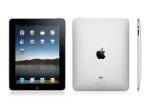
The real apps war begins as we see microsoft and nokia join forces to level out the playing field against the iphone and ipad.

The rise of the Apps. Now use second only to mobile messaging


Download i-send apps


Mobile apps attract almost as much mobile device use as messaging, and exceed the totals for voice calls and web browsing, according to a January 2011 survey by Zokem Research.

According to the study, commissioned by Wireless Intelligence, the research arm of the GSMA, mobile apps are responsible for 667 minutes of use per user each month, almost as much as messaging (671 minutes), and far more than voice (531 minutes) and web browsing (422 minutes).

The research revealed some interesting distinctions between apps pre-installed before shipment and apps downloaded by the users. User-added apps dominated in categories including entertainment (including gaming) and social networking. For ’commodity’ functionality such as browsing, messaging and voice, people are more likely to use the pre-installed software.

Add-on apps made up to 20 percent of total face time, but accounted for 30 percent of data traffic. Social networking represented 32 percent of total traffic with multimedia being the biggest chunk of mobile data usage at 57 percent.

Almost 10 percent of all smartphone “face time” is through the use of social networking apps. In terms of actual usage, only two third-party apps have greater than 30 percent penetration: Facebook and YouTube.

The research also noted differences between the major smartphone platforms. iPhone and Android device owners use an average of 15 different apps per month, whereas the number is eight for BlackBerry and Symbian OS. iTunes and Android Market Place have a monthly reach of 95  percent of their user bases, whereas Blackberry App World reaches 50 percent of Blackberry users, and Nokia Ovi store only 26 percent of Symbian users.

During January 2011, the average user added 2.5 apps, and nearly half of all users had more at the end of the month than in the beginning. One-in-five users had less at the end of the period, however.

iPhones generated  more than 200 percent more traffic per month on average than Android devices. Wi-Fi usage was about 11 percent of total traffic to/from devices.

Overall smartphone usage dropped at weekends but generically averaged more than 70 minutes per day with apps capturing more face time than any other activity at weekends.

The findings showed that SMS usage was higher in the mornings than voice and usage of social networking apps built up through the day and peaked at 9-10pm.

Source:  Apps use second only to mobile messaging – GSMA Mobile Business Briefing.

Why Smartphones May Be the Best Business Opportunity in Healthcare | Dark Daily

Meet “mHealth!” That’s the new term to describe how mobile devices are used in the delivery of healthcare to patients. Many clinical laboratories and pathology groups already have laboratory informatics solutions that support how their client physicians use mHealth solutions in patient care.

Experts predict that Smartphones will dominate mobile healthcare (mHealth) in just a few short years. The enabling tools will be mobile applications (apps) that monitor such conditions as diabetes, hypertension, coronary heart disease and asthma. Smart phones will also be used to order medical laboratory tests and access clinical laboratory test data.

Mobile health monitoring apps can track patients’ vitals signs, such as heart rate, blood pressure, body temperature and breathe rate and share that information with their physicians. (Photo by Natasha Lomas/silicon.com. Sourced from ZDNet.com.)

Why Smartphones May Be the Best Business Opportunity in Healthcare | Dark Daily.

Startbucks and McDonalds have launched contactless payment apps

A few days ago I wrote about the coming of the mobile phone credit card!   Well it’s here.  Many people across the industry have been excited about the prospects for mobile and contact-less payments for some time now – myself included.

To catch the public’s imagination, awareness and indeed a widespread frenzy similar to that experienced at the launch of iphone 4 or the ipad,  it has a lot of impact when well known merchants and locations that people see in the high street or mall and buy from every day start to offer and promote new ways of paying.

This is what has happened in the last few days.

First we had Starbucks. The Starbucks Card Mobile App is now available at its 6,800 U.S. company-operated Starbucks, and all U.S. Target stores. Extensive rollout here. Just scan your phone and go with your coffee – it’s promoted as the fastest way to pay. Excellent move and my guess is that in future assuming it goes well we’ll see apps for other smartphones to add to BlackBerry and iPhone.

Next comes McDonalds, who have announced that contact-less card payments will be offered in all of its 1,200 UK restaurants by this summer, working with Visa. Oh, and, wait for it – the company is emphasising speed  – McDonalds prefaces “contact-less” by labelling it “lightning fast”. McDonalds explains that “Contact-less payment saves time and effort, allowing customers to quickly pay for items which cost £15 or under without having to search around for cash.”

Whilst customer convenience is one of the key benefits, there are more benefits too. Reduced queues or lines for example. How many times have we walked up to a fast food or drink outlet, seen eight people waiting, and moved on? So moves like this reduce customer loss and increase customer throughput. They also mean less cash is handled by the merchants – with attendant risks of errors in counting, theft, mistakes in giving change and slower transaction speeds.

this is why several research organisations are forecasting a big future for mobile payments with nearly 1 in 2 of us having made a mobile payment of one sort or another by 2014. With iconic fast food and drink brands like Starbucks and McDonalds leading the way, we’re sure to see more launches in the future. After all, 2011 has only just begun….  But what about the small retailers, what can they do to get a slice of this market?  Well perhaps one of the first things to consider is getting your own business mobile apps in place and then look to belong to a partner offering a wider service and mobile access to consumers passing outside your shop front.

Launching marketing apps can backfire for retailers

by Diane Shawe

more than just a phone

For a growing number of UK shoppers, the difference between off-line and on-line shopping will be no line at all.

What does this mean for retailers and marketing companies?

With an inundation of new smart phone apps these hand-held shopping tools are redefining the shopping experience and blurring the distinction between the in-store experience and the virtual world of information now available in the palm of your hand.

Advances in location-based technology, price-comparison apps, bar-code scanning apps and social-networking tools have turned the mobile device into a real-time third channel of commerce, empowering consumers while challenging retailers to rethink the way they do business.

The appetite for new apps seems voracious. A recent survey by comparison-shopping site Price Grabber revealed that 36 percent of consumers plan to use their mobile phones for shopping-related activities this holiday season.

Around 4.2m of us in the UK are already using our mobiles to access the internet and browse retailer’s e Commerce sites

Recession-wary consumers are embracing new tools that can instantly call up product specs, reviews, price comparisons and input from Facebook friends and Twitter followers, all while they’re standing in the aisle.

David Dorf the Director of Technology Strategy states ” The United Nations estimates about 60 percent of the world’s population has access to a mobile communications device. More Americans have a mobile phone than own a credit card, and an increasing number of those are smart phones capable of Internet access. This proliferation is so unlike that of any other modern-day consumer technology that it is difficult to fully measure the impact on consumers and the industries that serve them.

With what is effectively a computer in the palm of their hands, consumers are finding new ways to do everything from banking to managing healthcare and household services. Shopping is a natural fit, and the retail industry has emerged as a front line for innovation in mobile applications. The mobile commerce revolution has changed almost every aspect of the retail business, from the way that we think about customer relationships to the way that we manage inventory and complete transactions”

So where are the retailers in all this? Playing catch-up with their customers as fast as possible in most cases, often looking for the quick wins.

Shopping is changing, and while the urge to please customers, capture sales and compete with competitors is very hard to resist, as the Interactive Media in Retail Group (IMRG) pointed out in a recent survey of 57 retailers, only four had fully mobile-optimised websites.

Chris Brassington is CEO ofStarfish360 stated in a recent article “It ’s true that many retailers are launching apps and/or a mobile site in an effort to capture the mobile customer, but the survey showed that a tactical approach to mobile marketing is likely to backfire, as 82 per cent of consumers said that if a retailer’s website performed badly, it would dissuade them from buying goods from that organisation, on the web or even in store.

And in today’s social media-driven society, a poor, fragmented customer experience could turn off not only the customer who experiences it, but many more too, if that customer chooses to share their experience on the web. So getting the customer experience wrong on mobile carries a big risk”

Many retailers, instead of providing a joined up mobile experience that will enhance customer service and reduce costs, have instead bolted on a piece of technology that does not provide an integrated shopping experience. These are often bespoke builds from marketing agencies, with one eye on what the competition is doing and increasing revenue for themselves, rather than a clear focus on how their clients customers’ behaviour is changing.

We have all used the phrase ‘blind leading the blind’. In this case we often see no integration, no alignment to the business’ challenges; no strategy in terms ownership; and no cyber psychology lead program to customers needs. So instead of mobile potentially being a progressive channel, it has, in most cases, provided only frustration for the shopper.

Mobile marketing roadmap

Diane Shawe the Project Director for i-send proximity is passionate about helping not only retailers benefit from proximity based mobile commerce and marketing, but how to address the retail sector’s operational challenges when implementing a mobile commerce strategy which can be measured in real time and assist a wide cross section of mobile phone users.

I-send proximity is leading the way towards helping different Boroughs to build a private Bluetooth wide area broadcasting network within a geographical area that will benefit consumers and visitors. By using this low energy, green, permission based and wireless controlled broadcasting network , retail town centre management teams and local authority regeneration departments can implement a cost effective and cost neutral solution. Click to read more

Because we believe that playing catch-up will be significantly more expensive than taking the strategic approach. Adopting the strategic approach will provide the blueprint and the roadmap to ensure the successful implementation of mobile marketing as a consumer channel, from both a business and a strategic viewpoint.

//

Tablets Force Developers to Refocus Strategies on Apps

I-send most recently came across several articles which have highlighted changes about to take place in the Apps market due to the growth of the tablet such as the Ipad and others fast in pursuits.

Appcelerator, maker of tools for building mobile, desktop and tablet applications, and IDC have announced results of a joint survey showing that the onslaught of tablet systems has caused some developers to refocus their development efforts.

Indeed, the joint Appcelerator-IDC survey of more than 2,200 developers around the world, indicated that tablet interest spikes across the board: Android Tablet interest jumped 12 points in three months to 74 of respondents saying they are “very interested” in developing for these devices. Interest in Blackberry Play book nearly doubled from 16 percent to 28 percent. iPad rose three points to 87 percent, while web-OS Tablet interest remained flat at 16 percent, the study showed.

With 85 new, primarily Android tablets announced at the Consumer Electronics Show (CES) in early January, developers are pushing these devices to the top of their priority list, Appcelerator officials said.

Overall, the survey reveals how new entrants to the tablet market are changing application development priorities and how businesses large and small are accelerating their efforts to build a mobile application strategy to deal with an explosion in apps, mobile devices, operating systems, and capabilities, Appcelerator officials said.

Moreover, Scott Schwarzhoff, vice president of marketing at Appcelerator, said, taken January 10-12, the Appcelerator-IDC Q1 2011 Mobile Developer Report shows that Google has nearly caught up to Apple in smart phone popularity and is closing the gap in tablets. Microsoft and RIM made solid gains through their product line update, while interest in Google TV and Apple TV dropped off.

And as these trends unfold, it is also becoming clear that the days of mobile app experimentation are over, Schwarzhoff said. This year, developers expect to triple their app development and the average developer is now building for four different devices, the survey showed. Meanwhile, a dramatic increase in the integration of geo-location, social, and cloud-connectivity services underscores new focus on sustaining user engagement, while increased plans to integrate advertising and in-app purchase business models points to a new focus on longer-term financial viability over free brand affinity apps.

With the Android Tablet market set to explode this year, 57 percent of developers said price will be the most important factor for success, followed by minimized fragmentation (49%) and then Android Honeycomb OS capabilities (33%).

“The tablets, unlike smart phones will have wildly different pricing,” Schwarzhoff told eWEEK. “Smartphones are about $199, but tablets will be different. There will be some sub-$100 tablets and developers see this as a big opportunity

Android phone interest, at 87 percent, rose 5 points to tie iPad and close to within 5 points of iPhone, which has 92 percent.  Yet Apple continues to be the number one priority with over 10 billion app sales to date.  Schwarzhoff said a common refrain from developers is: “after iPhone, do I go Android or iPad?”  For Apple, topping the iPad 2 wish list included: new camera capabilities, a USB connector, and an improved retina display, the survey showed.

As indicated, interest in building mobile apps for connected TVs decreased across the board as Google dialed down its launch plans, TV networks blocked access to their content and developers increasingly focused on tablets. Google TV interest slumped 11 points to 33 percent, while Apple iTV dropped 10 points to 30 percent.  Developer interest in other alternatives like Yahoo TV, Boxee, and Roku was also minimal, the survey showed.

Meanwhile, Windows Phone 7 rose 8 points to 36 percent of developers indicating they are ‘very interested’ due to a better-than-expected launch, Schwarzhoff said. Respondents said that Windows Phone’s improved UI was a critical factor for the increase.

“No one is ruling out Microsoft, at least in the enterprise,” Schwarzhoff said. He said Microsoft’s strategy of more stringent control over OEM implementations will limit fragmentation, which could become a concern for Android. Also, Microsoft’s tie-in to business apps is a plus for its platform, he said.

“As apps are becoming more social, more local and more cloud connected, it’s a long way to go [for Microsoft],” Schwarzhoff said. “Are they going to blow it open this year? It’s daunting, but they will improve it. They will be maniacally focused on iterative improvement. With Windows Phone 7 they made it through the toughest launch in their history.”

Regarding app stores, Schwarzhoff said Amazon’s newly announced Android Appstore shows early promise. While 82 percent of developers said they are interested in distributing their apps through the Android Market, 37 percent said they are interested in the Amazon Appstore, 13 percent for Verizon VCAST, and 9 percent for GetJar. Interestingly, developers are about equally as interested in the Mac App Store, at 39 percent, as they are in Amazon’s new Android Appstore.

Appcelerator said the proliferation of apps, devices, platforms, and capabilities has triggered a race among businesses large and small to define a sustainable mobile strategy. This quarter, Appcelerator and IDC introduce a new “Mobile Maturity Model” to identify three phases of mobility adoption shaping up in the enterprise and consumer markets: ‘exploration’, ‘acceleration’, and ‘innovation’. Last year, most respondents (43 percent) said they were in the ‘exploring’ phase of their mobile strategy. A simple app or two – typically on iPhone – and a focus on free or $0.99 branded apps was standard practice. This year, 55 percent of respondents said they are now shifting into the ‘acceleration’ phase.  This phase is defined by the following trends and mobile strategies.

For instance, on average, each respondent said they plan to develop 6.5 apps this year, up 183 percent over last year. And businesses are increasingly taking a multi-platform approach. On average, respondents said they plan to deploy apps on at least four different devices — such as iPhone, iPad, Android Phone, Android Tablet this year, up two-fold over 2010.

Moreover, 87 percent of developers said their apps will connect to the cloud this year, up from 64 percent last year. Interest in commerce apps is also on the rise, with PayPal beating Apple and Google as the number one preferred method for payments. And business models are evolving to stay in lockstep with these more engaging mobile app experiences. Developers are shifting away from free brand affinity apps and becoming less reliant on $0.99 app sales.  Increasingly, the focus is on user engagement models such as in-app purchasing and advertising, with mobile commerce on the horizon. And 81 percent of respondents said they “insource” their development, with the majority saying they have an integrated in-house web and mobile team.

For a complete summary of the findings, visit: http://bit.ly/appcelerator_idc_q1_2011_mobile_developer_report.

At this point it is becoming even more important for town centres and Cities to explore how they can build a private WAN on the platform for Bluetooth Proximity Broadcasting.  This will provide a controlled and direct way to communicate with consumers on a wide range of topics and encourage them to look for specific offers once they have downloaded the cities own integrated apps. Just take a look at what it did for one town centre.

Source


Mobile Phones soon to become credit cards!

Not so very long ago, you may recall, mobile phones were used exclusively for, well, ‘phoning.  Then the launch of texting on the mobile phone became a phenomena, you could text someone you didn’t really want to speak to.. and then to compete with the camera industry the mobile became our camera and photo album rolled into one. Then it became our music player. And our games device.  And our personal organiser. And – the crème de la crème – our means of accessing the Internet, allowing us to send emails, watch TV, tweet, update face book and buy items from our phones.

Oh, and by the way it’s going to be a credit card.

Well, it’s already a means of accessing your bank balance, isn’t it? So why not take things that one step further: forget that little plastic oblong tucked inside your wallet, simply swipe your handset over a bar code reader, the money comes out of your account and the new sofa is yours.

We have just seen Tesco’s advertising the iphone reading bar codes and dropping the item into your smart phone shopping basket!

I know that m-commerce is more simply brimming over with developments for the future but the simple question of whether or not mobiles can replace credit cards is an interesting proposition especially when the theft of mobile phones is on the increase. Because the mobile has become much more than the a simple talk and text communication tool therein lies the problem.

As the handset becomes the point of access to, and indeed default storage locker for, the myriad minutiae of our existence, the potential loss of that handset becomes a far more traumatising then moving home! I think the stress list needs to be rearranged to read a) loss of mobile phone, b) moving c) getting divorced etc.

Speaking personally, I love this new technology, I love the fact that you can do so much from a little handset which simplifies one life and even though the concept sounds great! (less for me to carry in my handbag) how is this method of payment from your mobile phone going to be guaranteed secure?

Because phones are relatively cheap to come by now (especially if you take out a contract) most teenagers are carrying the latest models.  I don’t want to be negative, but I don’t fancy getting mugged for my phone because they can swipe it for a packet of cigarettes.

This is part of the wider problem that we face: managing the transition to a mobile-centric world. It ain’t easy, it won’t be easy, but we have to do it, because – whether we like it or not – that transition is happening. I can’t pretend to have the solution to the credit card conundrum, but I suspect that is a conundrum that will be taxing a lot more of us in the medium term as new organisation raise up to help solve and charge us for the privilege.

With this in mind, more and more retailers need to look at how they can communicate with smart phones.

ONLINE Christmas shoppers spent £1 million in a single minute for the first time


Download your free shopping apps

On Monday 6th December an article introduced by Jonathan Prynn and Mark Priggs of Byline reported that for the first time the seven-figure barrier was broken just before 1pm on the most frenzied online shopping day of the year.

The precise high-water mark was 12.58pm, when 128 transactions per second were processed by retailers. In last year’s busiest minute, on December 7, [pounds sterling]732,000 was spent. The most popular gifts being snapped up by internet shoppers are the Mini Micro T-bar Scooter, the Nintendo Wii Fit Plus game, Lego’s Winter Toy Workshop and the Apple iPod Touch

Selfridges said its online sales soared 50 per cent last week, while John Lewis said sales through its website were up 62.2 per cent. The first week in December is thought to see the peak in online buying, because it comes after November pay cheques have been paid in but before the “zone of uncertainty” when consumers grow increasingly nervous about whether their gifts will arrive in time for Christmas.

Monday lunchtime is particularly popular, because it is the first chance many people have to buy after making their purchasing decisions over the weekend.


So is there an Opportunity?
With more and more people shopping online, an opportunity exists to tap into a residual income by helping people to search for the best deals online.  Now I don’t easily get involved with any online money-making scheme, but I have taken a look at this apps, and I have personally used it to save me money online.  It’s quick, simple and effective.

So when the opportunity came for me to become involved in the forthcoming launch in Malaysia, I thought it wouldn’t hurt to pre register.

Shopping Genie will be  pre-launching in Malaysia & Singapore and you have the unique opportunity of registering prior to our official launch. A full introduction to this amazing “app” and opportunity, will be taking place in KL on the 28th, 29th & 30th January, 2011.

This time frame is vital for YOU to benefit in the pre-launch stage. At our introduction in KL in January 2011, you will be able to see the product in action and hear first hand what is about to sweep Malaysia & Singapore.

In the USA, Australia & the UK, TOP MLM leaders have been getting on board, which has taken the MLM industry by storm.

What is the Product Google makes $1.3 Million everyday from Pay Per Click, we will reveal how YOU, with this amazing app, can have a share of this worldwide market.

This “APP” built on the top of the Microsoft platform and sitting on top of Google, Yahoo, Bing and all major search engines is sweeping the USA, and has taken the UK & Australia by storm…we are now in pre-launch in Malaysia & Singapore.

The company’s  aim is to have this amazing “app” on every home computer and mobile device in the next 12 months.  It’s worth taking a look and registering today.