
That one question could change everything. A lot of people say they want to “start a business”, but very few stop to ask themselves what kind of business owner they actually want to become.
Do you want the freedom to create everything from scratch? Or would you prefer to run a business where much of the groundwork has already been done for you?There is no right or wrong answer. But there can be a very expensive mismatch between the type of person you are, the way you like to work and the business structure you choose.
Creating a Business from Scratch
For some entrepreneurs, the excitement is in the creation. They want to choose the name, develop the concept, create the logo, design the customer experience, test different services, work out the pricing, develop the marketing and build their own systems.
They want complete control.
That freedom can be incredibly rewarding.But it also means you are responsible for figuring almost everything out yourself.
You may need to decide:-
Who exactly your target customer is-
What services or products you will offer-
How much you will charge-
How you will attract customers-
Which suppliers to use-
How appointments will be managed-
How staff will be trained-
How complaints will be handled-
How stock will be controlled-
How the business will be marketed-
How the brand will stand out from competitors-
How you will eventually grow beyond yourself
For some people, that challenge is exactly what entrepreneurship is about. For others, it can quickly become overwhelming.
Running a Business Is a Different Skill
Some people are excellent business operators. Give them a proven concept, clear procedures, training, systems and a recognisable brand, and they can concentrate on doing what they do best: running the business.
They may not have any desire to spend months developing branding, testing marketing ideas, researching suppliers or creating operating procedures.
They would rather start with a framework and build from there.
This is where franchising can become an interesting option.
A franchise is still your business.You are still responsible for attracting customers, managing finances, delivering excellent service, leading staff and building your local reputation. But instead of beginning with a completely blank sheet of paper, you are buying into an established business model.
Depending on the franchise, that might include training, branding, operating systems, supplier relationships, marketing support, procedures, service standards and ongoing guidance.
For the right person, that can dramatically reduce the amount of trial and error involved in getting started.
Freedom or Framework?
This is one of the most important questions to ask yourself.Some entrepreneurs hear the word franchise and immediately think,
“I don’t want anyone telling me what to do.”
That may be a sign that an independent business would suit them better. Other people hear about systems, training and support and think, “Good. I don’t want to reinvent the wheel.”
They may naturally be better suited to franchising. Neither personality is better.They are simply different.
The problem comes when someone who desperately wants creative independence buys into a highly structured franchise. Or when someone who needs guidance and support starts an independent business and discovers they are uncomfortable making every decision alone.
Knowing yourself matters.
What About the Salon and Specialist Hair Industry?
This question becomes especially important in the salon and specialist hair sector. Opening a salon can look straightforward from the outside.
Find premises.
Buy some mirrors and styling chairs.
Create an Instagram account.
Offer hair services.Open the doors.
But the reality is much more complicated. A successful specialist salon may need systems covering consultations, bookings, deposits, cancellations, client records, stock management, supplier relationships, customer follow-up, training, service standards, complaints, marketing, pricing and staff development.
If you are working in specialist areas such as hair extensions, wigs, toppers, toupees or hair-loss solutions, the level of knowledge and customer care required can become even more important.
Clients may be coming to you with significant concerns about thinning hair, alopecia, medical hair loss, damaged hair or confidence. They are not simply buying a hairstyle.They may be looking for expertise, reassurance and a solution they can trust.That means your business model matters.Before You Spend Thousands,
Decide What You Are Building
This is where many new entrepreneurs make a mistake. They start spending money before deciding what kind of business they actually want. They register a company.They order stock.They pay deposits on premises. They buy furniture.They create a website. They commission a logo. And only afterwards do they start asking fundamental questions about the business model.
A better approach is to decide what you are trying to build first.
Do you want a business that revolves around you personally?
Do you want to employ a team?
Do you want one location or several?
Do you want something you could eventually sell?
Do you want to create your own concept?
Do you want a proven concept that you can operate?
Do you enjoy developing systems?
Or would you rather use systems somebody else has already tested?
Those answers can point you towards very different structures.
Sole Trader?
Partnership?
Limited Company?
CIC? Franchise?
People often choose a business structure because somebody they know chose the same one.But your neighbour’s business, friend’s salon or favourite influencer may have completely different goals from you.
A sole trader structure may appeal to someone who wants simplicity and complete control.A partnership may work where two or more people want to build something together.
A limited company creates a separate legal entity and can suit businesses with ambitions to grow, employ staff or bring in investment.
A Community Interest Company (CIC) may appeal where the main purpose of the organisation is to deliver community or social benefit.
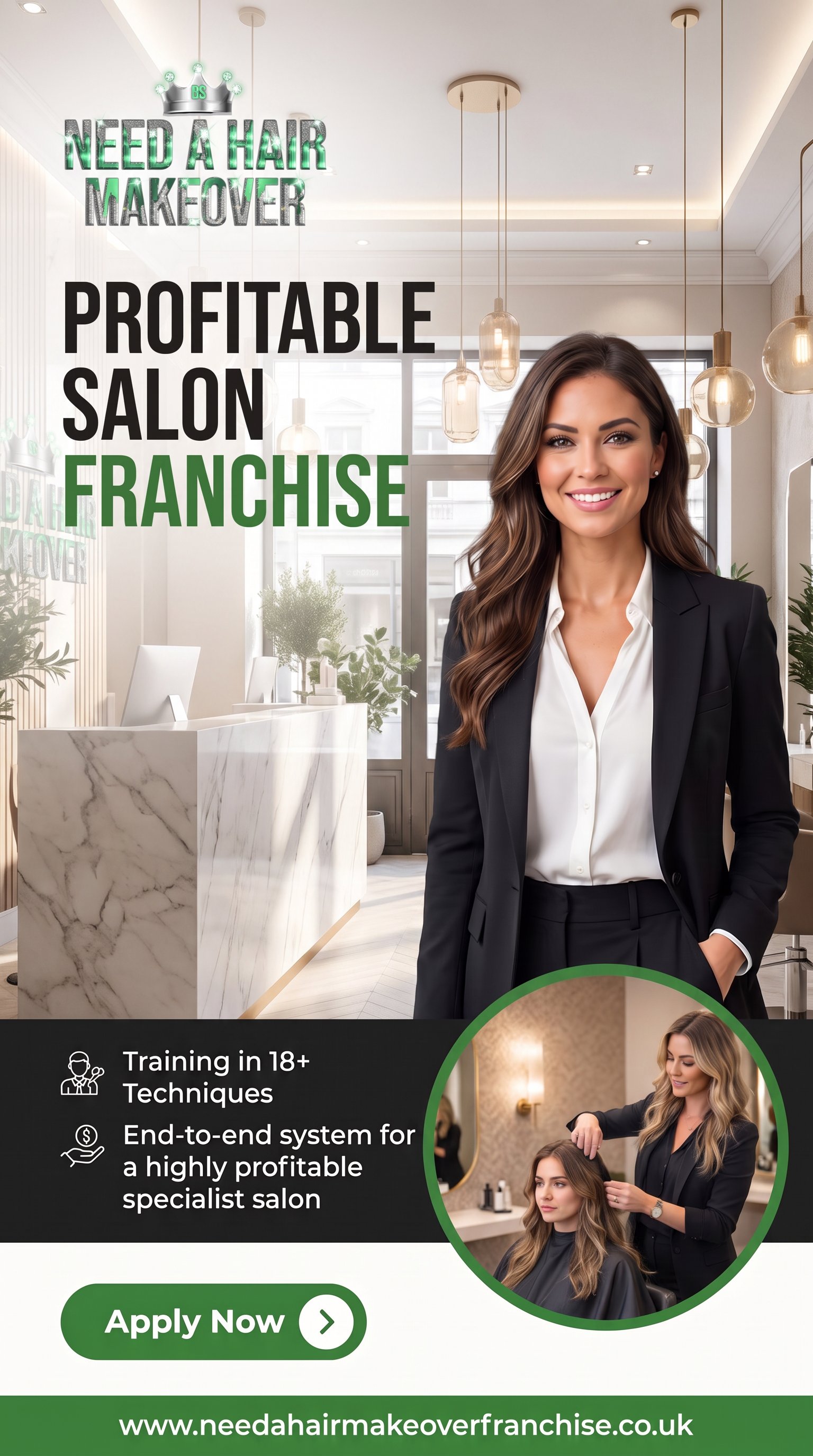
A franchise is different again because you operate your own business using another organisation’s established brand, systems and business model under a franchise agreement.
The important question is not: “Which structure is most popular?” It is: “Which structure supports the life and business I actually want?”
Ask Yourself Some Uncomfortable Questions
Before choosing your route, ask yourself:
Do I enjoy making decisions without guidance?
Do I want complete creative control?
Am I comfortable experimenting and potentially getting things wrong?
Would I value having experienced people I can contact for support?
Do I enjoy following systems?
Would I rather develop my own brand or grow an established one?
Do I want to spend time developing procedures,
or would I prefer to start with existing procedures?
How quickly do I want to get operational?
What level of risk am I comfortable taking?
What do I ultimately want this business to become?
These questions can tell you far more about your ideal business model than simply asking, “How much money can I make?” A Franchise Does Not Remove Entrepreneurship
There is sometimes a misconception that franchise owners are not “real entrepreneurs”.That misunderstands what running a franchise involves. A franchise owner still has to build relationships, attract customers, manage people, understand their local market, control costs, solve problems and generate revenue.The difference is that they are doing it within an established framework.
Think of it this way.
One person decides to design the car, build the engine and create the road map. Another decides they would rather get into a vehicle that has already been engineered and concentrate on driving it successfully. Both still have to reach the destination. They have simply chosen different ways of getting there.
The Best Business Model Is the One That Fits You
Starting a business should not be about copying what everybody else is doing. It should begin with
understanding yourself.
Your personality.
Your ambitions.
Your appetite for risk.
Your available capital. Y
our experience.
The level of support you want.
And ultimately the kind of working life you are trying to create.
You may discover that starting independently is exactly right for you.You may decide a partnership makes sense. You may realise you want to build a limited company from the ground up. Or you may discover that owning a franchise gives you the combination of independence, structure, training and support you were looking for.
The important thing is to investigate before you invest.
What Business Structure Suits YOUR Goals? Before registering a company, signing a lease or spending thousands of pounds launching a salon, take 90 seconds to think about what kind of entrepreneur you actually want to become.
Our short assessment helps you explore whether your goals, working style and ambitions may be suited to building independently or operating within a franchise model.Take the 90-second quiz here: https://www.qualiquiz.app/quiz/salon-franchise-candidate-pre-qualification-asses
Because the first question should not simply be:“What business should I start?”It should be:“What kind of business do I actually want to build — and what kind of business owner do I want to become?”
















You must be logged in to post a comment.