Category Archives: micro Learning

Why Stress can stop you from achieving excellence in 2013

managing your stress

managing your stress

Article by Diane Shawe M.Ed.

Take 5 minutes a day to keep your stress level down

Everything seems much faster, urgent and possibly unfulfilling! Just after Christmas and heading into the New Year it can often be a stressful time for lots of people for lots of reasons.

Stress is created by worrying about things in the future or things that have already happened, both of which you cannot change at the very moment you are worrying about it.

Before you read any further do this little test.  ‘At this very very moment whist you are reading this is there a problem affecting you reading this article at this moment in time that is stopping you from reading it? If your answer is ‘no’ then this is because you are living in the ‘NOW’

Living too much into the future or reliving the past are both causes of fear and pain. You would probably find yourself concerned with some of the following thoughts…

  • How can I stop the pain?
  • How can I switch your mind off,
  • How can I stop worrying?
  • How can I relax?
  • How can I be happy?

Well I invite you to explore two words ‘acceptance’ and ‘surrender’ a good place to start.

Become fully present is very empowering and helps you live in the higher order of thinking.

If only our lives was like typing when we can simply undo, delete or Hyperlink to a quick useful reference but alas, lots of things are unavoidable in life.  Never before has it become more important to find ways to decrease and prevent stressful incidents and decrease negative reactions to stress, especially as they can lead to short or long term illnesses.

Here are some of the things that can be done instantly by just remembering to be conscious of them.

Managing time

Time management skills can allow you more time with your family and friends and possibly increase your performance and productivity. This will help reduce your stress.

To improve your stress management:

  • Save time by focusing and concentrating, delegating, and scheduling time for yourself.
  • Keep a record of how you spend your time, including work, family, and leisure time.
  • Prioritise your time by rating tasks by importance and urgency.
  • Redirect your time to those activities that are important and meaningful to you.
  • Manage your commitments by not over- or under committing. Don’t commit to what is not important to you.
  • Deal with procrastination by using a day planner, breaking large projects into smaller ones, and setting short-term deadlines.
  • Examine your beliefs to reduce conflict between what you believe and what your life is like.
  • Build healthy coping strategies

It is important that you identify your coping strategies. One way to do this is by recording the stressful event, your reaction, and how you cope in a stress journal. With this information, you can work to change unhealthy coping strategies into healthy ones-those that help you focus on the positive and what you can change or control in your life.

Lifestyle

Some behaviors and lifestyle choices affect your stress level. They may not cause stress directly, but they can interfere with the ways your body seeks relief from stress. Try to:

  • Balance personal, work, and family needs and obligations.
  • Have a sense of purpose in life.
  • Get enough sleep, since your body recovers from the stresses of the day while you are sleeping.
  • Eat a balanced diet for a nutritional defense against stress.
  • Get moderate exercise throughout the week.
  • Limit your consumption of alcohol.
  • Don’t smoke.

Social support

Social support is a major factor in how we experience stress. Social support is the positive support you receive from family, friends, and the community. It is the knowledge that you are cared for, loved, esteemed, and valued. More and more research indicates a strong relationship between social support and better mental and physical health.

Changing your thinking pattern

When an event triggers negative thoughts, you may experience fear, insecurity, anxiety, depression, rage, guilt, and a sense of worthlessness or powerlessness. These emotions trigger the body’s stress, just as an actual threat does. Dealing with your negative thoughts and how you see things can help reduce stress.

  • Thought-catching helps you stop a negative thought to help eliminate stress.
  • Disproving irrational thoughts helps you to avoid exaggerating the negative thought, anticipating the worst, and interpreting an event incorrectly.
  • Problem solving helps you identify all aspects of a stressful event and find ways to deal with it.
  • Changing your communication style helps you communicate in a way that makes your views known without making others feel put down, hostile, or intimidated. This reduces the stress that comes from poor communication. Use the assertiveness ladder to improve your communication style.

Why Continued Personal Development is important

Lifelong learning it’s important to your continued growth and smiley to core with lives every changing environment, circumstances and economical. Everyday life can often present challenges and like any thing in life if you don’t equip yourself with the right tools trying to fix the problem with the wrong tools can itself be the greater source of frustration.

www.expressingtrainingcourses.com

Four Pillars that underpin buyers requirements for eLearning

Get qualified in days not years

article by Diane Shawe M.Ed

Whilst I am in the industry and excited by the latest trends in e-learning  through blended Learning Management Systems (LMS)  learning being hugely of interest at present, I believe that the four  pillars that go to underpin the buyers requirements and therefore still define the industry offerings are centered around the following:

• Compliance and accreditation
• Scalable and flexible whilst achieving a real reduction in Cost
• Improving , track and measuring Learners performance
• Real time management, alignment and communication to support ongoing changes.

The ability to track and report learner performance remains upper most in many procurers mind.

It will become increasingly important to have specified learning strategy which can deliver effectively against all of these requirements, and getting the “e-learning mix” of technologies obviously including content, collaboration and communication environments (social learning) and control mechanisms will be the key to further industry growth.

Under-pining these trends we are seeing growing interest in how e-learning can address softer skills and this is why we have concentrated our LMS content to this area of learning.

Some vendors are following the vertical market and configuring the offer to meet specific needs, others are differentiating by adding social media and social learning functionalists, and others such as us are aligning the LMS to the latest technologies being colonised by the e-learning industry – mobile/smart devices and video driven content. The trend from the USA is strongly toward talent management and we are often lagging behind.

The smart vendors in my view are aligning and integrating with other solutions: HR, ERP, CRM etc…. Content or Content, which to choose…..?

These developments can only be positive for the industry, as the demand for quality and quantative content will grow and grow.

My one but final view is that we will progress from blending to mixing the content provision as this will be the key challenge to the e-learning industry. The importance of content won’t go away, its just changing faster becoming more “Re-purposable” , “Flexible”, “Interoperable”, and “Accessible” learning content!

Now get this, I am so loving the fact that on its way to us is 3 Dimensional technologies, simulation, holographic all of which will increase the demand for new genres of learning content into a learning reality!

http://www.expresstrainingcourses.co.uk

E-learning growth ‘set to rise to £19 billion by 2015

Get qualified whilst on the move with AVPT

article by Diane Shawe M.Ed.

Academy of Vocational and Professional Training (AVPT) finds that the market for e-learning just keeps growing and growing, according to various research and sales figure surveys

A survey by Ambient Insight Research has showed that the worldwide market for e-learning products was $32.1 billion (£20.5 billion) in 2010 and is expected to rise to $49.9 billion by 2015.

Products and methods of online learning that were deemed the most successful in sales rates included “how to” videos, step-by-step interactive guides and course notes which have multi-media inserts and annotations which directed learners to other resources.

Writer for Gadget magazine, Andre Joubert of MWEB Business said that he thinks the availability of media-rich, interactive e-learning content on the internet – and the advent of uncapped, business-strength broadband connectivity is changing the face of e-learning. He based his analysis on South Africa, but his principles apply worldwide as global sales figures show.

We noted from our research that Mr Joubert said: “E-learning has long been recognised as offering considerable advantages over conventional classroom-based training when it comes to training employees and management quickly, efficiently and conveniently.

So what about the Virtual Classroom?

We see 2012/13 as being the breakthrough year for virtual classrooms, as organisations move on from webinars (which are increasingly commonplace) to more interactive environments offered by virtual classrooms.

I am certainly excited by our  online courses which are recognised and accredited in over 200 subject matters.  As  result of this growing trend AVPT has launched the first globally accredited Virtual Tutor Facilitator course. To train

A New Career Opportunity as a VTF

professionals in becoming a qualified online Tutor who want flexibility and positive earning potential to assist individuals gain a professional recognised certificate  using a mobile learning Management solutions through facilitating their online learning.

Training through online learning is now widely available on the internet and can be beneficial to anything from flower arranging, PowerPoint presentations through to health and safety.

Soft skills is now becoming the new hard skills and offering mobile training and  advice  through e-learning are valuable to many people and a range of businesses globally.

Tim Dingle AVPT Chief Development Officer cited many benefits of the virtual classroom, such as convenience, relevance, immediacy, affordability and ease of use. He added that beginning the learning experience can be as easy as starting up an internet browser.

According to research by Key Note from last year, instructor-led training represents the largest sector of the market, although e-learning teaching – which includes blended learning – showed the highest growth over the review period between 2005 and 2009.

Mobile Learning forging forward.

A 2009 research report summarised that they thought mobile learning could be a “maybe just maybe”, In 2010  a definite trend was being recorded and in 2011 they saw mobile learning as a major driver for the growth of the e-learning market.

The driver is not one of simple learning enhancement and support but driven by a requirement for portability and availability made possible by smart phones and tablet devices, the learning “additionality”. The PC might still remain key to many learners for some years to come but I believe that the call for mobility, flexibility and the trends to workforce mobility will win the day.

We are particularly taken with the concept of second screen learning, in that learners will use mobile devices i-pads, smart phones etc… in conjunction with other forms media such as skype, bluetooth and appliances imbedded in a variety of devices such as the TV, car or even on your fridge.

I do not see mobile learning as a straight replacement to existing genres, and accordingly iIdo not advise organisations to rush headlong into mobile learning solutions because they can be an expensive option if not properly planned out.

Mobile learning in appropriate additional ways  can be used to enhance the learning mix. One principle game changer is our ability to upload current or new courses into our LMS, cutting down on project development planning time and costs and enabling a blended Learning proposition to commence not only laterally but securely, scalable and in real time.

For instance the unemployed, people of disability, prison population, senior citizens and excluded children from the educational system could all benefit in real time whilst keeping the overall unit costs down by scaling and up-skilling with an emphasis on inclusion and virtual support.

Content can now increasingly be authored or in many cases converted to become fit for all purpose all range device delivery and in real time.

HTML5 coupled with Cloud based services will further embed e-learning into the all- pervasive always on internet. Indeed the terminology of mobile learning/ e-learning will lose differentiation, as will the nature of the device that the learning is undertaken upon.

Technology coupled with the growing importance of social media learning will lead to greater learner acceptance. I for one have seen a pattern stemming from the services we are offering to date and look forward to 2013 as we believe it is going to be a bumper year for mobile learning.

Visit us on http://www.expresstrainingcourses.com or call us if you would like more information on 0203 551 2621.

Join us now with over 200 courses


Mobile Learning is the HOT’s

Helping a Higher Order of Thinking Skills

Get qualified in days not years

article by Tim Dingle CDO Academy of Vocational and Professional Training Ltd.

The world of online learning is changing very rapidly. Instead of the old mantra of ‘e’ Leaning, we can now truly think about ‘mobile’ learning or mLearning. There is no doubt, mLearning is hot. And for good reason. If done right, it can produce great results by decreasing costs and improving performance.

Recently, I had a conversation with someone new to mLearning and it struck me that she didn’t fully understand the value of mLearning.  I think this is common as more people are joining the world of mLearning.  Understanding mLearning’s value helps you make the best decisions about when and why to use it.

So here at the Academy of Vocational and Professional Training, we recopognise the power of mLearning and suggest the following reasons why it will dominate the online education market.

1.      Decreased training costs.  Producing learning content is time consuming whether it’s online or not.  With mLearning, each time the course is accessed your return on investment improves because you are dividing the fixed production costs by number of uses.  You also have savings through decreased travel, reduced material, and hopefully improved (and more efficient) performance.

2.      Less material costs.  Let’s say you have to train how to arrange equipment in a sterile environment like an operating room.  If you had to use the real environment, it would be costly.  Even setting up a fake environment has material costs and labour.  By creating the environment online and letting the learner practice, you never have to worry about the costs associated with set up, use, and clean up.

3. Increased productivity.
 Because mLearning is not bound by geography or time, you can control training’s impact on production by training people during down times.  In addition, with the current economy, you’re asking people to do more with less.  So mLearning is a great way to give them the tools and skills needed to enhance their performance.

4. Getting the message across.  You may have a great facilitator, but that’s no guarantee that the courses are presented the same across sessions.  mLearning allows you to create a standardized process and consistency in the delivery of content.  It also compresses delivery time.

5. Synchronous and Asynchronous Learning  Live learning events require that those who participate align their schedules to the training calendar.  mLearning eliminates this because the course can be accessed anytime, anywhere.
6. Giving the freedom to fail.  Real learning requires some failure.  But no one likes to fail in a classroom full of other people.  mLearning lets you fail without fear.  This encourages exploration and testing of ideas.  With the right feedback you create a great learning environment.  Worst case, you can always start over.  Something you can’t always do in class.

A New Career Opportunity


7. Learning and Retaining.
  The combination of multimedia and instructional design can produce a very rich learning experience that is repeatable.  Throw in some good practice activities with feedback and you have a learning environment that’s going to help your learners retain the course content which will produce results.

8. Student Centred learning.  Look out the window at a car park. My guess is that you’ll see a dozen or more different cars.  They all do the same thing, yet we have personal opinions about what we want to drive. The same for learning.  Learners want control.  mLearning allows you to offer control to the learners in a way that classroom learning doesn’t.
mLearning Nurtures a Learning Organisation and Community

9. Learning Management.  Many people see mLearning as only the authored courses.  But mLearning includes all sort of online technologies.  If you incorporate some of the tools that allow collaboration and conversation, you can capture organizational knowledge that is available for future learners.

10. The Sharing Economy.  The foundation of a learning community is built on sharing what you know with others.  This is where incorporating a forum or wiki really adds value to your mLearning.  Depending on how the course is structured, you can encourage sharing of resources and insight gained from the course.

In addition to all these advantages, mLearning is really good for the environment. An Open University’s study found that producing and providing distance learning courses consumes an average of 90% less energy and produces 85% fewer CO2 emissions per student than conventional face to face courses.

One of the challenges with making mLearning effective is how you manage the courses and access to resources.  I’m an advocate of freeing up the course navigation and giving the learner more control .If you’re using a learning management system you might consider how that impacts the learning.
MLearning is cost effective and can produce great results.  It’s all a matter of how you use it. Have at look at our online learning system, mLearning and the eLearning future. Go to: www.expresstraingcourse.com or call us on 0203 551 2621

Tim Dingle BSc (Hons), PGCE, MIBiol, MBA has been involved in education, management and training for the last 30 years. Tim is a former Headmaster of a top school and gained an MBA with a distinction. His dissertation was on Body Language and Interview skills. He has a unique insight into teaching, leadership and management and has now written 24 books on a variety of topics in education. His background in management also includes being Chairman on England Schools Rugby and running a successful Comedy venue. He is rained in NLP and other advanced brain strategies and lectures on these topics around the world.  His academic pedigree (in Biology, Teaching and Body Language) combined with his Mediation skills, gained him a place on the Board of the Global Negotiation Insight Institute (which used to be the Harvard Negotiation project). He has an inspirational style and his enthusiasm for learning is infectious. Tim was an officer in the Royal Navy Reserves for 20 years and is a Yachtmaster and successful sailor.

Tim Dingle is the Chief Development Officer at The Academy of Vocational and Professional training.

E- Book Culture Gaining Momentum spearheaded by Amazon

Article by Diane Shawe M.Ed MIod

Historical evidence has shown that over the past 5 years, some universities had tried to break away from the traditional textbook model in the past—and failed, due to a lack of feasible alternatives. But many academic teachers and private training schools are finding that the online materials now available allow them to teach entire courses without textbooks, with no negative consequences to student learning. In some cases, digital materials may be even better than traditional texts because of their variety and timeliness and media.
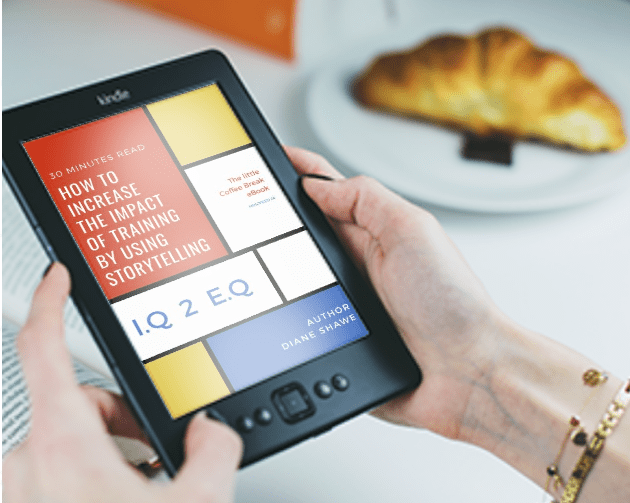
Technological revolution has change the way students are educated. Diane Shawe the founder and CEO of Academy of Vocational and Professional training has demonstrated time and time again that the tablet and the e-book has change how students learn through their Learning Management Solution. LMS.

A recent Tech event lists several advantages for tablets and e-book:

  • Tablets are lightweight compared to textbooks. This is true given that we can store a large number of books on a single tablet.
  •  E-books are cheaper than traditional textbooks. This is a somewhat fallacious argument. Textbooks can be used standalone while tablets require electricity and the initial cost of a tablet is still pretty high. E-books will probably be sold at a cheaper price than traditional textbooks, but e-books cannot be resold once the class is over and thus the overall cost for the student could be as high as today. A major advantage of e-books for publishers is that they might be able to kill the second-hand market
  •  E-books provide richer content. This is potentially true. For some topics, multimedia content will be a benefit. However, this argument was also given when the first e-learning software were distributed, for hyper-card, CDs and other types of technologies
  •  E-books can be automatically updated. This is both an advantage and a drawback. For the student, this means that it can get the latest content. Note that this does not require a tablet and nature has introduced a principle of biology textbook that is hosted on its servers and also regularly updated. For the teacher, it means that he/she has to check the updates of the e-book each year and reflect them for his/her classes.

I think that it is useful for teachers and even the educational departments throughout the UK begin to experiment with the utilisation of e-books in classes as well. Instead of storing lots of paperback text books, the saving could be stealth like which the saving could be redirected to other much needed resources short of funding. The courses are packaged in a chunk-able format so that blended learning can take place whilst the student is on the move and help young people into work quickly.”

Academy of Vocational and Professional Training Ltd has expanded it online suite of courses  to help students access whilst on the move a range of soft skills courses.  Tim Dingle the Chief Development Officer states: “The ‘Chunk-able format’an  Introduction to a new kind of Learning  in which the courses are designed in, allows students to work on the move using their tablet, smartphone or notebook, rather than committing to a 2000-word essay and most courses can even be completed in just one month! Every student is assisted by a live Virtual Tutor Facilitator so as to ensure every student completes there course in four weeks”

As initiatives such as those mentioned above are expanded, they just might be catalysts for growth in the market for low-cost or free digital textbooks. And as far as the educators who’ve created their own digital alternatives are concerned, these efforts have the potential to replace textbooks altogether.

£6000 worth of Scholarship awarded to 3 candidates following their 3 minute pitch at the Scholarship Den.

Entries now being accepted for November 2012

E-Learning hub, the Academy of Vocational and Professional Training, wards 3 scholars a scholarship at ‘Dragon’s Den’ style initiative
by Diane Shawe CEO

AVPT Launched it’s first Scholarship Den on  Friday 12th October 2012 at the Youth Enterprise Live Initiative at Earls Court Exhibition Centre, 10 lucky young people entered the 3 minute pitch to explain to five judges why they deserved a scholarship and how it would help their business.  Dragon’s Den style! Potential scholars battled it out for the chance to acquire a scholarship worth over £2,000 from The Academy of Vocational and Professional Training (AVPT). Cutting the red tape to students scholarship

Kamal Hyman was one of the lucky candidate who pitched for a suite of Personal Development courses.  Kamal says “I arrived at the exhibition not expecting to really gain anything, and now my parent and I are over the moon!” He goes onto say that he want’s to be an inspiration to other young teenagers and help motivate them towards their career aspirations.

AVPT supports young adults by offering them affordable and quick globally accredited soft skills qualifications. Diane Shawe, Founder and CEO says: “Our courses range from £250 to £4,500, which can be done either online or at one of our fast track training workshops. However, we respect that some students aren’t in the financial position to pay this money, and that’s why we have created the Scholarship Den.”

AVPT has found that many graduates are struggling to take their first, all important, steps on the career ladder as potential employers worry that graduates do not have enough experience. Tim Dingle, Chief Development Officer, explains how AVPT can help graduates overcome this issue, “Many students and young people are stuck in a catch 22. Employers aren’t willing to take the risk on inexperienced individuals and graduates aren’t able to gain experience. AVPT specialise in courses that are prepared at NVQ level 4 standard. The courses are packaged in a chunk-able format so that blended learning can take place whilst the student is on the move and help young people into work quickly.”

The ‘Chunk-able format’an  Introduction to a new kind of Learning  in which the courses are designed in, allows students to work on the move using their tablet, smartphone or notebook, rather than committing to a 2000-word essay and most courses can even be completed in just one month! Every student is assisted by a live Virtual Tutor Facilitator so as to ensure every student completes there course in four weeks.

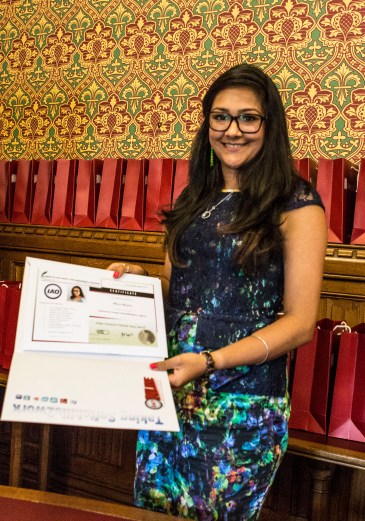
On September 21st 2012, AVPT’s first intake of students received their awards at the House of Lords with certificated globally accredited by the International Accreditation Organisation (IAO). Lord Ahmed congratulated the students and recognised that e-learning has a place in helping all types of people continue in life-long blended learning.

Students receiving their certificates Baroness Uddin and Lord Ahmed

As the m-learning hub continues to grow, AVPT is now working with apprenticeship schemes to provide apprentices with the key skills they require. With this new initiative and the Scholarship Den’s launch, looking forward it is set to be a very busy and successful year!

To find out more information about the Academy of Vocational and Professional Training please visit http://www.avptglobal.com or call 0203 551 2621.

Watch our Videos

Students receiving their certificates Baroness Uddin and Lord Ahmed Introduction to a new kind of Learning
Cutting the red tape to students scholarship

£8000 worth of Scholarship to be given to four students in 45minutes.

Image

Maya receiving her certificate at the house of Lords

E-Learning hub, the Academy of Vocational and Professional Training, targets scholars by launching a ‘Dragon’s Den’ style initiative

Launching Friday 12th October 2012 on stand 315 at the Youth Enterprise Live Initiative at Earls Court Exhibition Centre, young people will be encouraged to pitch the reasons they deserve a scholarship to a group of experts, Dragon’s Den style! Potential scholars will be battling it out for the chance to acquire a scholarship worth over £2,000 from The Academy of Vocational and Professional Training (AVPT). Four of the candidates will be chosen on the day, to mark the launch of the Scholarship Den with Channel 4 recording the day’s events.

AVPT supports young adults by offering them affordable and quick globally accredited soft skills qualifications. Diane Shawe, Founder and CEO says: “Our courses range from £250 to £4,500, which can be done either online or at one of our fast track training workshops. However, we respect that some students aren’t in the financial position to pay this money, and that’s why we have created the Scholarship Den.”

AVPT has found that many graduates are struggling to take their first, all important, steps on the career ladder as potential employers worry that graduates do not have enough experience. Tim Dingle, Chief Development Officer, explains how AVPT can help graduates overcome this issue, “Many students and young people are stuck in a catch 22. Employers aren’t willing to take the risk on inexperienced individuals and graduates aren’t able to gain experience. AVPT specialise in courses that are prepared at NVQ level 4. The courses are packaged in a chunk-able format so that blended learning can take place whilst the student is on the move and help young people into work quickly.”

APVT Global launches Scholarship Den

The ‘Chunk-able format’ in which the courses are designed in, allows students to work on the move using their tablet, smartphone or notebook, rather than committing to a 2000-word essay and most courses can even be completed in just one month!

On September 21st 2012, AVPT’s first intake of students received their awards at the House of Lords with certificated globally accredited by the International Accreditation Organisation (IAO). Lord Ahmed congratulated the students and recognised that e-learning has a place in helping all types of people continue in life-long blended learning.

As the m-learning hub continues to grow, AVPT is now working with apprenticeship schemes to provide apprentices with the key skills they require. With this new initiative and the Scholarship Den’s launch, looking forward it is set to be a very busy and successful year!

To find out more information about the Academy of Vocational and Professional Training please visit http://www.avptglobal.com or call 0203 551 2621.

Academy of Vocational and Professional Training presents its students certificates at the House of Lords

Rachel Fanshawe receives her certificate from Baroness Uddin

The Academy of Vocational & Professional Training held it’s first graduation ceremony on Friday 21st September in the Grand Committee room at the House of Lords.  The first intake of 38 was presented their certificates by Baroness Uddin of which six students from Oman was awarded certificates in Leadership Skills, Crisis Management and effective feedback.

All the courses supplied by AVPT are globally accredited by the International Accreditation Organisation (IAO) who granted AVPT full accreditation in June 2012.  Diane Shawe the CEO was delighted and wanted to mark this very special occassion for the first lot of students to benefit from this global accreditation.

Afterwards, Lord Ahmed (founder of the

Lord Ahmed & Diane Shawe CEO

Entrepreneurship Committee in the House of Lords) offered up congratulations and was delighted that technology could inspire and be a constructive vehicle to help vocational training through m-learning.

Diane Shawe founder & Chief Executive Officer launched this global service which offers more than 240 outstanding interactive on-line and express classroom courses, covering a wide variety of subjects. The courses are flexible, scalable and student centered. Diane and her team are committed to supporting the global lifelong learning experience.

The Academy of Vocational and Professional Training is a globally accredited organisation whose courses and certificates are recognised around the world. Tim Dingle Chief Development Office states “In these times of economic and educational uncertainty it makes sense to gain qualifications that can improve life chances, and we believe that our online blended learning methodology uses fully trained virtual tutors will aid super-learning through our latest e-learning management strategies”.

AVPT’s courses work for anyone who wishes to learn rapidly, whether unemployed, redundant, disabled, retired, graduate, single mothers, ex-forces, lawyers or those simply wishing to up-skill or become one of the growing number of online Virtual Tutor Facilitator.

Academy of Vocational & Professional training will be exhibiting at stand 315. They are the key sponsors for the education section and will be delivering 8 seminar and workshops at the Youth Enterprise live on the 12th & 13th October 2012.  Tickets are available online free of charge.

www.expresstrainingcourses.com

The ‘Multi-Generational’ workforce and m-learning

article by Diane Shawe BBA., M.Ed IEEE  CEO Academy of Vocational and Professional Training Ltd

Social Media, New media and e-Networking, whatever we want to call it,  has certainly changed more than the way we work, the way we share and consume knowledge and even complain. The context in which we work is faster and faster, and result can almost happen in real time around the world.

Well they have come up with yet another gadgetry word, wait for it…  The workforce of the 21st century is now being referred to as the  ‘Multi-Generational Workforce’ because it consist of a mixture of baby boomer’s and generation Y.

Generation Y differs from the baby boomer’s because they were brought up in the digital era. They are familiar with the internet and social media and easily post a question into their on-line network and receive all types of answers in seconds!

With this in mind, we see a lot of the old ‘Tanker’ type organisations refusing to initiate, release, set free the use of this new powerful media throughout there organisation because of speculative fear mongering proposed by their IT departments!  I guess these guys need to safeguard their jobs!  I know the truth hurts.  They say a tanker takes a much longer time to turn than a speed boat.  Look at the graveyard of large tanker companies who just did not heed the writing on the wall.

This unstoppable social media era has taken a few large employees by surprise because smaller leaner business have taken the reins by freeing and empowering all their staff to become ambassador’s for their company  enabling not one but many to respond to change and  guarantee online responsive service and  quality to the every fast moving consumer who can complain in nano seconds around the world!

The investment of continuous education (lifelong learning) of any work force is imperative. With more and more titanic type organisations downsizing, multi skilling the remaining staff efficiently is a no brainer!

Research of Harvard shows that in 1986 when the first baby boomer’s started to work they had to rely for 75% on their own knowledge. The other 25% came from sources such as manuals. In 2009 people were relying on only 10% on their own knowledge and on 90% on information from third party sources such as social networks. New media did not merely change the way we work but primarily the way we share knowledge and learn. Therefore, companies need to make sure their workforce knows how to navigate the vast online environment.

In this sense, m-Learning is more than just a cost saving method but a strategic tool to avoid damaging the company’s reputation and to project a positive brand image.

Social Media and employees
One single negative post or tweet of an employee can have a devastating effect on the image of an organisation. For this reason, many organisations have implemented policies which offer support and guidance on the usage of social media. This empowers employees to use social media when necessary while still avoiding the pitfalls that can generate negative PR fallouts. But merely setting up these policies will cut short of these goals. That is why, increasingly, organizations use m-learning to communicate these guidelines and rules in an interesting and interactive manner. There is another major advantage to use m-Learning versus traditional training methods: the costs. Academy of vocational and Professional Training can assist any company deliver to their entire workforce  courses that are significant in  a scalable way. m-learning provides a solution which can be accessed from the desktop, iPad, Tablet, notebook or smartphone at any time and be kept up to date in real time with changes.

mobile-learning
m-Learning is increasingly used for specific training purposes, such as communicating the social media guidelines, but it can also play a major role in the broader development and training of personnel. One of the key characteristics of well-designed m-learning solutions, is that they create a space where workers can be active and inquisitive in their learning.

What’s next?
On the modern work floor we encounter a mix of various generation groups. In the year 2012 knowledge is not the ultimate goal, because knowledge is just a few mouse clicks away. It is about how one is able to apply this knowledge and provide an added value. There are several ways to make learning more interesting for both young and mature workers. Simulations, e-coaching and online peer-to-peer learning can help bring together the generation gap. Below we provide some ideas on how we can help to accelerate learning within the organisation:

1. Keep it simple.
By adding a variety of  layers, a blended learning approach meets the various learning styles with tool that are relevant and challenging for each employee. Keeping it light by a combining video, images and text without eating too much data.  Encourage employees to share experiences and let them contribute to the improvement of m-learning, so that they experience blending learning as one coherent experience.

2. Work with real-life cases
Real-life cases are recognisable and will therefore be motivating. Employees should be encouraged to collaborate and share knowledge and ideas. This can be reached by integrating a familiar environment. Many employees love to learn if this will assist them to execute their daily work.

3. Mirror reality
Learning is most effective when simulations are as closely related to reality as possible. We know that Facebook, Twitter or LinkedIn are the new game shifters in online communications and could be used most effectively in a controlled environement. Competitions or games could help challenge and stimulated the employee to make certain choices or come up with ideas. Be recognised and awarded. These are the most concrete experiences one can gain.

4. Make progress visible
People must be motivated to continue to learn. It is important that one can measure their progress in adopting new ideas, knowledge and behavioural changes. By acknowledging progress, the incentive to continue grows. By creating a competition element, one adds value. The employee can measure the success of the decisions made when they lead to a comparable and competitive result.

In many organisations, there is much to improve in terms of development and training. Sometimes employers forget that the whole organisation could suffer from economic and emotional depression, especially whey no energy is put into real motivation or stimulation.

While everyone knows that knowledge, development and involvement can make all the difference for a company to increase performance. Introducing an m-learning tool to reflect and inspire a higher order of thinking skills which incorporate communications, could reinforce each and every member of staff throughout an organisation.  After all it is not the size of the dog, but the fight in the dog that will set the new trendsetters apart. So  Let’s get to work! Let’s help your organisation stimulate on a scalable and cost effect way with our no nonsense approach to m-learning, courses and certificates that count globally.

For more information about our services visit www.academy-of-vocational-and-professional-training.com or call us on 0203 551 2621 to discuss our bespoke or white labelling services.

Online Learning is where Online Music was five years ago

Article by Andrew Maynard
2020Science

Posted: Jul 6, 2012

YouTube is gearing up to transform the way we learn…We are at the beginning of an exciting revolution in online educational content.

That’s the message that came across loud and clear at this morning’s VidCon breakout panel on education. In an overflowing room of well over two hundred conference goers, head of YouTube Education Angela Lin led a panel of five leading video makers in a lively discussion, that gave a compelling glimpse of the future of online education.  And it was a future that didn’t feature too many conventional lessons or institutionalized videos!

As the panel included John and Hank Green (SciShow, CrashCourse and a gazillion other things) I was expecting a room packed to the brim with their incredibly engaged teen fans – which it was.  An odd audience you might think for a panel on education.  But this was a serious, intelligent and engaged crowd, eager to listen to the panel, ask questions and provide their own insight on online learning.

Joining the Green brothers were physics blogger Henry Reich (minutephysicsminutephysics), science YouTuber Brady Haran (The Periodic Table of Videos), Mike Rugnetta, host of the PBS Idea Channel and Vi Hart of Mathemusician and the Khan Academy.

What was notable was that these panelists are all a) successful online educators (extremely so in some cases), b) not formally trained in teaching (to my knowledge) and c) not representing mainstream educational institutions (not counting PBS).  This is important, because there was no doubt here that the excitement and impact surrounding online education is occurring outside conventional educational circles – and in many cases leaving them standing.  John Green talked about this emerging online education community as being “disruptive,” while brother Hank talked about a “new kind of learning.”

And everyone the panel agreed that education content on YouTube is where online music was five or six years ago, and on the cusp of something really big.  But a big that might not necessarily include conventional educational institutions unless they get their act together!

On this point Henry Reich made the distinction between learning and teaching.  Formal educators (as well as “informal educators” in museums and on educational TV programs) teach to a curriculum or a plan, with competencies, learning objectives and evaluation being the name of the game. But at the cutting edge of community online education, content developers are using their passion and interests to facilitate user-driven learning.  And as John Green pointed out – endorsed by the packed room – people want to learn!

Bridging this gap between learning and teaching is perhaps going to be one of the biggest challenges – and opportunities – of online education over the next few years.  Without question, there is a global hunger for learning, and some very talented individuals who are beginning to satisfy this hunger using an increasing array of online tools.  This will undoubtedly help people develop and grow as individuals – but how do you also give them the tools to “do stuff” as opposed to simply enriching their understanding and satisfying their curiosity?

As new tools come online, educational institutions are jumping on the band-wagon to provide instructional content.  Initiatives like Coursera and edX are bringing college course material to a far wide audience using online video.  But even these innovations are in danger of looking turgid and outmoded in comparison to the new breed of community educators.

There are some moves to close this gap.  Brady’s Periodic Table videos for instance are used by teachers to kick-start classes and inspire kids.  And the AVPT Ltd is leading the field in terms of combining user-driven learning with practical virtual facilitating.  But if teaching institutions want to keep up with the revolution in online learning, it seems pretty clear that they are going to have to radically rethink their ideas of web-based content.  They are going to have to start partnering with and learning from the masters of online community education.  And they are going to have to let go a bit and embrace the mess and madness of online educational content as they respond to a growing community’s desire to learn.

What seems clear after this panel is that we are at the beginning of an exciting revolution in online educational content.  What is not clear is whether the teaching institutions can get their act together fast enough not to be sidelined in the rush toward online learning.


Andrew Maynard is Director of the Risk Science Center at the University of Michigan School of Public Health

Source

Taking SoftSkill2Work

At Academy of Vocational and Professional Training, we care about your success as an individual or organisation. You may have a new job in mind or you may be looking to start a new business, what most of us don’t have is the luxury of time and money!  Whatever your reason you will find that our courses are designed to help you train on the go.

We have developed our e-Training products to serve as a complete training solution to deliver high quality blended learning. We’ve already completed the preparation work for you and if you want to train personally, or are currently training, or planning on developing an organisational training plan, we have all the materials you need.

Diane Shawe M.Ed  CEO  http://www.expresstrainingcourses.co.uk