
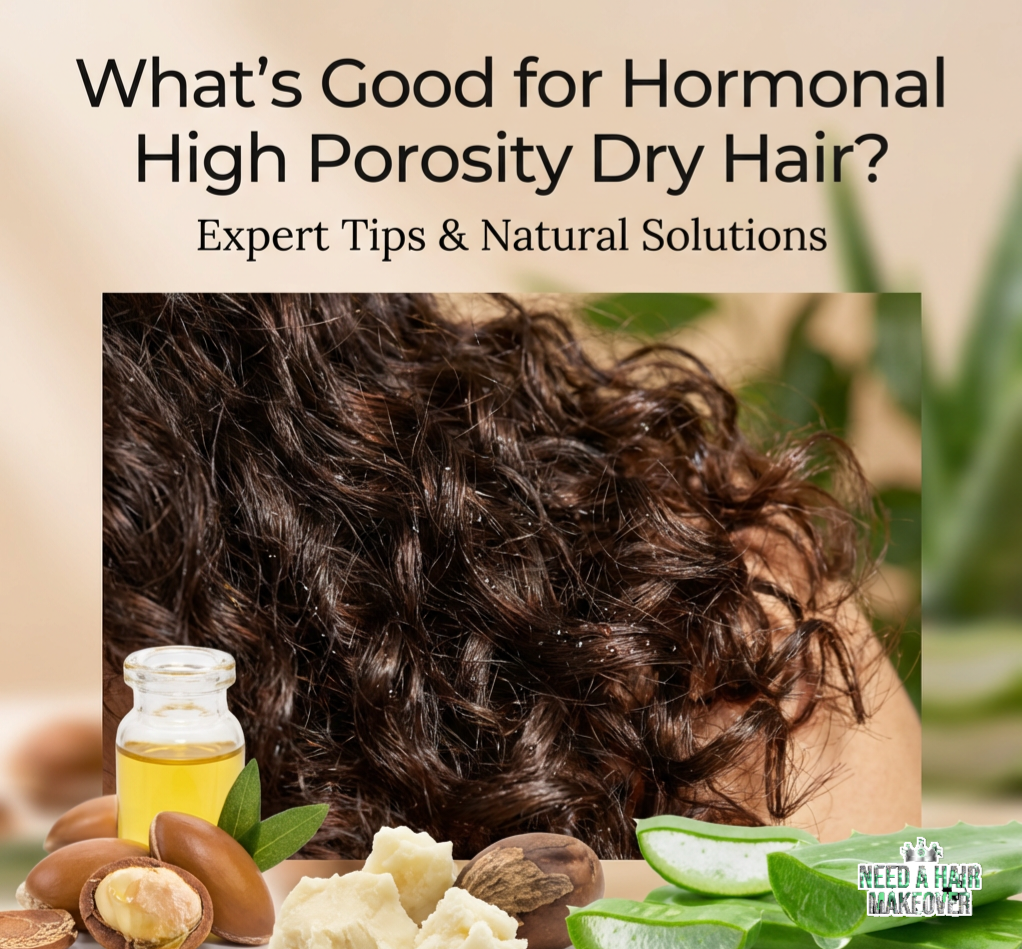
Hormonal shifts can significantly alter hair texture, often leading to high porosity, which means the hair cuticle is raised or “holey,” allowing moisture to enter easily but escape just as fast.
This results in hair that feels perpetually dry, frizzy, and brittle.
What Causes It?
Hormonal high porosity is primarily driven by changes in the endocrine system that affect the scalp’s natural oil production and the hair’s structural integrity:
1. Menopause and Perimenopause: A drop in estrogen reduces sebum (oil) production. Without enough sebum to coat and “seal” the hair shaft, the cuticle becomes more fragile and prone to lifting.
2. Thyroid Imbalances: Both hypo- and hyperthyroidism can interfere with the hair follicle’s growth cycle, leading to thinning and a more porous, “straw-like” texture.
3. Stress (Cortisol): High cortisol levels can disrupt the delivery of nutrients to the hair follicle, weakening the protein structure (keratin) of the hair as it grows.
4. Aging: Naturally decreasing levels of collagen and lipids in the body make the hair fiber less elastic and more porous over time.
What Can You Ingest to Help?
Improving hair from the inside out focuses on providing the building blocks for a stronger, smoother cuticle.
– Omega-3 Fatty Acids: Found in fish oil, flaxseed, and walnuts. These help lubricate the hair from within by supporting the sebaceous glands.
– Collagen & Biotin: Supplements containing marine collagen or biotin can help strengthen the hair’s keratin structure, making the new growth less porous.
– Hyaluronic Acid Supplements: Known for holding 1,000 times its weight in water, oral hyaluronic acid can help improve systemic hydration, which reflects in the scalp and hair.
– Protein-Rich Foods: Since hair is 90% protein, ensuring you get enough lean meats, eggs, or plant-based proteins (like lentils) is vital for repairing the hair “cortex.”
– Zinc and Iron: Deficiencies in these minerals (common during hormonal shifts) lead to brittle, porous strands.
What Can You Treat It With?
High porosity hair needs products that fill the gaps in the cuticle and seal the moisture in.
1. Protein TreatmentsHigh porosity hair has “gaps” in the cuticle. Use a strengthening mask containing hydrolyzed keratin, silk, or wheat protein once every two weeks to temporarily patch those holes and add structure.
2. The L.O.C. MethodThis layering technique is highly effective for high porosity hair: – L (Liquid/Leave-in): Apply a water-based leave-in conditioner.- O (Oil): Apply a heavy oil like Argan, Avocado, or Jojoba to mimic natural sebum.- C (Cream): Finish with a thick styling cream or butter (like Shea butter) to “plug” the cuticle and lock everything in.
3. Apple Cider Vinegar (ACV) RinsesHigh porosity hair is often too alkaline. An ACV rinse (1 part vinegar to 4 parts water) helps lower the hair’s pH, which flattens the cuticle scales, making the hair smoother and shinier.
4. Seal with Cold WaterAlways finish your shower with a blast of cold water. This helps physically close the raised cuticles before you step out into the air.
5. Avoid Sulfates and High HeatSulfates strip the little oil you have left, and high heat further “pops” the cuticle open. Opt for sulfate-free “co-washes” and air-drying whenever possible.
For hormonal high porosity hair, you need a mask that provides both protein (to fill the gaps in the cuticle) and heavy lipids (to replace the natural oils lost due to hormonal shifts).
The “Cuticle-Seal” DIY Mask
This recipe combines protein to strengthen the hair shaft and fats to smooth down the raised cuticles. Ingredients: Thinking About Balayage? Here’s How to Know if it’s Right For You!
– 1 Egg Yolk: Contains lecithin and protein to “patch” the holes in the hair fiber.
– 2 Tablespoons Extra Virgin Olive Oil or Avocado Oil: These are “penetrating oils” that can actually get inside the hair shaft to provide deep moisture.
– 1 Tablespoon Raw Honey: A natural humectant that pulls moisture into the hair.
- 1 Teaspoon Apple Cider Vinegar (Optional): Helps lower the pH to flatten the hair cuticle.
Instructions:
1. Mix: Whisk the egg yolk and oil together until creamy, then stir in the honey and vinegar.
2. Apply: Start at your ends and work your way up. High porosity hair is usually most damaged at the tips.
3. Dwell: Cover your hair with a shower cap. The trapped body heat will help the treatment penetrate. Leave it on for 20–30 minutes.
4. Rinse (Important): Rinse with cool or lukewarm water. Never use hot water, as it will “cook” the egg in your hair and cause the cuticle to lift even further.
5. Wash: Follow with a sulfate-free shampoo to remove any residue.
Quick Tip for Application Since high porosity hair is “thirsty,” apply this to damp (not soaking wet) hair. If the hair is dripping wet, the water fills the gaps in the cuticle first, leaving no room for the mask to sink in.
Ready to restore your hair’s strength and seal in lasting hydration?
Experience the ultimate transformation by booking a Deep Hair Repair with Infrared Treatment at the award-winning Need a Hair Makeover Specialist Hair Extensions and Hair Loss Salon.
Our advanced infrared technology penetrates deep into the hair shaft to repair hormonal damage and smooth high-porosity strands from the inside out. Don’t let dry, brittle hair hold you back—visit http://www.needahairmakeover.com today to schedule your consultation with our specialist team and give your hair the professional care it deserves.
Thinking about hair extensions but its becoming confusing?
Losing your hair? Not sure which is best technique?Complete this assessment to receive your personalised result on the best solution for your hair type.
https://qualiquiz.app/quiz/which-hair-extension-or-hair-replacement-method-is-0d8d0990


















 All about Hair Extensions & Hairloss Courses and Franchise Opportunity by Diane Shawe
You must be logged in to post a comment.