Category Archives: credit cards

Startbucks and McDonalds have launched contactless payment apps

A few days ago I wrote about the coming of the mobile phone credit card!   Well it’s here.  Many people across the industry have been excited about the prospects for mobile and contact-less payments for some time now – myself included.

To catch the public’s imagination, awareness and indeed a widespread frenzy similar to that experienced at the launch of iphone 4 or the ipad,  it has a lot of impact when well known merchants and locations that people see in the high street or mall and buy from every day start to offer and promote new ways of paying.

This is what has happened in the last few days.

First we had Starbucks. The Starbucks Card Mobile App is now available at its 6,800 U.S. company-operated Starbucks, and all U.S. Target stores. Extensive rollout here. Just scan your phone and go with your coffee – it’s promoted as the fastest way to pay. Excellent move and my guess is that in future assuming it goes well we’ll see apps for other smartphones to add to BlackBerry and iPhone.

Next comes McDonalds, who have announced that contact-less card payments will be offered in all of its 1,200 UK restaurants by this summer, working with Visa. Oh, and, wait for it – the company is emphasising speed  – McDonalds prefaces “contact-less” by labelling it “lightning fast”. McDonalds explains that “Contact-less payment saves time and effort, allowing customers to quickly pay for items which cost £15 or under without having to search around for cash.”

Whilst customer convenience is one of the key benefits, there are more benefits too. Reduced queues or lines for example. How many times have we walked up to a fast food or drink outlet, seen eight people waiting, and moved on? So moves like this reduce customer loss and increase customer throughput. They also mean less cash is handled by the merchants – with attendant risks of errors in counting, theft, mistakes in giving change and slower transaction speeds.

this is why several research organisations are forecasting a big future for mobile payments with nearly 1 in 2 of us having made a mobile payment of one sort or another by 2014. With iconic fast food and drink brands like Starbucks and McDonalds leading the way, we’re sure to see more launches in the future. After all, 2011 has only just begun….  But what about the small retailers, what can they do to get a slice of this market?  Well perhaps one of the first things to consider is getting your own business mobile apps in place and then look to belong to a partner offering a wider service and mobile access to consumers passing outside your shop front.

Launching marketing apps can backfire for retailers

by Diane Shawe

more than just a phone

For a growing number of UK shoppers, the difference between off-line and on-line shopping will be no line at all.

What does this mean for retailers and marketing companies?

With an inundation of new smart phone apps these hand-held shopping tools are redefining the shopping experience and blurring the distinction between the in-store experience and the virtual world of information now available in the palm of your hand.

Advances in location-based technology, price-comparison apps, bar-code scanning apps and social-networking tools have turned the mobile device into a real-time third channel of commerce, empowering consumers while challenging retailers to rethink the way they do business.

The appetite for new apps seems voracious. A recent survey by comparison-shopping site Price Grabber revealed that 36 percent of consumers plan to use their mobile phones for shopping-related activities this holiday season.

Around 4.2m of us in the UK are already using our mobiles to access the internet and browse retailer’s e Commerce sites

Recession-wary consumers are embracing new tools that can instantly call up product specs, reviews, price comparisons and input from Facebook friends and Twitter followers, all while they’re standing in the aisle.

David Dorf the Director of Technology Strategy states ” The United Nations estimates about 60 percent of the world’s population has access to a mobile communications device. More Americans have a mobile phone than own a credit card, and an increasing number of those are smart phones capable of Internet access. This proliferation is so unlike that of any other modern-day consumer technology that it is difficult to fully measure the impact on consumers and the industries that serve them.

With what is effectively a computer in the palm of their hands, consumers are finding new ways to do everything from banking to managing healthcare and household services. Shopping is a natural fit, and the retail industry has emerged as a front line for innovation in mobile applications. The mobile commerce revolution has changed almost every aspect of the retail business, from the way that we think about customer relationships to the way that we manage inventory and complete transactions”

So where are the retailers in all this? Playing catch-up with their customers as fast as possible in most cases, often looking for the quick wins.

Shopping is changing, and while the urge to please customers, capture sales and compete with competitors is very hard to resist, as the Interactive Media in Retail Group (IMRG) pointed out in a recent survey of 57 retailers, only four had fully mobile-optimised websites.

Chris Brassington is CEO ofStarfish360 stated in a recent article “It ’s true that many retailers are launching apps and/or a mobile site in an effort to capture the mobile customer, but the survey showed that a tactical approach to mobile marketing is likely to backfire, as 82 per cent of consumers said that if a retailer’s website performed badly, it would dissuade them from buying goods from that organisation, on the web or even in store.

And in today’s social media-driven society, a poor, fragmented customer experience could turn off not only the customer who experiences it, but many more too, if that customer chooses to share their experience on the web. So getting the customer experience wrong on mobile carries a big risk”

Many retailers, instead of providing a joined up mobile experience that will enhance customer service and reduce costs, have instead bolted on a piece of technology that does not provide an integrated shopping experience. These are often bespoke builds from marketing agencies, with one eye on what the competition is doing and increasing revenue for themselves, rather than a clear focus on how their clients customers’ behaviour is changing.

We have all used the phrase ‘blind leading the blind’. In this case we often see no integration, no alignment to the business’ challenges; no strategy in terms ownership; and no cyber psychology lead program to customers needs. So instead of mobile potentially being a progressive channel, it has, in most cases, provided only frustration for the shopper.

Mobile marketing roadmap

Diane Shawe the Project Director for i-send proximity is passionate about helping not only retailers benefit from proximity based mobile commerce and marketing, but how to address the retail sector’s operational challenges when implementing a mobile commerce strategy which can be measured in real time and assist a wide cross section of mobile phone users.

I-send proximity is leading the way towards helping different Boroughs to build a private Bluetooth wide area broadcasting network within a geographical area that will benefit consumers and visitors. By using this low energy, green, permission based and wireless controlled broadcasting network , retail town centre management teams and local authority regeneration departments can implement a cost effective and cost neutral solution. Click to read more

Because we believe that playing catch-up will be significantly more expensive than taking the strategic approach. Adopting the strategic approach will provide the blueprint and the roadmap to ensure the successful implementation of mobile marketing as a consumer channel, from both a business and a strategic viewpoint.

//

Tablets Force Developers to Refocus Strategies on Apps

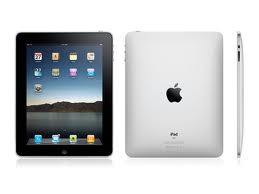
I-send most recently came across several articles which have highlighted changes about to take place in the Apps market due to the growth of the tablet such as the Ipad and others fast in pursuits.

Appcelerator, maker of tools for building mobile, desktop and tablet applications, and IDC have announced results of a joint survey showing that the onslaught of tablet systems has caused some developers to refocus their development efforts.

Indeed, the joint Appcelerator-IDC survey of more than 2,200 developers around the world, indicated that tablet interest spikes across the board: Android Tablet interest jumped 12 points in three months to 74 of respondents saying they are “very interested” in developing for these devices. Interest in Blackberry Play book nearly doubled from 16 percent to 28 percent. iPad rose three points to 87 percent, while web-OS Tablet interest remained flat at 16 percent, the study showed.

With 85 new, primarily Android tablets announced at the Consumer Electronics Show (CES) in early January, developers are pushing these devices to the top of their priority list, Appcelerator officials said.

Overall, the survey reveals how new entrants to the tablet market are changing application development priorities and how businesses large and small are accelerating their efforts to build a mobile application strategy to deal with an explosion in apps, mobile devices, operating systems, and capabilities, Appcelerator officials said.

Moreover, Scott Schwarzhoff, vice president of marketing at Appcelerator, said, taken January 10-12, the Appcelerator-IDC Q1 2011 Mobile Developer Report shows that Google has nearly caught up to Apple in smart phone popularity and is closing the gap in tablets. Microsoft and RIM made solid gains through their product line update, while interest in Google TV and Apple TV dropped off.

And as these trends unfold, it is also becoming clear that the days of mobile app experimentation are over, Schwarzhoff said. This year, developers expect to triple their app development and the average developer is now building for four different devices, the survey showed. Meanwhile, a dramatic increase in the integration of geo-location, social, and cloud-connectivity services underscores new focus on sustaining user engagement, while increased plans to integrate advertising and in-app purchase business models points to a new focus on longer-term financial viability over free brand affinity apps.

With the Android Tablet market set to explode this year, 57 percent of developers said price will be the most important factor for success, followed by minimized fragmentation (49%) and then Android Honeycomb OS capabilities (33%).

“The tablets, unlike smart phones will have wildly different pricing,” Schwarzhoff told eWEEK. “Smartphones are about $199, but tablets will be different. There will be some sub-$100 tablets and developers see this as a big opportunity

Android phone interest, at 87 percent, rose 5 points to tie iPad and close to within 5 points of iPhone, which has 92 percent.  Yet Apple continues to be the number one priority with over 10 billion app sales to date.  Schwarzhoff said a common refrain from developers is: “after iPhone, do I go Android or iPad?”  For Apple, topping the iPad 2 wish list included: new camera capabilities, a USB connector, and an improved retina display, the survey showed.

As indicated, interest in building mobile apps for connected TVs decreased across the board as Google dialed down its launch plans, TV networks blocked access to their content and developers increasingly focused on tablets. Google TV interest slumped 11 points to 33 percent, while Apple iTV dropped 10 points to 30 percent.  Developer interest in other alternatives like Yahoo TV, Boxee, and Roku was also minimal, the survey showed.

Meanwhile, Windows Phone 7 rose 8 points to 36 percent of developers indicating they are ‘very interested’ due to a better-than-expected launch, Schwarzhoff said. Respondents said that Windows Phone’s improved UI was a critical factor for the increase.

“No one is ruling out Microsoft, at least in the enterprise,” Schwarzhoff said. He said Microsoft’s strategy of more stringent control over OEM implementations will limit fragmentation, which could become a concern for Android. Also, Microsoft’s tie-in to business apps is a plus for its platform, he said.

“As apps are becoming more social, more local and more cloud connected, it’s a long way to go [for Microsoft],” Schwarzhoff said. “Are they going to blow it open this year? It’s daunting, but they will improve it. They will be maniacally focused on iterative improvement. With Windows Phone 7 they made it through the toughest launch in their history.”

Regarding app stores, Schwarzhoff said Amazon’s newly announced Android Appstore shows early promise. While 82 percent of developers said they are interested in distributing their apps through the Android Market, 37 percent said they are interested in the Amazon Appstore, 13 percent for Verizon VCAST, and 9 percent for GetJar. Interestingly, developers are about equally as interested in the Mac App Store, at 39 percent, as they are in Amazon’s new Android Appstore.

Appcelerator said the proliferation of apps, devices, platforms, and capabilities has triggered a race among businesses large and small to define a sustainable mobile strategy. This quarter, Appcelerator and IDC introduce a new “Mobile Maturity Model” to identify three phases of mobility adoption shaping up in the enterprise and consumer markets: ‘exploration’, ‘acceleration’, and ‘innovation’. Last year, most respondents (43 percent) said they were in the ‘exploring’ phase of their mobile strategy. A simple app or two – typically on iPhone – and a focus on free or $0.99 branded apps was standard practice. This year, 55 percent of respondents said they are now shifting into the ‘acceleration’ phase.  This phase is defined by the following trends and mobile strategies.

For instance, on average, each respondent said they plan to develop 6.5 apps this year, up 183 percent over last year. And businesses are increasingly taking a multi-platform approach. On average, respondents said they plan to deploy apps on at least four different devices — such as iPhone, iPad, Android Phone, Android Tablet this year, up two-fold over 2010.

Moreover, 87 percent of developers said their apps will connect to the cloud this year, up from 64 percent last year. Interest in commerce apps is also on the rise, with PayPal beating Apple and Google as the number one preferred method for payments. And business models are evolving to stay in lockstep with these more engaging mobile app experiences. Developers are shifting away from free brand affinity apps and becoming less reliant on $0.99 app sales.  Increasingly, the focus is on user engagement models such as in-app purchasing and advertising, with mobile commerce on the horizon. And 81 percent of respondents said they “insource” their development, with the majority saying they have an integrated in-house web and mobile team.

For a complete summary of the findings, visit: http://bit.ly/appcelerator_idc_q1_2011_mobile_developer_report.

At this point it is becoming even more important for town centres and Cities to explore how they can build a private WAN on the platform for Bluetooth Proximity Broadcasting.  This will provide a controlled and direct way to communicate with consumers on a wide range of topics and encourage them to look for specific offers once they have downloaded the cities own integrated apps. Just take a look at what it did for one town centre.

Source


Mobile Phones soon to become credit cards!

Not so very long ago, you may recall, mobile phones were used exclusively for, well, ‘phoning.  Then the launch of texting on the mobile phone became a phenomena, you could text someone you didn’t really want to speak to.. and then to compete with the camera industry the mobile became our camera and photo album rolled into one. Then it became our music player. And our games device.  And our personal organiser. And – the crème de la crème – our means of accessing the Internet, allowing us to send emails, watch TV, tweet, update face book and buy items from our phones.

Oh, and by the way it’s going to be a credit card.

Well, it’s already a means of accessing your bank balance, isn’t it? So why not take things that one step further: forget that little plastic oblong tucked inside your wallet, simply swipe your handset over a bar code reader, the money comes out of your account and the new sofa is yours.

We have just seen Tesco’s advertising the iphone reading bar codes and dropping the item into your smart phone shopping basket!

I know that m-commerce is more simply brimming over with developments for the future but the simple question of whether or not mobiles can replace credit cards is an interesting proposition especially when the theft of mobile phones is on the increase. Because the mobile has become much more than the a simple talk and text communication tool therein lies the problem.

As the handset becomes the point of access to, and indeed default storage locker for, the myriad minutiae of our existence, the potential loss of that handset becomes a far more traumatising then moving home! I think the stress list needs to be rearranged to read a) loss of mobile phone, b) moving c) getting divorced etc.

Speaking personally, I love this new technology, I love the fact that you can do so much from a little handset which simplifies one life and even though the concept sounds great! (less for me to carry in my handbag) how is this method of payment from your mobile phone going to be guaranteed secure?

Because phones are relatively cheap to come by now (especially if you take out a contract) most teenagers are carrying the latest models.  I don’t want to be negative, but I don’t fancy getting mugged for my phone because they can swipe it for a packet of cigarettes.

This is part of the wider problem that we face: managing the transition to a mobile-centric world. It ain’t easy, it won’t be easy, but we have to do it, because – whether we like it or not – that transition is happening. I can’t pretend to have the solution to the credit card conundrum, but I suspect that is a conundrum that will be taxing a lot more of us in the medium term as new organisation raise up to help solve and charge us for the privilege.

With this in mind, more and more retailers need to look at how they can communicate with smart phones.

ONLINE Christmas shoppers spent £1 million in a single minute for the first time


Download your free shopping apps

On Monday 6th December an article introduced by Jonathan Prynn and Mark Priggs of Byline reported that for the first time the seven-figure barrier was broken just before 1pm on the most frenzied online shopping day of the year.

The precise high-water mark was 12.58pm, when 128 transactions per second were processed by retailers. In last year’s busiest minute, on December 7, [pounds sterling]732,000 was spent. The most popular gifts being snapped up by internet shoppers are the Mini Micro T-bar Scooter, the Nintendo Wii Fit Plus game, Lego’s Winter Toy Workshop and the Apple iPod Touch

Selfridges said its online sales soared 50 per cent last week, while John Lewis said sales through its website were up 62.2 per cent. The first week in December is thought to see the peak in online buying, because it comes after November pay cheques have been paid in but before the “zone of uncertainty” when consumers grow increasingly nervous about whether their gifts will arrive in time for Christmas.

Monday lunchtime is particularly popular, because it is the first chance many people have to buy after making their purchasing decisions over the weekend.


So is there an Opportunity?
With more and more people shopping online, an opportunity exists to tap into a residual income by helping people to search for the best deals online.  Now I don’t easily get involved with any online money-making scheme, but I have taken a look at this apps, and I have personally used it to save me money online.  It’s quick, simple and effective.

So when the opportunity came for me to become involved in the forthcoming launch in Malaysia, I thought it wouldn’t hurt to pre register.

Shopping Genie will be  pre-launching in Malaysia & Singapore and you have the unique opportunity of registering prior to our official launch. A full introduction to this amazing “app” and opportunity, will be taking place in KL on the 28th, 29th & 30th January, 2011.

This time frame is vital for YOU to benefit in the pre-launch stage. At our introduction in KL in January 2011, you will be able to see the product in action and hear first hand what is about to sweep Malaysia & Singapore.

In the USA, Australia & the UK, TOP MLM leaders have been getting on board, which has taken the MLM industry by storm.

What is the Product Google makes $1.3 Million everyday from Pay Per Click, we will reveal how YOU, with this amazing app, can have a share of this worldwide market.

This “APP” built on the top of the Microsoft platform and sitting on top of Google, Yahoo, Bing and all major search engines is sweeping the USA, and has taken the UK & Australia by storm…we are now in pre-launch in Malaysia & Singapore.

The company’s  aim is to have this amazing “app” on every home computer and mobile device in the next 12 months.  It’s worth taking a look and registering today.

How do blind people and the visually impaired use mobile phones? by Diane Shawe

Most new mobile phones are difficult for blind or the visually impaired to use without assistive technologies, or at least built-in accessibility functionalities. A more complex mobile phone requires some kind of a screen reader or a voice recognition system to function well for people who are totally blind.

When mobile phones started to emerge on the market, their accessibility was less complex. Blind people practically had to memorize the layout of the phone’s keypad, which is very similar to regular phones, practically with two extra needed keys, send and cancel. After learning these keys, it was possible to use most of the phone’s functionality, even without being able to see the display. Of course, initially caller id was not available, but in practice that was the only difference.

With the growth of the Smartphones it required more and more effort to make mobile phones accessible to blind people. Phone manufacturers started to build voice recognition into their still simple phones.

However many goods, such as mobile phones or digital television devices, are not easily usable by people with visual impairments. Some disability rights campaigners had claimed that a previous draft of the Directive would force manufacturers to change the way goods are made.
Nevertheless, the Presidency has published amendments to the draft Directive that make it clear that the planned law does not change the legal landscape for manufacturers.

“This Directive shall not apply to the design and manufacture of goods,” said an amendment to Article 4 of the proposed Directive tabled by the EU Presidency Many goods are not accessible to people with disabilities.

A position paper from the European Blind Union published last year while goods were still potentially covered by the draft Directive outlined some of the problems.
“Inaccessible products are barriers to independent living for blind and partially sighted people,” it said. “For blind and partially sighted people, digital television is inaccessible because the interface requires the user to be able to see menus and programme information on the television screen.

The major gap started to emerge between the blind and sighted users, when mobile phones started to run operating systems, and users were able to use them similarly to a regular computer. At this point, it became necessary to develop a screen reader, which could be used on the mobile phone similarly to how blind people use the computer.

The emergence of touch screens recently made the situation much more difficult. Before, all input was done through a keyboard, which is the ideal situation for blind people. When touch screens started to emerge, software developers quickly picked up the technology, but in many cases omitted proper keyboard access to their applications. This way, even if blind people had a screen reader to use, it became increasingly difficult for them to enter information, and interact with their phone. But one may argue that there are many different types of Smartphones with keyboards, but some features then mean they omit others.

Screen reader manufacturers started to provide solutions for the use of touch screens. One approach was to disable the actual touch screen, and assign new functionality to it. The screen was divided into four equal parts, and each part represented a button. These virtual buttons were assigned to additional functionality to interact with the phone. Another virtual division of the screen was when a plastic sheet was provided to blind people with holes similar to a number pad. After laying this sheet on the phone, virtual screen areas were created responding to the regular numeric phone pad, which was especially useful with phones which did not have an actual keyboard.

Another invention was modifying the on-screen keyboard functionality. When sighted people touch an area of the screen keyboard with the stylus that key is activated. It was modified for blind people in a way that when an area of the screen is touched, the current key is announced but not activated. After memorizing the on-screen keyboard, people can slide their finger on the screen until finding the desired key. Once the user releases the screen, only then the key is activated.

There are many more inventions on using phone touch screens and on-screen keyboards, but the biggest problem is not solved yet. There is only so much a blind person can do with a screen reader on a graphical user interface, when the application is not coded to provide accessibility features. Technology is rapidly going towards using graphical interaction, while not enough information is provided to developers about accessibility. Meanwhile, screen reader manufacturers are trying to catch up with the latest developments and provide the best possible solutions.

With all this in mind, many location based technology is looking at ways in which they can communicate in real time with up to date and intelligent information. So watch this space

Diane Shawe
Project Development Consultant
http://www.i-send.co

Free Wi-Fi is it worth Implementing?

14 Oct 2010 by Diane Shawe

The Effects of EU Directive on Free Wi-Fi

Extract from i-send.co proximity White Paper ‘Enabling Bluetooth technology to aid location-based Big Society Partnerships for Prosperity’ October 2010
As the Prime Minister David Cameron said:

“Super-fast broadband is the electricity of the digital age….it must be for all-not just for some…We have already decided to commit public funding to ensure existing broadband reaches nearly every household in Britain by 2012”.

Many councils and commercial businesses around the UK are exploring the opportunity to deliver free wi-fi to their customers, visitors, residents and businesses.

However, there are two main points to consider.

A. Taking Wi-Fi interoperability for granted

Wi-Fi Interoperability should never be assumed. As 802.11n makes its way onto new smartphones and tablets, wireless administrators should stay sceptical about interoperability, warns Andrew Garcia from e week Europe publications.

Most of the mobile phone devices have not received Wi-Fi interoperability certification from the Wi-Fi Alliance especially if they are more than 18 months old. Nevertheless, devices such as Apple’s iPad and iPhone 4, Motorola’s Droid X, and the BlackBerry Torch 9800 are a sampling of new 802.11n-enabled devices likely to be connected to enterprise Wi-Fi networks.

B. Retention of Data

Summary of Directive 2006/24/EC (15 March 2006)
on the retention of data generated or processed with the provision of publicly available electronic communication services or of public communications networks

The requirements apply to retention of data in relation to all providers of Internet access, Internet email and Internet telephony services.

The Directive requires that data necessary to trace the source of a communication is stored. This means that the individual user ID, telephone number, and name and address of the subscriber using the service at the time of a communication must be stored. In addition, the same data must be stored so that the destination of a communication can be traced. Data must also be stored so that the date, time and duration of the communication can be traced, including the date and time of the log-in and log-off of the user.

The data must be stored for a minimum of 6 months, and destroyed after 2 years. The data must be stored securely, which means that service providers must ensure that it cannot be tampered with or altered, and that only specially authorised personnel can access the data. It must be stored in such a way that it can be supplied without undue delay to law enforcement authorities.

When did it come into force in the UK?

The Directive will be enacted into UK law before it becomes effective. This had to happen between 15 September 2007 and 15 March 2009 at the latest. Given the UK’s stance and concerns about combating terrorism, as well as their recent enthusiasm for enacting anti-terrorism legislation it seems likely that they will implement the directive reasonably quickly

Who will have to pay for implementation of this new law?

The company or county providing the Internet access to the end-user will have to bear the cost of setting up, maintaining and managing the retention of data, whether the Wi-Fi service is charged for or not.

As the objective of the EU directive is combating terrorism, it will apply to those locations that offer free Wi-Fi services even if their core business is as an Internet Service Provider and they do not profit from their service.
Importantly the EU Directive will now govern service providers not previously obligated to retain data stipulations, Frost & Sullivan notes 4.

To comply with the law the business will need the following equipment:

• Radius server for authenticating users
• Storage server for holding data
• Database to store user details and internet data

The cost of setting up such a service will increase astronomically, with hardware and labour setup costs running well into thousands of pounds, and monthly hosting, storage and data management fees exceeding hundreds of pounds per month.

This high level of cost and management will deter independent establishments wishing to entice customers to their coffee shop or hotel with free Wi-Fi from providing such a service in the future. So exploring alternate ways of communicating directly with mobile phone users is essential.

i-send intends to introduce emerging technologies that can aid location-based communication for greater prosperity. If you are interested in exploring the aspects of bluetooth proximity marketing and the advantages, then request a copy of our White Paper 2010.

Contents of White Paper                                Click to request a copy
* The Big Society Policy and Challenges for Collaborative Prosperity.
* Councils and Mobile Technology
* Technology saves Councils Quarter of a billion by using Location based technology
* Leicestershire piloted Bluetooth proximity for it Safer Community Strategy.
* Helping the local economy respond to the recession.
* How is Bluetooth developing?
* Bluetooth to launch version 4 for 2011/12
* No need for Cabling
* EU R&TTE Directive (Radio and Telecommunication Terminal Equipment)
* The Effects of EU Directive on Free Wi-Fi
* Taking Wi-Fi interoperability for granted
* Retention of Data
* Print v Digital Marketing & Data Collection.
* The rapid evolution of Mobile Smartphones
* Intelligent Mobile Marketing
* Intelligent targeting
* Access for the Visually Impaired
* Bluetooth Location Based Technology a Breakthrough
* Commissioning the launch of a Proximity or Pilot Schemes
* I-send Conclusion

Click to request copy of White Paper

Is Bluetooth better than SMS Marketing?

Bluetooth vs SMS Mobile Phone Marketing.

I get asked this question a lot, so I have set out the differences between them, you can make up your mind which you think is better value for money and targets your customer directly.
What is Mobile Marketing?

Mobile Marketing is a set of practices that enables organisations to communicate and engage with their audience in an interactive and relevant manner through any mobile device or network.

Why use Mobile Marketing?

With over 60 Million mobile phone users in the UK it makes Mobile Marketing the most effective and cost efficient strategy available with a high Return on Investment (ROI) when used correctly.
MOBILE MARKETING FAQ’S What information can we send to people?

You can send a variety of rich media to consumers (images, text, videos, sound, games etc.) Contact can be made to promote and inform a customer of special offers, product information and event news.

What is Bluetooth Mobile Marketing?

Bluetooth Marketing is the localised wireless distribution of advertising content assocaited with a particulur place. Information can be pushed towards users who have their devices enabled for bluetooth and then transmitted once the user has agreed to receive. Information sent can be text, audio, images or video and will hold information that is place or time specific.

How many people use Bluetooth?

95% of mobile phones sold today are bluetooth enabled which has increased by 5% since 2008. Statistics show that over 70% of consumers leave their bluetooth switched on throughout the day and through incentives this number has potential to increase.

Where can we use Bluetooth?

Bluetooth technology can be used both indoors and outdoors with equal success. Areas such as retail centres, exhibitions, sports stadiums and public areas are ideal, but equally people use our solution for private networks and information distribution.

What does it cost to send and receive Bluetooth messages?

Bluetooth is free to use and therefore once you have invested in the equipment , training and maintainence solution the number of transmissions are free no matter whether it is 1 or 1 million people you connect with.

Is Bluetooth permission based?

Yes – All content is delivered on an opt-in permission basis. Unlike SMS and Email it is not technically possible to fully transmit content over Bluetooth without first receiving permission from the end user.

Are Bluetooth messages SPAM?

No – Because people have to give permission to receive data this means that only people who accept the transfer will receive it. The server recognises and saves any phones that have rejected a transfer to ensure that the message is not re-sent to them.

How much data can I send?

Files up to 1MB work better, files larger than this can take longer to transmit.

How many people can I contact via Bluetooth?

Our technology can link with up to 105 people simulteaneously every few seconds per broadcasting server. There is no limit as to how many contacts can be made
per day.

Can I manage my own campaign?

Yes – You can upload your own content and schedule the delivery by time, day and date.

Can I measure how successful the method is?

Yes – The server logs all downloaded messages, so you know exactly how many and which customers have received your marketing content. Reports can be pulled down in PDF, Excel or word format using different types of graph be it by time, campaign, product or daily reporting.

How far will the Bluetooth signal reach?

The standard rules are that delivery distance works based on 3 classes:
Class 1, up to 100 metres
Class 2, up to 10 metres
Class 3 up to 1 metre

Atenna Boosters can also be used to increase delivery distance.

Here at isend we work with a team of developers meaning there is no upper or lower limit on the distance that we can deliver Bluetooth messages to. We always advise that a more targeted strategy is more beneficial as the recipient is in the right area of the offer when they receive the data meaning data is kept relevant and in real time.

What is SMS Mobile Marketing?

Brands use this service to promote brand awareness, services, offers and products by sending out a text style message to the recipient.

Does it cost to receive a SMS message?

Most SMS providers require a fee for this service for each individual message. Costs are usually associated with competition, music or subscriptions of some sort. Whilst there is not much initial investment upfront for equipment (maybe software if you chose to self manage) the on going costs in relations to bluetooth can be quite expensive.

How effective is SMS Marketing?

Information from the Mobile Data Association (MDA) shows that circa 217 Million texts are sent daily in the UK meaning this is one of the more effective ways of communicating. Statistics also show that 75% of texts are read immediantly showing this as 4 times higher than email readings.

Can we send data to our existing customer base?

Yes – We have the knowledge and experience of database integration, so you can send out marketing offers to your existing customers who have given you their contact details and agreed for contact to be made.

How many SMS Messages can I send?

There is no limit on how many SMS messages you send, this is entirely up to the company as to how much you would like to budget for SMS marketing

How much information can I send in 1 SMS?

Here at Orgatise we use a credits facility for charging usage. 1 credit is 160 characters. There is no limit as to how many characters can be sent but we advise that less is more and information should be direct and straight to the point.

What is a SMS shortcode?

Short codes, also known as short numbers are special telephone numbers, significantly shorter than full telephone numbers that can be used to address SMS messages. Short codes are designed to be easier to read and remember than normal telephone numbers. Like telephone numbers, short codes are unique.


Smartphones to help visually impaired and elderly see

www.i-send.co

Retail Theraphy Bluetooth Style

A consultant from i-send came across a most recent press release by LookTel announcing that two mobile solutions companies, Ipplex and LinkMe Mobile, have partnered to create mobile applications for elderly and vision-impaired consumers.
“LookTel allows users to instantly interact with their world through their mobile phone – recognizing everyday objects such as text, money, packaged goods, CDs or medication bottles, even signs and landmarks,” explained Ipplex in a March 24 press release.

The application also provides additional support to the vision-impaired by way of live video, audio chat, push-to-talk audio, and GPS-tracking data.

Their groundbreaking application was selected as a finalist in the CTIA Wireless Emerging Technology Awards Healthcare/Public Safety/Transportation Category in 2010.

Augmented reality-like technology has previously been used to help vision-impaired and blind people see with their ears. Almost 10 years ago, a senior scientist at Philips Research Laboratories in the Netherlands developed a “seeing” system called The vOICe.

The vision technology offered totally blind users a sonic representation of visual sensations by way of image-to-sound renderings. The technology is now available as an Android application from the Seeing With Sound website, http://www.seeingwithsound.com/.

I-send White Paper 2010: Access for the Visually Impaired.  If you would like a copy please email promote@i-send.co to request a copy.

Why buy a Smartpone by i-send.co

We have all seen the familiar picture!  Most people actually walking around with their mobile phone in their hands, just waiting for it to ping them with a text, call or twitter!  As a busy person, you know the importance of staying a step ahead of your clients and your family.

Being  tied to your desk or home is not an option anymore, getting that important email or phone call and to maintain convenient access to essential data—proposals, schedules, contact information, business news or the stock market.

However, thousands have newfound freedom using PDA-style smartphones designed for business (and fun). Today’s smartphone traces its roots back to the personal digital assistant or PDA. (I actually found my old one the other day) Originally used as businessperson’s right hand to track important client information, project statuses, and task lists, smartphones have evolved into an everyman’s (and woman’s) tool.

Smartphones are much more than just cell phones; they provide instant access to the web. Whether you’re researching news to predict the stock market or looking for the perfect golf course on the weekend, you’ll find it on the net.

Many smartphones allow you to sync with your desktop computer by USB or bluetooth! This means you can store,  view, and work on  documents directly on your handheld. You can also receive and respond to emails as they arrive in your inbox on your home computer with real-time push email.

Smartphones can also serve as multimedia devices, so your entertainment goes with you. They can store and display pictures and videos of friends and family and even entire feature-length movies. Most smartphones take pictures and capture video, but the most common multimedia function is the ability to play MP3s—sit back, relax, and enjoy your favorite tunes while traveling or during breaks.

Another perk of using a smartphone is the fairly recent development of third-party applications (or apps). These apps range from those geared toward hardworking business tasks to entertaining games and everything in between. With thousands of apps available to download in a range of prices, there’s sure to be something that will appeal.

Check out Top Ten Smartphone

What to Look for in a Smartphone for Business

In the past, business people were easily identifiable—they carried large briefcases, binder planners and perhaps a brick cell phone. The scene has changed and so has the way we conduct life and business. A smartphone stores important data and documents, offers a calendar planner, provides instant access to the internet and email and keeps you in touch with clients, coworkers, friends and family – anytime and anywhere.

You can even use your smartphone as an effective broadcasting and marketing tool by sending different types of media via bluetooth to other devices.

Top Things to look for in a new smartphone

Design
Size and weight, along with screen size and resolution, make a difference in the display and handling of a smartphone.

Multimedia
The best business cell phones have at least a 2 megapixel camera with zoom features and the ability to play and record audio and video. Smartphones act as life management devices and include organizational features like calendars and task lists. Most sync with home computers allowing for document viewing and editing.

Call Features/Quality
The foundation of business is communication, and a smartphone’s first function is as a cellular phone. Smartphones for business should include all typical cell phone features including speakerphone, three-way calling, voice dialing, call waiting, etc.

Memory/Storage
The most practical smartphones are compact, include good input and display options, and enough battery life to last through a full day’s work and beyond.

Additional Features
Many smartphones include practical tools like calculators, map applications and GPS. Some have the ability to support third-party or browser-based programs that can perform a variety of specific functions. Third-party apps are becoming a key component of a smartphone, allowing the user to customize their phones to support their lifestyles.  Bluetooth enabled is also a standard feature of the smartphone.

If you want to find out more about Bluetooth proximity Broadcasting, then visit http://www.i-send.co