I-send has discovered an announcement and article written by Peter Eichenbaum and Margaret Collins – Aug 2, 2010 9:56 PM GMT
Visa Inc.’s new contactless payment application, “Visa payWave.” Source: Visa Inc. via Bloomberg
Aug. 2 (Bloomberg) — Bloomberg’s Peter Eichenbaum talks with Julie Hyman about AT&T Inc. and Verizon Wireless’s plan to displace credit and debit cards with smartphones, posing a new threat to Visa Inc. and MasterCard Inc. The trial would be the carriers’ biggest effort to spur mobile payments in the U.S. and supplant more than 1 billion plastic cards in American wallets. The system would allow consumers to pay at stores with a contactless wave of a smartphone. (Source: Bloomberg)
July 29 (Bloomberg) — Jason Kupferberg, an analyst at UBS AG, talks with Bloomberg’s Susan Li about Visa Inc.’s financial results and outlook. Visa, the world’s biggest payments network, posted a fiscal third-quarter profit that exceeded most Wall Street estimates for a 10th straight quarter as more consumers paid with plastic. Kupferberg, speaking from New York, also discusses the Federal Reserve’s new debit-card regulations aimed at Visa and No. 2 network MasterCard Inc. (Source: Bloomberg)
AT&T Inc. and Verizon Wireless, the biggest U.S. mobile carriers, are planning a venture to displace credit and debit cards with smartphones, posing a new threat to Visa Inc. and MasterCard Inc., three people with direct knowledge of the plan said.
The partnership, which also includes Deutsche Telekom AG unit T-Mobile USA, may work with Discover Financial Services and Barclays Plc to test a system at stores in Atlanta and three other U.S. cities that would let a consumer pay with the contactless wave of a smartphone, the people said. The carriers have been searching for a chief executive officer.
The trial would be the carriers’ biggest effort to spur mobile payments in the U.S. and supplant more than 1 billion plastic cards in American wallets. Smartphones have encroached on tasks ranging from Web browsing to street navigation and now may help the phone companies compete with San Francisco-based Visa and MasterCard, the world’s biggest payments networks.
“This is definitely a game-changer,” said industry consultant Richard Crone of San Carlos, California-based Crone Consulting LLC. The firm advises card networks, issuers and phone companies. The mobile carriers “are the biggest recurring billers in every market. They are experts at processing payments,” Crone said.
Market Dominance
Visa and Purchase, New York-based MasterCard handled $2.45 trillion, or 82 percent, of U.S. consumer spending on general- purpose cards last year, according to the Nilson Report, an industry newsletter. That dominance has helped fuel profit growth for both companies. Visa’s annual operating income has grown sixfold since fiscal 2005 to $3.54 billion last year. MasterCard’s has surged more than fivefold to $2.27 billion.
Visa fell 1.5 percent to $72.23 at 4:15 p.m. in New York Stock Exchange composite trading and MasterCard declined 3.6 percent to $202.52, the worst performance in the Standard & Poor’s 500 Index.
The service, similar to those already available in Japan, Turkey and the U.K., would use contactless technology to complete purchases in stores. They’d be processed through Discover’s payments network, currently the fourth-biggest behind Visa, MasterCard and American Express Co. Barclays would be the bank helping to manage the accounts, said the people, who requested anonymity because of confidentiality agreements.
‘Logical Next Step’
AT&T and Verizon Wireless are equal partners in the venture and T-Mobile has a smaller stake, one person said. Representatives for the carriers, London-based Barclays and Riverwoods, Illinois-based Discover declined to comment on the venture.
“Mobile payments are the logical next step for consumers,” said Mark Siegel, a spokesman for Dallas-based AT&T. Siegel, Marquett Smith of Basking Ridge, New Jersey-based Verizon Wireless, and Peter Dobrow of the Bellevue, Washington- based T-Mobile unit, all said their companies “have nothing to announce.”
At Discover, spokeswoman Leslie Sutton said the company “is always evaluating technology solutions that make things faster, safer and more convenient.” Barclays spokesman Kevin Sullivan said, “facilitating mobile payments is a big part of Barclaycard’s strategy globally.”
The phone companies probably wouldn’t replace the biggest U.S. credit- and debit-card issuers, including JPMorgan Chase & Co. and Wells Fargo & Co., said Gary Townsend, CEO of Hill- Townsend Capital LLC, a Chevy Chase, Maryland-based hedge fund that specializes in financial firms.
Swipe Fees
“What is a cell phone, except a mechanism for consumers to address their lives in whatever way they choose?” Townsend said today in a telephone interview. “There’s certainly no reason if an AT&T account can effectively be carried on a phone that a JPMorgan or a Wells Fargo card can’t be there, too. In fact, the antitrust issues would demand that that be allowed.”
Retailers may be eager to help another network after years of fighting over transaction fees set by Visa and MasterCard. The merchants persuaded Congress last month to approve caps on interchange, or “swipe” fees, for debit transactions and filed a 2005 federal antitrust lawsuit that is still pending. The U.S. Department of Justice is weighing whether to bring a civil lawsuit against Visa for barring merchants from surcharging customers who use credit cards, according to the company.
‘Material, Adverse Effect’
“If we change our rules in these areas, this could cause a material, adverse effect on our business,” Visa said today in a regulatory filing.
Interchange fees on credit and debit cards exceed $40 billion a year and average about 1 percent to 2 percent of every transaction.
The people with knowledge of the carriers’ venture didn’t say how much merchants may be charged per transaction or when the trial will start.
“We have long argued that real competition is missing from today’s payments market,” said Brian Dodge, a spokesman for the Retail Industry Leaders Association, which represents merchants such as Wal-Mart Stores Inc., Home Depot Inc. and Target Corp. “The emergence of a secure and reliable competing network that serves the demand from consumers for mobility payment options and reduces retailers’ costs would be welcomed news.”
‘Tipping Point’
Visa and MasterCard are benefiting as people abandon cash and paper checks for cards and electronic payments, which account for more than half of U.S. consumer purchases, compared with 36 percent in 2003, according to the Nilson Report.
Mobile technology for banking and payments is reaching “a tipping point,” with younger consumers leading the way, Mercatus LLC, a Boston-based consulting firm, said in a June 7 study. More than half of U.S. consumers, and almost 80 percent of those between the ages of 18 and 34, will use mobile financial services within five years, according to Mercatus.
“Rapid and broad-based consumer adoption of mobile financial services is imminent,” as people rely on their phones to manage every aspect of their lives, said Mercatus Managing Partner Bob Hedges, former head of retail banking and payments at Fleet Bank. “Consumers want it to happen.”
MasterCard and Visa have been investing in their own mobile projects. Visa and Richardson, Texas-based DeviceFidelity, have developed technology that can transform phones consumers carry today, including Apple Inc.’s iPhone, into a payment device that can store multiple card accounts, said Bill Gajda, head of mobile for Visa.
Zong, Bling, Boku
“Visa is in discussions with a number of mobile operators around the world,” Gajda said in a July 28 interview. “We continue to believe that the best opportunity to create a secure, scalable, mobile-payment service is by working together, converging mobile and financial networks, and extending the value of electronic payments to the mobile channel.”
In June, New York-based Citigroup Inc. introduced MasterCard PayPass stickers that can be affixed to the back of mobile phones to make contactless payments at about 230,000 U.S. merchants, MasterCard spokeswoman Joanne Trout said in an e- mail.
Startups based near Silicon Valley, California, such as Zong, Bling Nation and Boku Inc., offer alternative payment solutions. Zong users enter their mobile phone numbers to make purchases on the Internet. Bling Nation works with community banks and local businesses, allowing customers to “tap-and- pay” with their devices. Boku lets online gamers buy “digital goods and social experiences,” the company says on its website.
‘Card Is Dumb’
Any new payment system may face barriers that prevent the technology from taking hold in the U.S., the Federal Reserve Bank of Boston said in a May policy paper.
Consumers won’t demand mobile payments “until they know that enough merchants accept them, and merchants will not implement the technology until a critical mass of consumers justifies the cost of doing so,” the report said.
Merchants would have to spend an estimated $200 per reader, and updating mobile phones with embedded microchips would increase manufacturing costs by $10 to $15 per handset, according to the Boston Fed. That may be worthwhile if accepting mobile payments allows retailers to send rewards and information about promotions to their customers’ phones at checkout.

Retail Theraphy Bluetooth Style
“These are important issues if people are to be convinced to rely on this technology as an alternative to carrying a wallet,” the policy paper said.
The wireless carriers have an advantage over Visa and MasterCard in the race to control the U.S. payments market because the phone companies have access to their customers’ mobile numbers and bank account information, said Crone, the industry consultant.
“A mobile device is online, real-time interactivity that changes the customer relationship,” he said. “A card is dumb.”

i-send consultative services.
Our highly experienced media and technology specialists can provide you with the knowledge and tools to ensure your mobile project is successful and delivers maximum return on your investment. We have in-depth industry knowledge, hands-on experience and understand business processes, which means we can advise on, and realise your organisation’s mobile aspirations.
With our extensive network of contacts within the mobile space we can put you in touch with the right people where necessary. Open communication is core to our ethos and your long-term success with mobile is the ultimate goal.
We can provide consultancy services from a half-day discussion about your ideas, through to managing full life-cycle projects. Such activities can include:
- Project management
- Feasibility and idea reality-checks
- Vendor/partner evaluation and selection
- Technical due-diligence for investment opportunities
- Technical and architectural design and implementation
- Systems integration
- Matchmaking with potential partners
Visit our website for free whitepapers.

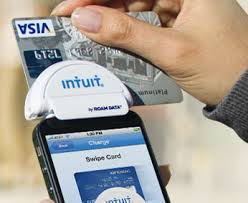 Have you setup your business to take money from plasitic cards anywhere?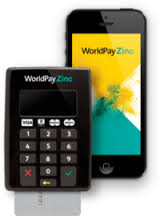
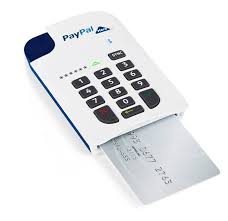 Industry Data Security Standard (PCI DSS). This Authority is designed to protect your business transactions and your customers from fraud. Also ensure you keep customers financial information/receipts locked away safely as you are responsible for protecting their data.


















 All about Hair Extensions & Hairloss Courses and Franchise Opportunity by Diane Shawe
You must be logged in to post a comment.