A consultant from i-send came across a most recent press release by LookTel announcing that two mobile solutions companies, Ipplex and LinkMe Mobile, have partnered to create mobile applications for elderly and vision-impaired consumers.
“LookTel allows users to instantly interact with their world through their mobile phone – recognizing everyday objects such as text, money, packaged goods, CDs or medication bottles, even signs and landmarks,” explained Ipplex in a March 24 press release.
The application also provides additional support to the vision-impaired by way of live video, audio chat, push-to-talk audio, and GPS-tracking data.
Their groundbreaking application was selected as a finalist in the CTIA Wireless Emerging Technology Awards Healthcare/Public Safety/Transportation Category in 2010.
Augmented reality-like technology has previously been used to help vision-impaired and blind people see with their ears. Almost 10 years ago, a senior scientist at Philips Research Laboratories in the Netherlands developed a “seeing” system called The vOICe.
The vision technology offered totally blind users a sonic representation of visual sensations by way of image-to-sound renderings. The technology is now available as an Android application from the Seeing With Sound website, http://www.seeingwithsound.com/.
I-send White Paper 2010: Access for the Visually Impaired. If you would like a copy please email promote@i-send.co to request a copy.
We have all seen the familiar picture! Most people actually walking around with their mobile phone in their hands, just waiting for it to ping them with a text, call or twitter! As a busy person, you know the importance of staying a step ahead of your clients and your family.
Being tied to your desk or home is not an option anymore, getting that important email or phone call and to maintain convenient access to essential data—proposals, schedules, contact information, business news or the stock market.
However, thousands have newfound freedom using PDA-style smartphones designed for business (and fun). Today’s smartphone traces its roots back to the personal digital assistant or PDA. (I actually found my old one the other day) Originally used as businessperson’s right hand to track important client information, project statuses, and task lists, smartphones have evolved into an everyman’s (and woman’s) tool.
Smartphones are much more than just cell phones; they provide instant access to the web. Whether you’re researching news to predict the stock market or looking for the perfect golf course on the weekend, you’ll find it on the net.
Many smartphones allow you to sync with your desktop computer by USB or bluetooth! This means you can store, view, and work on documents directly on your handheld. You can also receive and respond to emails as they arrive in your inbox on your home computer with real-time push email.
Smartphones can also serve as multimedia devices, so your entertainment goes with you. They can store and display pictures and videos of friends and family and even entire feature-length movies. Most smartphones take pictures and capture video, but the most common multimedia function is the ability to play MP3s—sit back, relax, and enjoy your favorite tunes while traveling or during breaks.
Another perk of using a smartphone is the fairly recent development of third-party applications (or apps). These apps range from those geared toward hardworking business tasks to entertaining games and everything in between. With thousands of apps available to download in a range of prices, there’s sure to be something that will appeal.
In the past, business people were easily identifiable—they carried large briefcases, binder planners and perhaps a brick cell phone. The scene has changed and so has the way we conduct life and business. A smartphone stores important data and documents, offers a calendar planner, provides instant access to the internet and email and keeps you in touch with clients, coworkers, friends and family – anytime and anywhere.
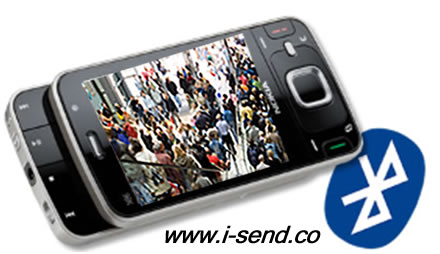
You can even use your smartphone as an effective broadcasting and marketing tool by sending different types of media via bluetooth to other devices.
Top Things to look for in a new smartphone
Design
Size and weight, along with screen size and resolution, make a difference in the display and handling of a smartphone.
Multimedia
The best business cell phones have at least a 2 megapixel camera with zoom features and the ability to play and record audio and video. Smartphones act as life management devices and include organizational features like calendars and task lists. Most sync with home computers allowing for document viewing and editing.
Call Features/Quality
The foundation of business is communication, and a smartphone’s first function is as a cellular phone. Smartphones for business should include all typical cell phone features including speakerphone, three-way calling, voice dialing, call waiting, etc.
Memory/Storage
The most practical smartphones are compact, include good input and display options, and enough battery life to last through a full day’s work and beyond.
Additional Features
Many smartphones include practical tools like calculators, map applications and GPS. Some have the ability to support third-party or browser-based programs that can perform a variety of specific functions. Third-party apps are becoming a key component of a smartphone, allowing the user to customize their phones to support their lifestyles. Bluetooth enabled is also a standard feature of the smartphone.
If you want to find out more about Bluetooth proximity Broadcasting, then visit http://www.i-send.co
Signals given off by phones allow shopping centres to monitor how long people stay and which stores they visit
Customers in shopping centres are having their every move tracked by a new type of surveillance that listens in on the whisperings of their mobile phones.
The technology can tell when people enter a shopping centre, what stores they visit, how long they remain there, and what route they take as they walked around.
The device cannot access personal details about a person’s identity or contacts, but privacy campaigners expressed concern about potential intrusion should the data fall into the wrong hands.
The surveillance mechanism works by monitoring the signals produced by mobile handsets and then locating the phone by triangulation – measuring the phone’s distance from three receivers.
It has already been installed in two shopping centres, including Gunwharf Quays in Portsmouth, and three more centres will begin using it next month, i-send co has learnt.
The company that makes the dishes, which measure 30cm (12 inches) square and are placed on walls around the centre, said that they were useful to centres that wanted to learn more about the way their customers used the store.
A shopping mall could, for example, find out that 10,000 people were still in the store at 6pm, helping to make a case for longer opening hours, or that a majority of customers who visited Gap also went to Next, which could useful for marketing purposes.
In the case of Gunwharf Quays, managers were surprised to discover that an unusually high percentage of visitors were German – the receivers can tell in which country each phone is registered – which led to the management translating the instructions in the car park.
The Information Commissioner’s Office (ICO) expressed cautious approval of the technology, which does not identify the owner of the phone but rather the handset’s IMEI code – a unique number given to every device so that the network can recognise it.
But an ICO spokesman said, “we would be very worried if this technology was used in connection with other systems that contain personal information, if the intention was to provide more detailed profiles about identifiable individuals and their shopping habits.”
Only the phone network can match a handset’s IMEI number to the personal details of a customer.
Liberty, the campaign group, said that although the data do not meet the legal definition of ‘personal information’, it “had the potential” to identify particular individuals’ shopping habits by referencing information held by the phone networks.
Owners of large buildings currently have to rely on manual surveys to find out how customers use the space, which can be relevant to questions of design such as where the toilets should be located or which stores should be placed next to one another.
Other types of wireless technology, such as wi-fi and Bluetooth, can be used to locate devices, but the regular phone network signal is preferable because it is much more powerful and fewer receivers are needed to monitor a given area.
Phone networks have long been capable of gauging the rough location of a handset using three phone masts, but the margin error can be as great as 2km. The process is also less efficient when the phone is indoors.
“You’re basically going to know that that person has been in Starbucks,” Toby Oliver, the company’s chief technology officer, said.
Even when the owner is not using it, a mobile phone makes contact with the network every couple of minutes, which is enough for the receivers to get a reading on its position.
It has been interesting to read a new report from Juniper Research which has found that the mobile marketing and retail sector (comprising mobile advertising, coupons and smart posters) will exceed $8 billion by 2012 globally.
Retail Theraphy Bluetooth Style
The Mobile Marketing and Retail Strategies report found that Retailers were already starting to exploit the mobile channel through advertising campaigns on the handset and by issuing money-off coupons.The market for these two activities alone is forecast to grow by half in the next two years.
According to report co-author Howard Wilcox, there research and interviews showed that location aware technologies will play a key part. Companies like Google and IBM are seeking to exploit the knowledge of where users are located to enable retailers to offer in store shoppers a rich set of capabilities such as personalised special offers. As a result forecasting the mobile coupons market to double to exceed $4 billion in 2012.
Retailers Migrating to Mobile
At a recent mobile industry event, CTIA Wireless 2010, more than 20 percent of the shows attendees were said to come from the retail space, showing that retailers were beginning to latch on to the potential of the mobile channel.
Whilst the mobile advertising and mobile coupons markets will reach similar sizes, Juniper believes that smart posters (which users can tap to obtain product information) will remain a niche sector within the overall market until NFC (Near Field Communications) capable devices are more widely used.
The report also warns however that failure to use targeted, location based advertising, particularly SMS advertising, may cause mobile users to regard such advertising as little better than spam. The report recommends that brands and retailers should consider geotagging their products and locations.
Further findings include:
a) Western Europe forecast to nearly treble in size between 2010 and 2014
b) Brands, retailers and merchants should use clever, engaging apps, which can be far more effective





















 All about Hair Extensions & Hairloss Courses and Franchise Opportunity by Diane Shawe
You must be logged in to post a comment.